BGCI Southeast Asia
Managed remotely by programme staff from Malaysia and the Philippines, BGCI Southeast Asia covers a diverse range of funded projects dealing with various facets of plant conservation in the region: both in situ forest restoration and ex situ collections management as well as community engagement, public education and awareness, livelihood improvement, and policy recommendations. Flora that have been the focus of these activities have included cinnamon, palm, magnolia, and dipterocarp species, among many others.
BGCI Southeast Asia has historically included local partnerships from Malaysia, the Philippines, Indonesia, Thailand, Singapore, Vietnam, Laos, Cambodia, and Brunei Darussalam, as well as collaborations from other international institutions. Apart from these projects, BGCI Southeast Asia also strives to connect and integrate BGCI’s global programmes and services to members in the region, including funding opportunities such as the GBGF, bursaries for congresses such as the GBGC and the ICEBG, and initiatives such as the GPPC, TGBS, etc.
Current Funded Programmes
Global Trees SEA
As part of a three-year programme from 2025-2027 called “Global Trees: Action for All Tree Species”, funded by Fondation Franklinia, BGCI has partnered with 4 countries in Southeast Asia to help deliver in situ and ex situ conservation for some of the region’s most threatened tree species. These include:
- In Indonesia: Cinnamomum subaveniopsis and Cinnamomum sulavesianum (with the Ethnobiological Society of Indonesia or PMEI)
- In Malaysia: Adonidia dransfieldii and Saurauia sammanniana (with the Sabah Forestry Department)
- In the Philippines: Areca ipot and Pinanga bicolana (with Makiling Botanic Gardens)
- In Thailand: Magnolia sirindhorniae and Mitrephora sirikitiae (with Queen Sirikit Botanic Garden)
Learn more about the progress of these projects through the following links:
- [IDN] Public lecture at Hasanuddin University
- [MLY] Discovering new populations in Sabah
- [MLY] Sabah taxonomy workshop
- [PHL] Project presentation and nursery visit
Nature’s Neighbours: Sustainable Coexistence between Indigenous People and Philippine Eagles
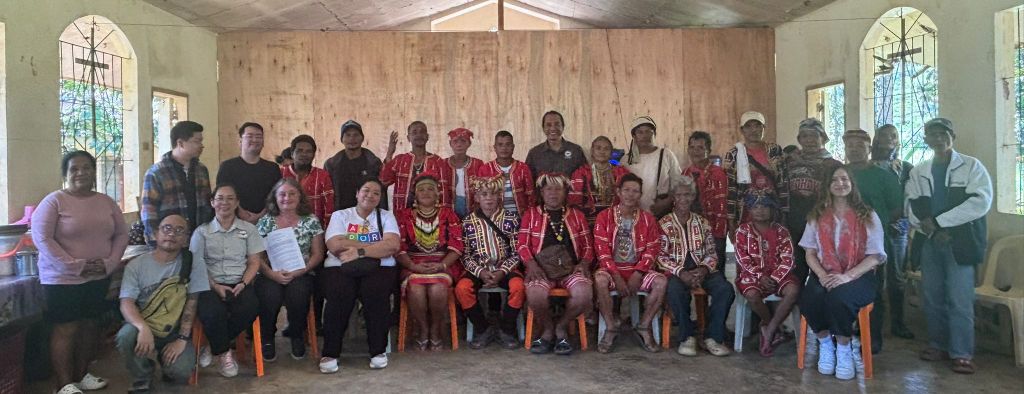
Funded by the UK government’s Darwin Initiative, the Nature’s Neighbours project is implemented by BGCI in partnership with the Landscape Alliance (formerly International Centre for Research in Agroforestry [ICRAF] Philippines) and the Philippine Eagle Foundation (PEF).
Visit the project page here to learn more about how BGCI, LA, and PEF are supporting forest restoration, Philippine eagle conservation, poverty reduction, and sustainable indigenous co-management in San Fernando, Bukidnon.
Building Capacity and Sharing Knowledge for Tree Conservation
This programme is funded by the Audemars Piguet Foundation for Trees and will run from 2025-2028. Read an overview of the programme here.
Through a capacity needs survey, circulated to the region in 2025, the Audemars project identified a number of major themes of interest to Southeast Asian plant conservationists.
For biosecurity, BGCI Southeast Asia has been working with the International Plant Sentinel Network (IPSN) to develop the Southeast Asia Plant Biosecurity Group (SEA-PBG) towards consolidating regional knowledge, challenges, and future actions for plant health monitoring and biosecurity.
For ex situ conservation, a technical talk on conservation genetics was held online in June 2026, hosted by the Southeast Asia Botanic Gardens (SEABG) Network (more information below). The Audemars project is also set to support the SEABG Network’s upcoming 9th Conference and Meeting in 2027.
Southeast Asia Botanic Gardens (SEABG) Network
The SEABG Network was established in 2004, with BGCI as secretariat, to acknowledge, support and promote the work of botanic gardens in the region. The objectives of the SEABG Network are to:
- Set standards (e.g. working practices, sustainable management approaches, etc.) among botanic gardens in the region;
- Provide a venue for exchange of technical expertise and assistance;
- Link SEABG members with other botanic gardens networks and associations;
- Guide SEABG members towards implementing the Convention on Biological Diversity (CBD), specifically the Global Strategy for Plant Conservation (GSPC) as well as the International Agenda for Botanic Gardens.
The SEABG Network holds a conference every two years to gather country representatives and provide capacity building on priority themes determined by the network. Conferences of the network held to date include:
- 2004: Singapore Botanic Gardens, Singapore
- 2007: Singapore Botanic Gardens, Singapore
- 2009: Dr. Cecilia Koo Botanic Conservation Center
- 2011: Xishuangbanna Tropical Botanical Garden, China
- 2015: Eka Karya Bali Botanic Garden, Indonesia and ABS training session
- 2017: Bidoup-Nuiba National Park, Vietnam
- 2019: Queen Sirikit Botanic Garden, Thailand
- 2023: Makiling Botanic Gardens, Philippines
The 9th SEABG Conference and Meeting is currently being planned for 2027 (venue TBA).
Gardens in the region: explore the map below and click on the follow on link for more information about each garden. Total number of gardens in the region 85 according to BGCI’s GardenSearch (Last updated April 2025).
SEABG Network Conference Papers
-
SEABG Network Conference Proceedings
Publication / English
For more information, contact the Greetha Arumugam (greetha.arumugam@bgci.org) and David Ples (david.ples@bgci.org).