NTS: What to plant where?
The key resource available here is information on what tree species would naturally occur in each location in the absence of human disturbance. This helps restoration practitioners understand the ecological potential of different sites and make informed decisions about what species can grow—and should be planted—where. The seed zone maps, also available here, serves as an essential starting point, helping users match species to site conditions. These maps are intended to be used alongside species-specific information and local knowledge of microsite variation to support effective, site-appropriate restoration.
Tanzania’s Agro-Ecological Zones (map)
Interactive Native Tree Species Decision Support Mapping Platform for Tanzania
The “What to Plant Where” tool enables users to identify the most appropriate native species for specific ecological conditions, locate verified seed sources, and understand where seed can be safely transferred within ecologically compatible seed zones.
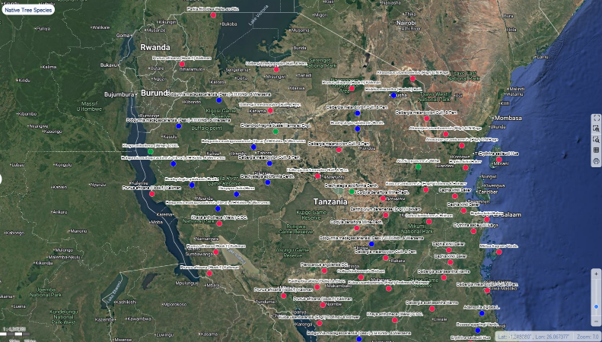
The seed sources map indicate the location of all the 100 prioritised species in various locations across Tanzania. The map has been coded with green, indicating where the seed sources have been ground truth and verified within the project period by the extended project team. The blue coded species indicate seed sources that have been confirmed by TFS and partners over the last few years through their work on various projects, as a way of capitalizing on work that has already been done in Tanzania by other entities. The red coded species and locations indicate potential seed sources. These are areas where the species have previously been cited and recorded in literature, suggesting that they can be found at those areas.
The platform strengthens the technical basis for restoration planning while maintaining the genetic integrity and adaptive capacity of native tree populations. The integration of agroecological zones, floristic regions and potential natural vegetation maps allows practitioners to make evidence-based decisions that improve seedling survival, ecosystem resilience and long-term restoration success under changing climatic conditions.