Watching the Next Generation: Community Monitoring Reveals the Status of Threatened Trees
-
Country
Kenya -
Region
Africa -
Topic
Tree Conservation -
Type
News -
Source
BGCI
News Published: 19 October 2026
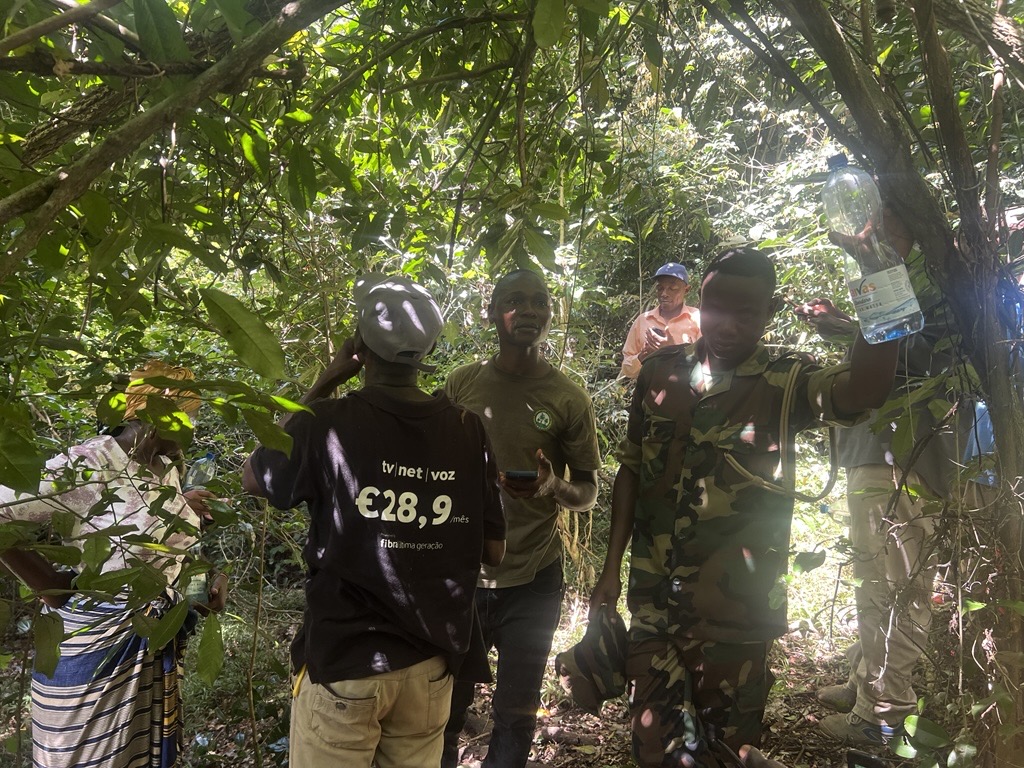
Walking through a Kaya forest, a mature threatened tree is only part of the conservation story. What grows beneath and around it may be even more important. In Kenya, community patrol teams in four Kaya forests along Kenya’s coast have been returning regularly to known populations of threatened trees. Armed with smartphones, field knowledge and monitoring skills, they record the health of mature trees, scour the forest floor for regenerants and note whether trees are flowering, fruiting or producing seed.
The information is beginning to build an increasingly detailed picture of some of Kenya’s rarest coastal tree species.
Since early this year, patrol teams generated 128 monitoring submissions (entries using the data collection platform) covering 13 target threatened tree species. Coffea pseudozanguebariae was the most frequently monitored species, appearing in 45 submissions, while Anglocalyx braunii and Euphorbia wakefieldii each appeared in 15. Other monitored species included Afrocanthium kilifiense, Buxus obtusifolia, Newtonia paucijuga, Oldfieldia somalensis, Psydrax faulknerae and Vitellariopsis kirkii.
Perhaps most valuable is what the teams are learning about regeneration.
Across monitoring visits, patrol members recorded more than 3,100 regenerants around target trees. Anglocalyx braunii accounted for 948 recorded regenerants, followed by Coffea pseudozanguebariae with 853 and Newtonia paucijuga with 517.
Not every species showed the same pattern. Six monitoring submissions for Dialium orientale, for example, recorded only one nearby regenerant. This does not necessarily indicate population decline, but it highlights a species and location where recruitment may warrant closer investigation.
Encouragingly, every monitoring record in which tree condition was entered described the target trees as healthy.
The monitoring programme is therefore doing more than confirming where threatened trees remain. It is beginning to show whether the next generation is present — information that can guide seed collection, propagation, restoration and future species-recovery actions.
Eyes on the Forest: Community Patrols Reveal the Pressures Facing Threatened Trees
For a threatened tree, survival can depend on what happens in just those few metres that surround it. A mature tree may appear healthy while repeated firewood collection, cutting of neighbouring trees or disturbance of young seedlings gradually erodes the forest around it. This is why BGCI’s community patrol teams are trained to record not only the condition of threatened trees, but also the pressures they encounter during every patrol.
Their observations are revealing a clear pattern.
Between June and early October 2026, the patrol database contained 85 monitoring submissions in which identifiable threats were reported. Of these, 71 related to direct extraction of wood, principally tree cutting, logging and firewood collection.
Tree cutting and logging were the most frequently reported pressures, occurring in 55 monitoring submissions.
The problem was particularly visible in Kaya Gandini, where cutting was reported in 41 monitoring submissions during the period. In Kaya Chonyi, all five monitoring submissions made over the same period identified logging or tree cutting alongside monitoring of Dialium orientale. One patrol team explicitly recommended that the area needed more intensive patrols.
Kaya Mrima showed a broader mixture of pressures. Alongside nine submissions relating to cutting or logging, patrol teams recorded firewood collection 16 times and wind damage 12 times. Trapping was also recorded on two occasions.
These suggest that pressures can change seasonally throughout the year. Firewood collection at Kaya Mrima appeared once in June and once in July, but was recorded six times in August and eight times in September.
These figures should not be interpreted as numbers of separate offences: patrol teams may encounter or report the same continuing pressure during repeated visits. Their value lies in showing how consistently certain threats occur around threatened-tree populations.
And patrols do not end with observation.
When community patrol members encounter people cutting trees or undertaking activities that may damage threatened populations or regenerants, they use the opportunity to explain why the trees matter and encourage more sustainable behaviour.
This combination of early detection, repeated monitoring and community sensitisation is helping turn threatened-tree conservation from a reactive exercise into an ongoing presence within the forest.
Local Guardians: Turning Forest Walks into Conservation Action
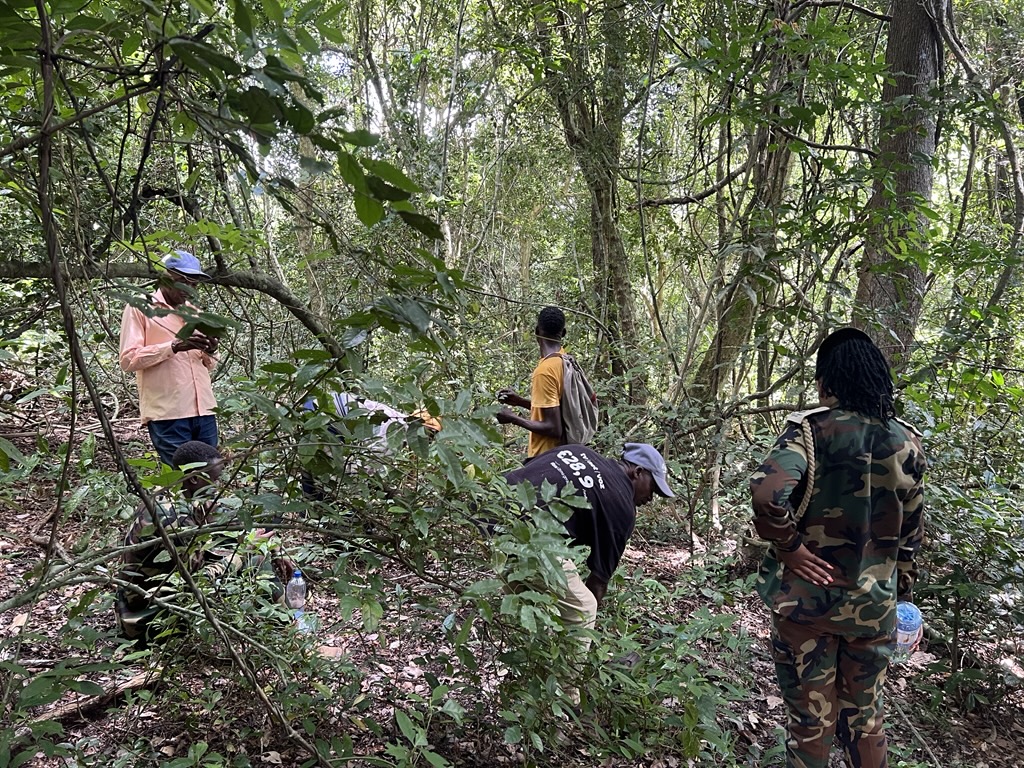
On 13 July 2026, a community patrol team entered Kaya Chonyi carrying a smartphone and a clear conservation task: check on populations of the threatened tree Dialium orientale.
By the end of the patrol, along one route, their GPS had traced approximately 0.86 kilometres through the forest. Along the way, the team checked the target trees, looked for regeneration, recorded ecological observations and documented logging as a threat.
The route may appear as a simple line on a map. In reality, it represents a growing community-led conservation system.
Following initial surveys that located and mapped threatened tree populations, BGCI helped establish patrol units in four Kaya forests: Kaya Chonyi and Kaya Ribe in Kilifi County, and Kaya Gandini and Kaya Mrima in Kwale County.
Patrol members were trained in threatened-tree surveys, ecological monitoring, digital data collection and identification of threats. They now revisit target populations and submit observations using KoboCollect.
Importantly, the monitoring is being undertaken repeatedly by local people rather than relying solely on occasional visits from conservation organisations. The submissions show recurring community patrol members working individually and in teams across the different forests.
Their role combines science with stewardship.
During a patrol, members may assess whether a tree is healthy, look for seedlings and saplings, record flowering or fruiting, and document evidence of cutting, firewood collection or other disturbance. Where they meet community members undertaking activities that threaten the trees or their regenerants, they also provide sensitisation on the conservation importance of the forest and its threatened species.
Over time, these repeated patrols are creating something extremely valuable: a locally generated record of what is changing within threatened-tree populations.
They also strengthen the link between conservation action and the communities who live closest to these forests.
Rather than community members simply being recipients of conservation interventions, patrol teams are becoming the eyes, ears and custodians of threatened-tree conservation — producing data that can influence where future patrols, restoration activities and species-recovery actions are most urgently needed.

Become a Member
Be part of the largest network of botanic gardens and plant conservation experts in the world by joining BGCI today!
Support BGCI
You can support our plant conservation efforts by sponsoring membership for small botanic gardens, contributing to the Global Botanic Garden Fund, and more!