Tracking Myrtle Wilt: How Volunteers Are Helping Protect Tasmania’s Myrtle Beech
-
Country
Australia -
Region
Oceania -
Programme
International Plant Sentinel Network -
Workstream
Addressing Global Challenges Through Public Engagement -
Topic
Plant Conservation -
Type
Blog -
Source
BGCI Member
News published: 27 October 2026
Guest blog contribution from Tonia Cochran and Olivia Steed-Mundin from Inala Jurassic Garden and Kew Wakehurst, respectively.
Protecting Bruny Island’s ancient rainforest
On Bruny Island, Tasmania, ancient myrtle beech (Nothofagus cunninghamii) trees are facing a growing threat from myrtle wilt, a potentially fatal fungal disease.
In 2023, a team of volunteers led by Inala Jurassic Garden, in collaboration with Kew Wakehurst, began surveying myrtle beech trees in the island’s local rainforests for signs of the disease.
What began as a one-year pilot study supported by a BGCI/ArbNet Partnership Grant has since grown into a long-term monitoring programme sustained by committed local volunteers.
Three years of monitoring show an increase in the number of trees with symptoms of myrtle wilt, particularly in areas affected by human disturbance.
Through continued monitoring, the team hopes to better understand the spread of the disease and contribute to the protection of these remarkable ancient trees on Bruny Island and beyond.
What is myrtle wilt, and why does it matter?
Myrtle beech is a globally vulnerable tree species and a cornerstone of the cool temperate rainforests of Tasmania and Victoria, Australia. These trees are part of an ancient lineage of southern hemisphere plants, with evolutionary roots stretching back to the time of the supercontinent Gondwana that once connected Australia, Antarctica, and South America.
One of the major threats to myrtle beech is myrtle wilt, a disease caused by the fungus Davidsoniella australis. Early symptoms include wilting branches and leaves on the tree’s crown that turn orange as they die, often remaining attached to the tree. Affected trees may also show signs of the mountain pinhole borer (Platypus subgranosus), a beetle that commonly attacks diseased trees. Its presence can be detected through tiny holes in the trunk and fine, sawdust-like material known as frass.
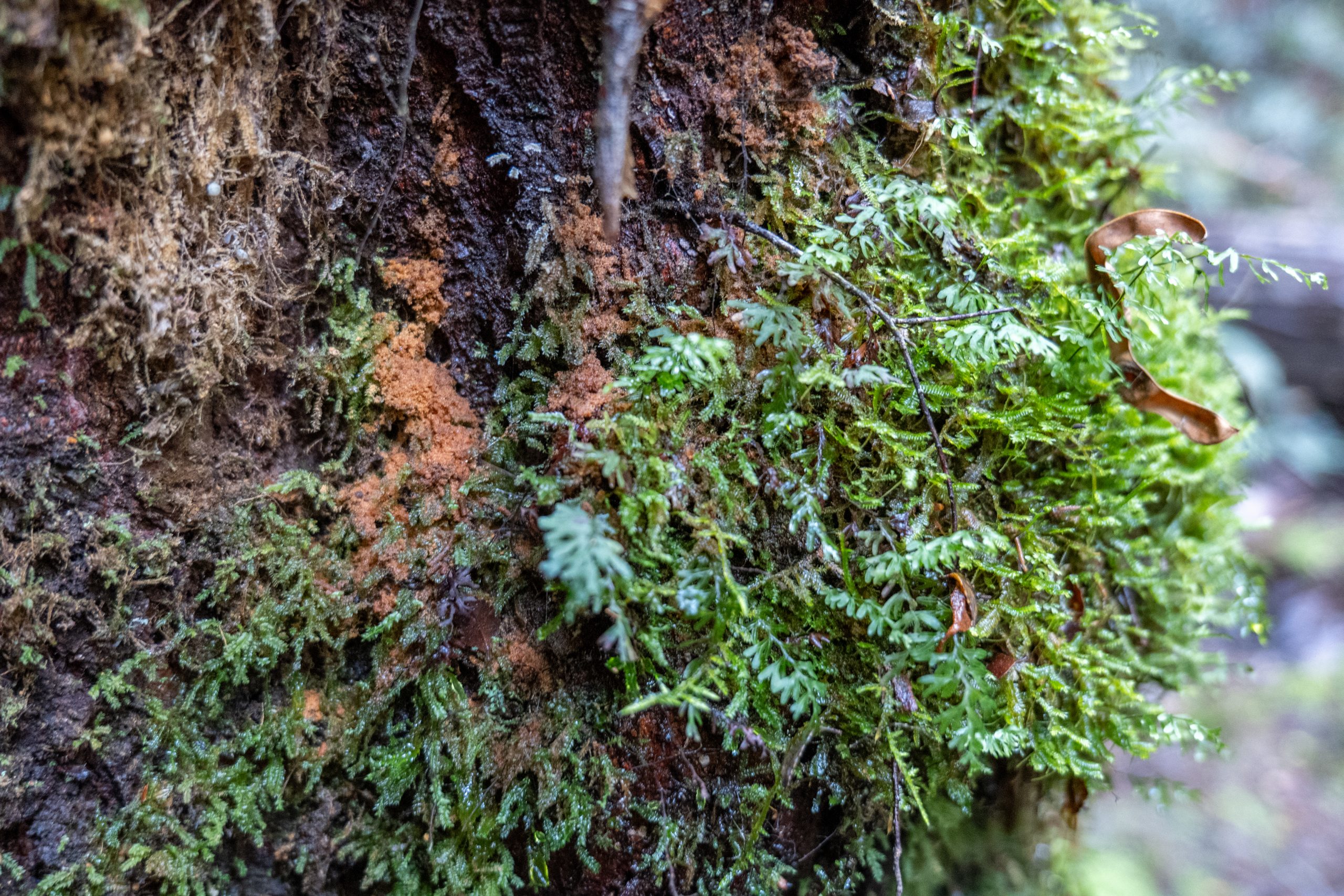
Trees affected by myrtle wilt can die somewhere between six months and three years after infection.
Previous research has suggested that myrtle wilt is more common in areas affected by human disturbance, including roadsides and areas where trees have been damaged during forestry or maintenance activities. Understanding where the disease occurs and how it changes over time is therefore important for identifying potential risks and informing conservation efforts.
From local concern to conservation action
In 2021, Olivia Steed-Mundin, Coordinator of the Global Conservation Consortium for Nothofagus (GCCN) at Kew Wakehurst and co-author of the Conservation Gap Analysis of Nothofagus , first alerted me to the existence of myrtle wilt.
Wild myrtle beech trees grow less than a five-minute drive from Inala, my home on Bruny Island and the location of Inala Jurassic Garden, which houses several threatened Nothofagus species. I was horrified to learn that our local rainforest could be under threat from this disease, so we applied for funding through the BGCI/ArbNet Partnership Grant Programme to collaborate on a pilot study to survey and monitor myrtle beech trees for signs of myrtle wilt on Bruny Island.
The initial survey was carried out between March 2023 and March 2024 by a small team of dedicated local volunteers led by Inala Jurassic Garden, with support from Kew Wakehurst, which co-designed the project and analysed the results.
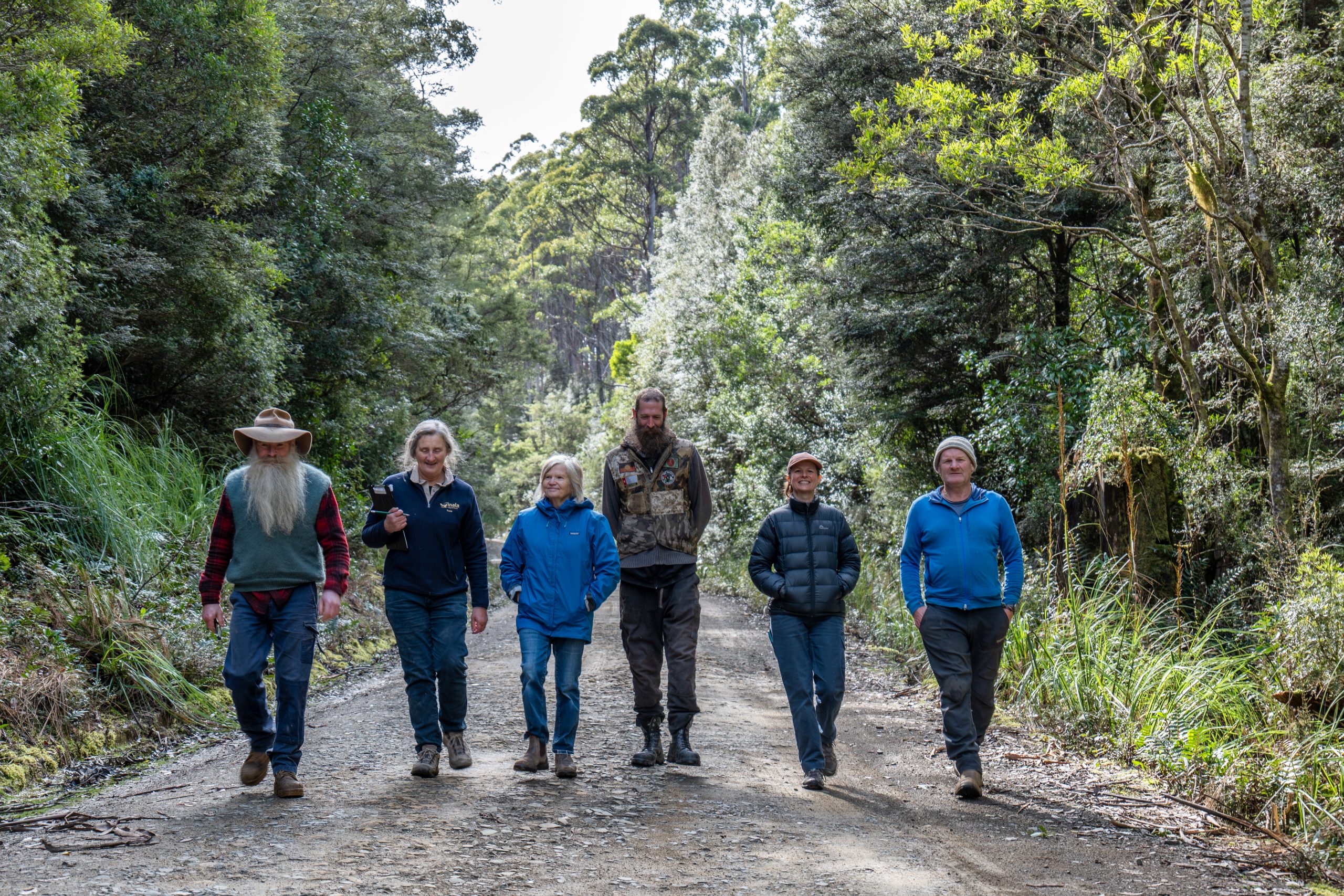
The first survey identified several trees showing symptoms of myrtle wilt, particularly in areas affected by human disturbance. These findings highlighted the importance of continued monitoring, and the team decided to extend the project beyond the initial grant period.
What began as a one-year pilot study has now become a long-term volunteer-led monitoring programme, helping us better understand the health of these ancient rainforest trees.
Volunteers at the heart of the monitoring programme
Our monitoring programme would not have been possible without the dedication of our volunteer team.
Over the past three years, volunteers have spent countless hours navigating fallen logs, dense vegetation, and challenging weather conditions to collect valuable information about the health of myrtle beech trees and our local rainforest.
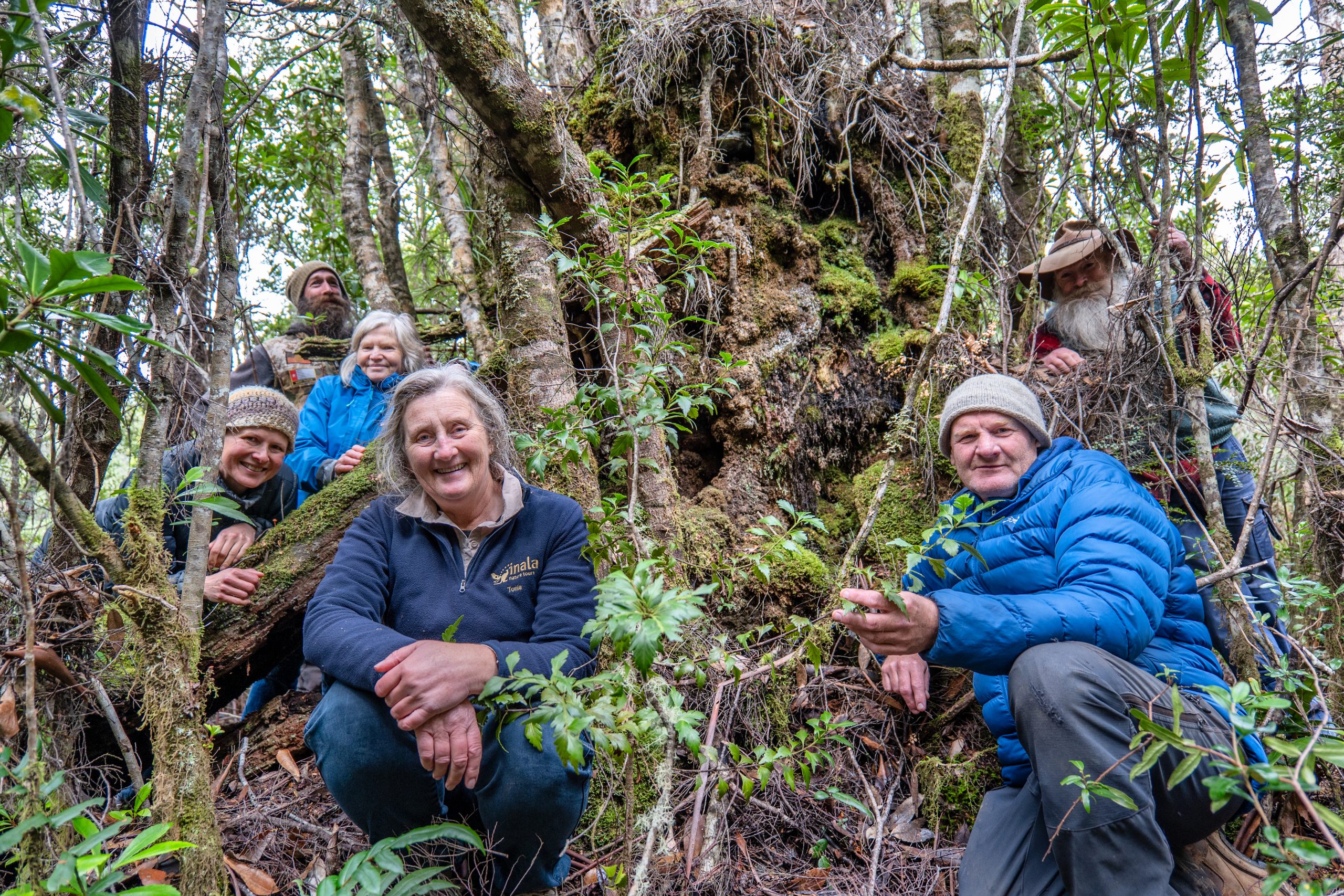
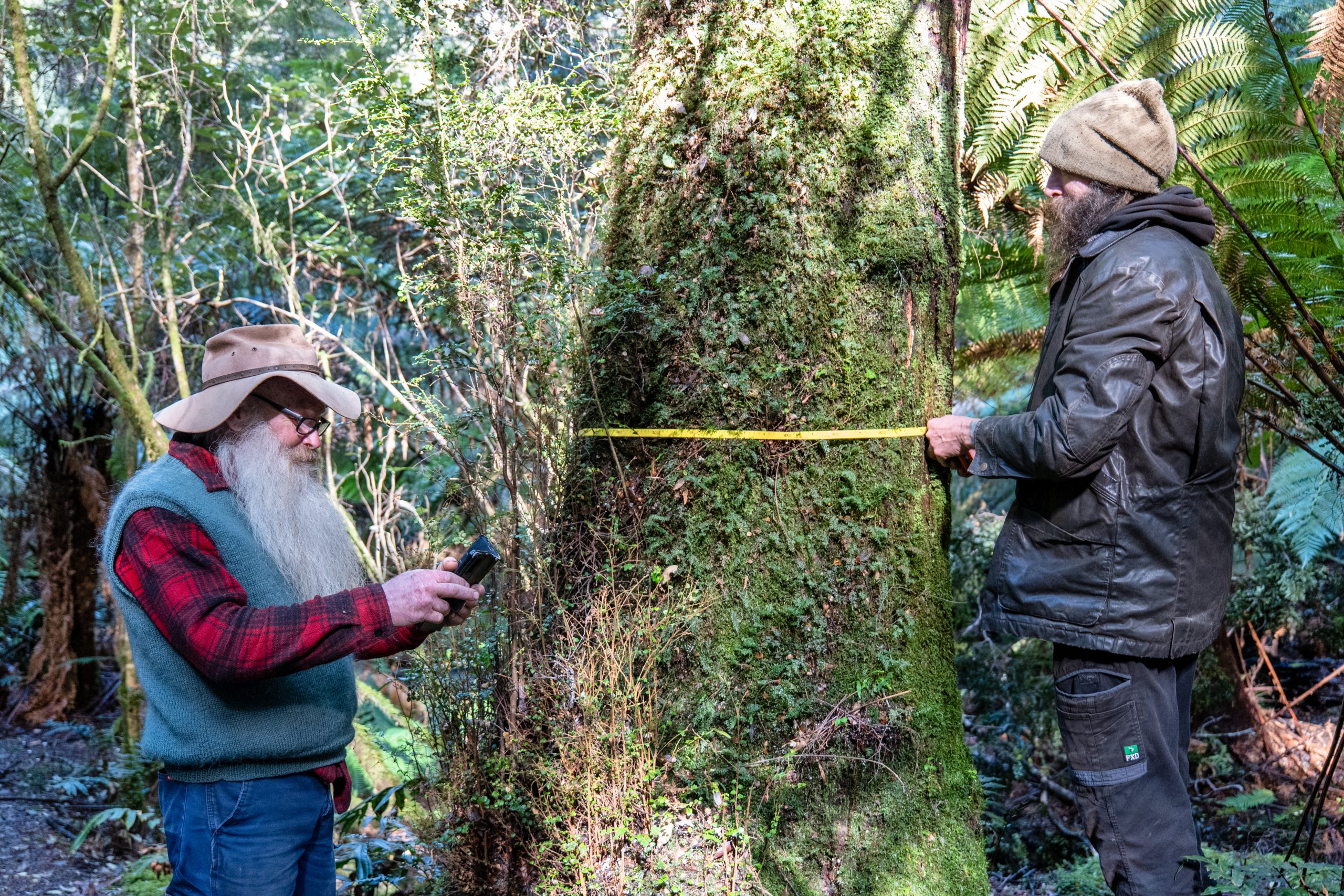
Between 2023 and 2026, the team carried out five surveys, monitoring a total of 444 trees within three 200 m x 20 m transects.
To ensure that changes in tree health could be recorded over time, each mature myrtle beech tree with a trunk diameter greater than 10 cm was labelled with an aluminium tag.
During each survey, volunteers recorded:
- The health of each tree, classifying it as: healthy, dying with myrtle wilt symptoms, or dead for less than or more than three years.
- Evidence of mountain pinhole borer activity, including the presence of frass.
- Tree measurements, location, and distance from nearby roads or walking paths.
- Any damage to the trunk or changes in tree condition, supported by photographs.
Smaller trees were not included in the monitoring programme, as myrtle wilt is relatively rare in young myrtle beech trees.
To minimise the risk of spreading plant pathogens during the surveys, volunteers also disinfected their footwear and equipment.
By returning to the same trees over several years, the team has been able to track changes in their health and build a clearer picture of how myrtle wilt may be affecting the monitored forest areas.
What have three years of monitoring revealed?
The results are beginning to reveal a concerning trend.
Over the three-year monitoring period, nine of 444 surveyed trees (approximately 2%) were recorded as either dead or dying with symptoms of myrtle wilt.
The greatest rate of change was observed during the 2025–2026 survey, as trees that had previously shown no signs of disease began to show symptoms or die, suggesting that the number of trees affected by the disease may be increasing within the monitored areas.
Most of the affected trees (78%) also showed evidence of mountain pinhole borer activity, which is commonly associated with diseased trees.
Although the number of affected trees remains relatively small, these findings highlight the importance of continued monitoring to understand how the disease may be changing over time.
Human disturbance and myrtle wilt: What are the connections?
One of the most striking findings was the location of the affected trees.
Around 90% of trees showing symptoms of myrtle wilt were recorded within five metres of a road or walking path. These observations are consistent with previous research suggesting that human disturbance may be associated with a greater occurrence of myrtle wilt.
Most of the affected trees were found in the monitoring area near the summit of Mount Mangana and the Mavista Walking Track.
Additionally, alongside the road to Mount Mangana, several trees showed signs of damage associated with roadside maintenance. These injuries could potentially create opportunities for the fungus to enter the tree.
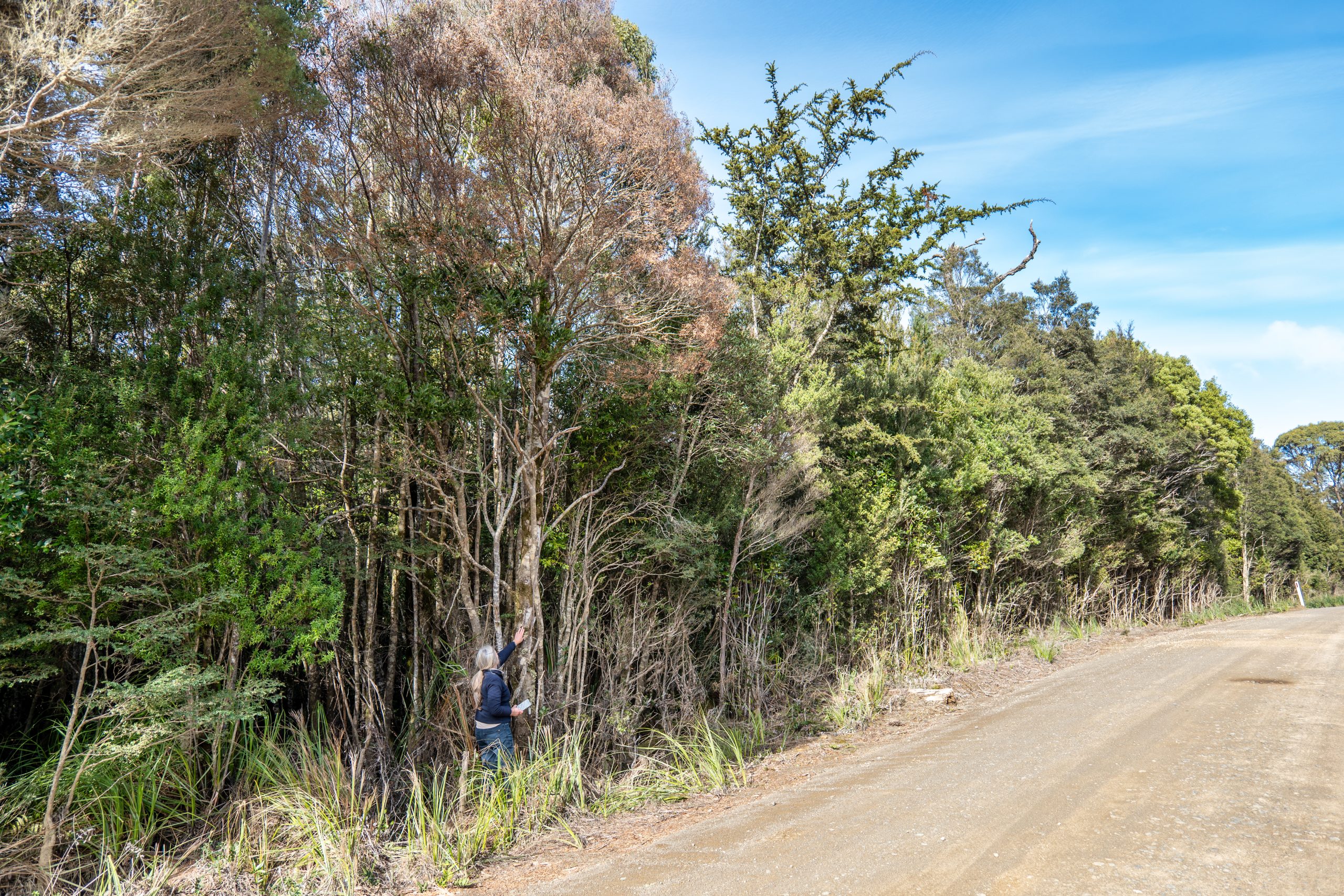
The team also recorded two additional dead trees in the third monitoring area alongside the Mavista Walking Track, as well as several trees that died outside the original survey area but near the walking track.
These findings are particularly relevant given the increasing number of visitors to Bruny Island (from 150,000 visitors in 2018 to 220,525 in March 2026) and the potential for greater human activity around sensitive rainforest habitats.
While the monitoring results do not establish a direct causal relationship between human disturbance and myrtle wilt, they highlight the importance of considering plant health when managing roads, walking tracks, and other areas where people and vehicles come into contact with myrtle beech trees.
Looking ahead: expanding monitoring and protecting our forests
Our volunteers are committed to continuing annual surveys on Bruny Island to build a longer-term picture of myrtle wilt spread and how it may be changing and affecting the island’s rainforests.
We also hope to expand the monitoring programme across the wider natural range of Nothofagus cunninghamii in Australia, including Tasmania and Victoria.
In areas that are difficult to access on foot, emerging technologies such as drones equipped with specialised cameras could help us monitor larger and more remote forest areas and identify changes in tree health. These technologies may provide additional information about changes in tree health and help identify areas where further investigation is needed.
By combining continued volunteer-led monitoring with scientific expertise and emerging technologies, we hope to build a better understanding of myrtle wilt and support the long-term conservation of these remarkable trees.
Strengthening biosecurity to protect myrtle beech
Our findings also highlight the importance of good biosecurity practices in areas where people and vehicles regularly come into contact with myrtle beech trees.
Simple precautions can help reduce the risk of introducing or spreading plant pathogens. These practical measures could be considered across the species’ range in Tasmania and Victoria to help reduce the risk of introducing and spreading plant pathogens:
- Cleaning footwear and equipment: Installing footwear-cleaning facilities, such as shoe-scrubbing stations, at appropriate locations along walking tracks and other high-traffic areas could help visitors reduce the risk of transporting potentially contaminated soil and plant material.
- Avoiding unnecessary damage to trees: Taking care during roadside maintenance, particularly when using heavy machinery such as mowers, slashers, and road graders, could help prevent injuries that may create entry points for fungal pathogens.
- Working with local land managers: Collaboration between researchers, volunteers, land managers, and relevant authorities could help identify suitable biosecurity measures and incorporate plant health considerations into the management of roads, walking tracks, and sensitive rainforest habitats.
Continued monitoring, together with appropriate biosecurity practices, could help reduce risks to myrtle beech and contribute to the protection of these ancient rainforest ecosystems.
The power of community-led conservation
What began as a local concern about the health of Bruny Island’s myrtle beech forests has grown into a long-term monitoring programme made possible by the commitment of our volunteers and collaboration between Inala Jurassic Garden and Kew Wakehurst.
The information collected over the past three years is helping us better understand the health of the monitored trees, identify areas where myrtle wilt may be increasing, and highlight potential opportunities to improve biosecurity.
Our experience shows the valuable role volunteers and botanic gardens play in monitoring plant health, supporting scientific research, and contributing to the conservation of threatened species.
Through continued collaboration, careful monitoring, and practical conservation action, we hope to help protect these magnificent ancient trees for future generations.
A special thank you to our volunteers
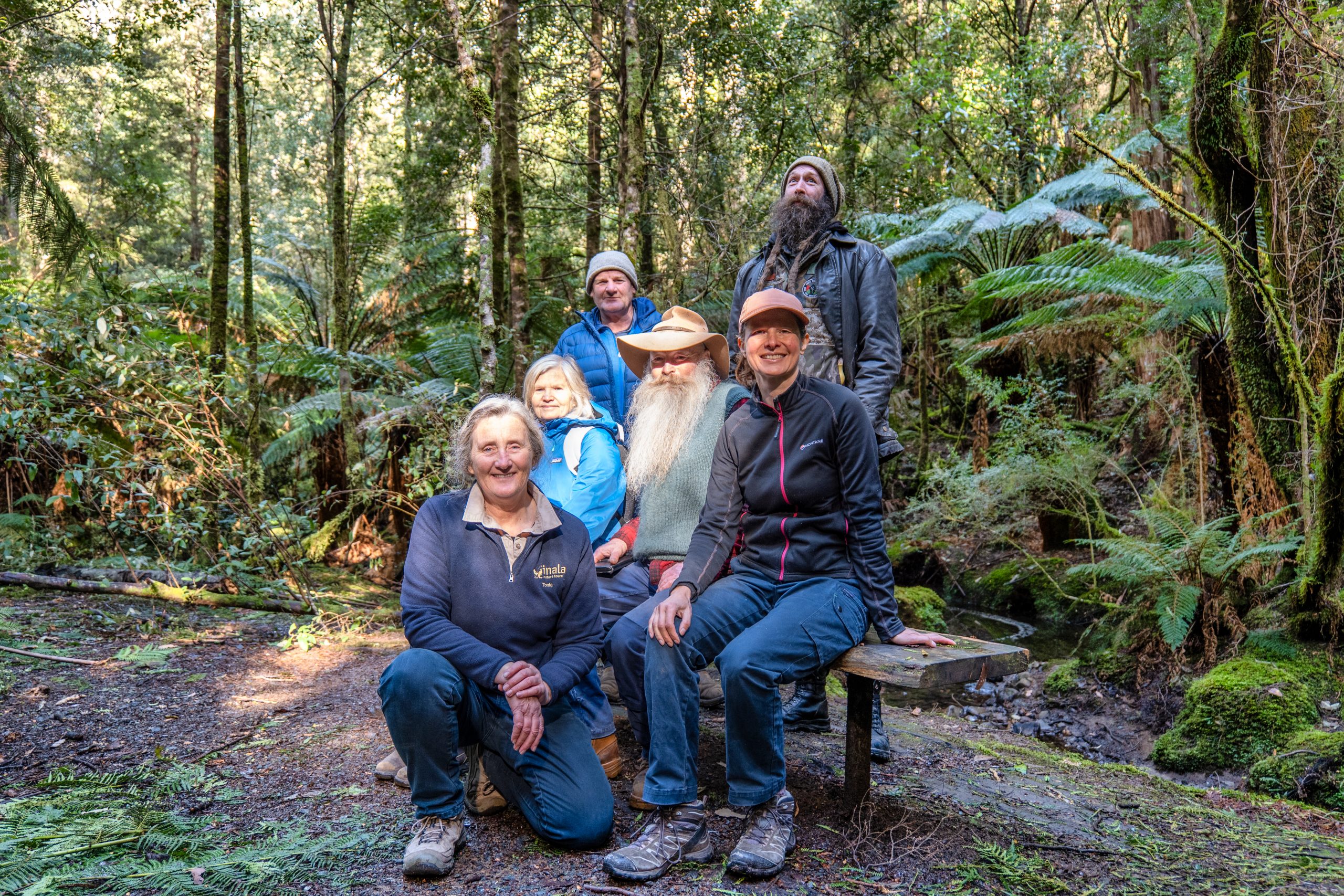
We are deeply grateful to all the volunteers who have generously contributed their time and enthusiasm to this project, particularly Steven ‘Bori’ Morris and James Bunker. Their dedication has made this long-term monitoring programme possible.
For further reading: https://www.bgci.org/wp/wp-content/uploads/2026/10/Further-reading.pdf.
About the authors
Dr Tonia Cochran OAM is the Curator and Collection Manager at Inala Jurassic Garden , Bruny Island, which houses an ex situ collection of more than 70 globally threatened species, including several Nothofagus species. Tonia collaborates with botanic gardens and scientific institutions around the world to support plant conservation. She was awarded the Medal of the Order of Australia for her contribution to conservation and the environment.
Olivia Steed-Mundin is Coordinator of the Global Conservation Consortium for Nothofagus (GCCN) at Kew Wakehurst, UK, and co-author of the Conservation Gap Analysis of Nothofagus . Her work focuses on supporting collaborative conservation efforts for threatened Nothofagus species.
Learn more about the Global Conservation Consortia (GCC) here: Global Conservation Consortia | Botanic Gardens Conservation International.
Join as a Nothofagus affiliate here: Affiliate sign-up: Global Conservation Consortium for Nothofagus.


Become a Member
Be part of the largest network of botanic gardens and plant conservation experts in the world by joining BGCI today!
BGCI Databases
Explore BGCI's suites of databases to help plant conservation worldwide. Upload your data!