Shenzhen Releases Report on Urban Green-Space Flower-Visiting Networks
-
Country
China -
Region
Asia -
Topic
Plant Conservation -
Type
News -
Source
BGCI Member
News published: 06 January 2026
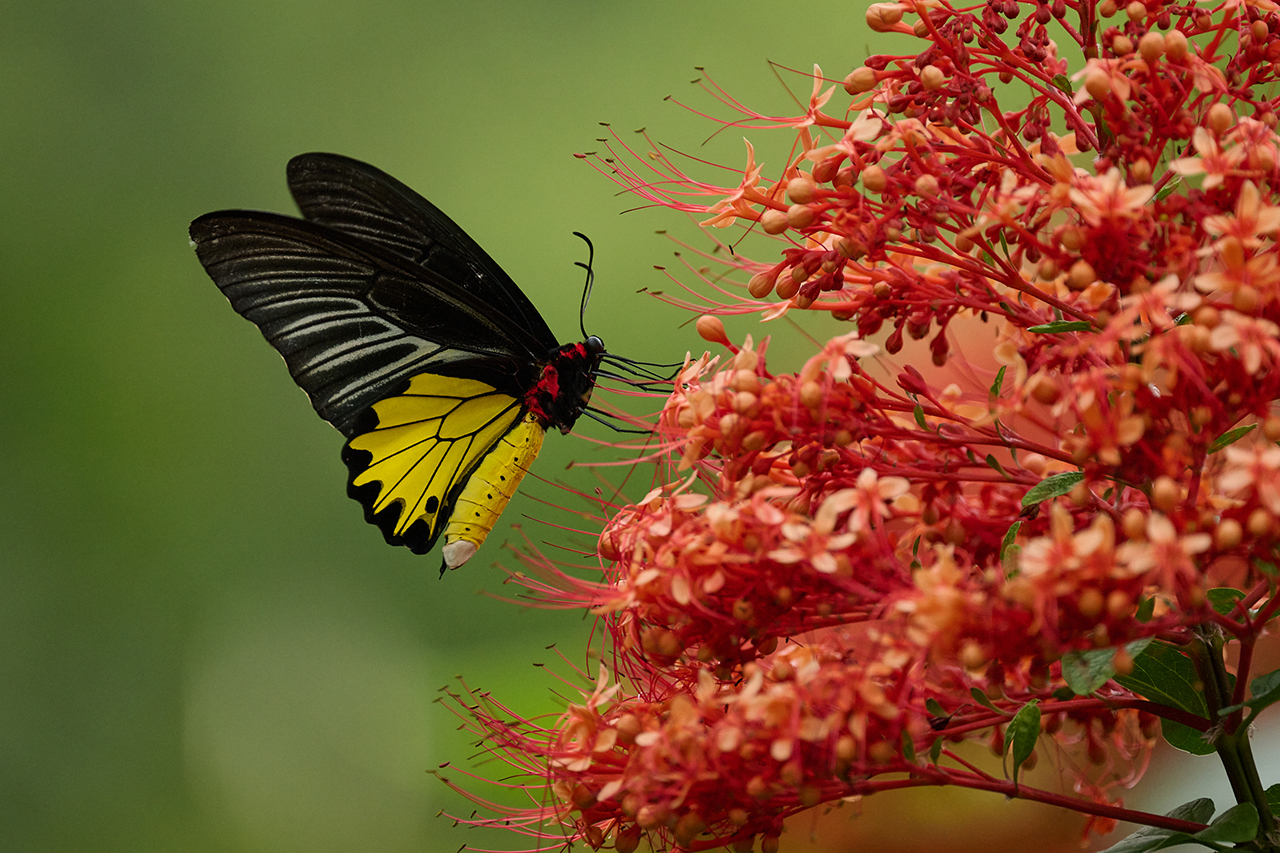
Shenzhen released the “Citizen Science Annual Report on Urban Green-Space Flower-Visiting Networks (2024-2025)” on Dec. 5, the latest outcome of “Nectar plants and where to find them” — a long-running citizen science programme that tracks interactions between nectar plants and flower-visitors in urban green spaces.
Guided by China’s National Forestry and Grassland Administration (NFGA) and other relevant authorities, and led by the Urban Management and Law Enforcement Bureau of Shenzhen Municipality, the multi-partner initiative has expanded monitoring to four core cities (Shenzhen, Hong Kong, Guangzhou, and Zhuhai) in the Guangdong-Hong Kong-Macao Greater Bay Area as well as Shanghai.
Parts of the work were also featured in the newly released nature documentary “Wild Guangdong,” co-produced by Guangdong Radio and Television Station (GRT) and BBC Studios, bringing Shenzhen’s urban biodiversity efforts to a global audience.
The report was jointly compiled by Fairy Lake Botanical Garden, Shenzhen & Chinese Academy of Sciences, the School of Ecology of Sun Yat-sen University, Mangrove Conservation Foundation (MCF), and Friends of Parks, Shenzhen.
Since May 2024, 631 volunteers have submitted 13,439 valid records via BioGrid (developed by the South China National Botanical Garden), while outreach has reached around 360,000 participants. Shenzhen alone contributed 6,258 records, covering 561 species of nectar plants and 323 species of flower-visitors across various urban green spaces types, such as parks, community green spaces, and college campuses.
The report highlights the role of native plants as network “cornerstones” and recommends increasing planting native pollinator-friendly nectar plants, establishing nectar plant corridors, and four-season bloom gardens, implementing ecological management such as reduced shrub/herb trimming, lower pesticide use, and timely invasive species removal.
It also notes that more than half of potential plant-flower visitor interactions remain undocumented, underscoring the need for long-term monitoring to better inform urban ecological planning.
The environmental awareness evaluation result of the report shows that volunteers significantly improved skills in species identification, scientific recording, and insect ecology after joining this citizen science project. More residents shifted from nature observers to citizen science participants and advocates, strengthened their connection to urban nature and neighbourhood conservation.
The programme aligns with the Kunming-Montreal Global Biodiversity Framework and explores local pathways for integrating urban green spaces into Other Effective Area-based Conservation Measures (OECMs). Related tools and resources — including the annual report, species lists, training materials, and identification cards — are now freely available to support communities that interested in documenting urban flower visitors and pollinators across the Greater Bay Area and beyond.
Become a Member
Be part of the largest network of botanic gardens and plant conservation experts in the world by joining BGCI today!
Conservation Action Tracker
BGCI’s Conservation Action Tracker provides information on conservation actions for tree species.