Scientists Warn Flowering Plant Evolutionary History at Risk
-
Region
Global -
Programme
Global Tree Assessment -
Workstream
Saving Plants -
Topic
Conservation Prioritisation -
Type
News -
Source
BGCI
News published 08 May 2026
On the EDGE of extinction: scientists warn that 21% of flowering plant evolutionary history is at risk
New research published in the journal Science finds that more than a fifth of flowering plant evolutionary history could disappear without adequate protection measures in place. The study was led by researchers from the Royal Botanic Gardens, Kew, ZSL (Zoological Society of London), with contributions from other experts including Dr Malin Rivers at BGCI.
Evolutionary history shows how living organisms relate to one another on the tree of life. Not all species are equal in evolutionary terms, and some exist on long and isolated branches with few or no close relatives. These species represent a more unique evolutionary history than recently diverged species with several close relatives.
To determine how much evolutionary history is presently at risk of extinction, the scientists used a metric known as EDGE or ‘Evolutionarily Distinct and Globally Endangered’. This metric combines the extinction risk faced by an individual species (as assessed through the Global Tree Assessment) with how genetically distinct it is within the wider tree of life.
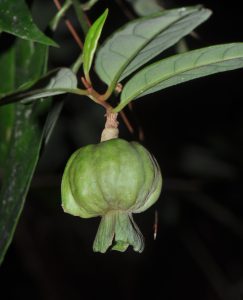
Almost 10,000 Evolutionarily Distinct and Globally Endangered (EDGE) species were identified and many of them are trees. Examples include iconic species such as the maidenhair tree, Ginkgo biloba, and a Wollemi pine (Wollemia nobilis). However, the top-ranked EDGE angiosperm identified in the study, is the much lesser known Hondurodendron urceolatum, a dioecious tree with a few scattered populations found across a single mountain range in the Parque Nacional El Cusuco, Honduras.
These results give us a new angle on how to prioritise the world’s plant species for conservation, ensuring that some of the most irreplaceable species are not lost.
Conservation Action Tracker
BGCI’s Conservation Action Tracker provides information on conservation actions for tree species.
BGCI Databases
Explore BGCI's suites of databases to help plant conservation worldwide. Upload your data!