It Might Not Be Plain Sailing for London Planes for Much Longer…
-
Country
United Kingdom -
Region
Europe -
Programme
International Plant Sentinel Network -
Workstream
Addressing Global Challenges -
Topic
Plant Conservation -
Type
Blog -
Source
BGCI Partner
News Published: 18 December 2025
Guest blog contribution from Dr Caroline Gorton from Forest Research, UK.
Plane trees (Platanus x hispanica) are a familiar and much-loved feature of towns and cities across Europe. Valued for their tolerance of pollution, compacted soils and heavy pruning, they have been widely planted in urban areas for more than two centuries.
For much of that time, they were considered relatively trouble-free, affected mainly by well-known issues such as powdery mildew and plane anthracnose. However that picture began to change during the Second World War, with the introduction of an aggressive fungal disease called Canker Stain of Plane (CSP).

How Did Canker Stain of Plane Reach Europe?
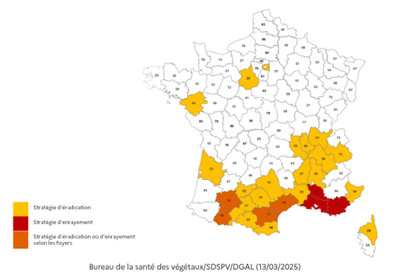
Canker stain of Plane (CSP) originated in North America and is thought to have entered Europe via ports in Marseille and Italy during the 1940s. From these initial entry points, it spread and is now established in several European countries, including France, Switzerland, Greece, Albania and Turkey.
CSP is caused by the fungus Ceratocystis platani, which affects species of Platanus. It is a wound pathogen, infecting plane trees through damaged areas. Activities such as pruning, construction damage, storm breakage or vehicle impacts can therefore provide opportunities for infection. The disease can also be spread through contact with infected wood, or via contaminated tools if hygiene measures are not followed carefully.
In France, Canker Stain of Plane is now widespread in the south of the country, with further outbreaks recorded in Nantes, Paris and the Nouvelle-Aquitaine region.
Why Is This a Concern for the UK?
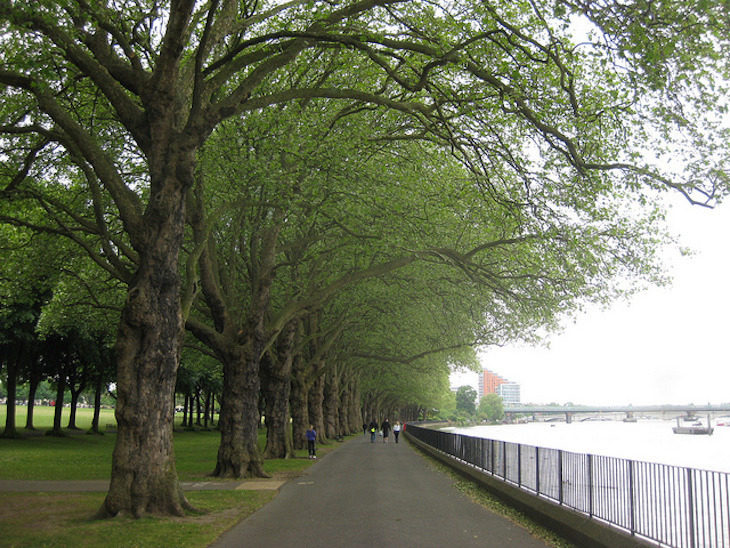
Given the importance of plane trees in British towns and cities, there is significant concern about the impact CSP could have if it were introduced into the UK. London plane trees are a defining feature of many streets and parks in British towns and cities, providing shade, cooling, air-quality benefits and long-term landscape value.
To reduce the risk of introduction, preventative measures are already in place. These include restrictions on the import of plane trees from regions where the disease is present, as well as annual health surveys of plane trees across the UK to monitor their condition and detect declining trees. These surveys are coordinated by Forestry Commission plant health colleagues and often carried out with support from members of the London Tree Officers’ Association.
Passive Surveillance: Detecting Problems Early
To complement the annual survey work, a system of passive surveillance has been developed through Forest Research’s Defra-funded Future Proofing Plant Health project.
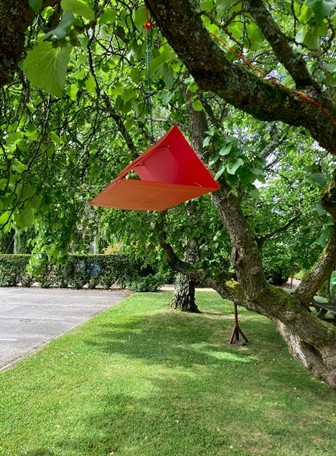
The approach is based on a technique used in Europe where CSP is present which has used bird cages suspended in trees to house the filter papers that capture airborne spores. For practicality, we decided to adapt this method by using the plastic prism traps, that gardeners are familiar with, for pheromone trapping insect pests like plum moth.
In this system though, instead of a pheromone lure, the prism trap contains a petri dish which is glued to the base and provides a suitable way of retaining the filter paper on which spores will settle. The trap is hung outside (although it does not need to be in a plane tree) and the filter paper is in place for one week every month.
Lightly wetting the paper with buffer helps to capture airborne particles, including fungal spores, passing through the trap.
After one week the filter papers are removed and sent to Forest Research’s laboratory at Alice Holt in Hampshire. On arrival, Caroline cuts up the filter papers before Megan extracts DNA from them using real-time PCR (qPCR), a molecular technique that provides fast and highly accurate detection of Ceratocystis platani DNA.
The Role of Botanic Gardens and Parks
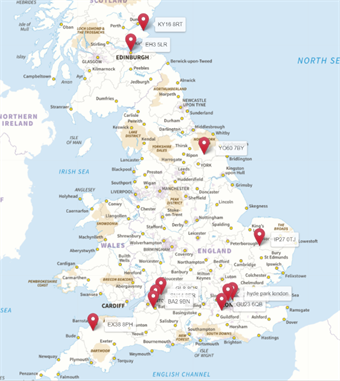
The spore traps are distributed in Botanic Gardens in England and Scotland as shown in the map below. This work is being carried out in collaboration with the International Plant Sentinel Network (IPSN). Through IPSN, botanic gardens across England and Scotland volunteered to host the traps and support the monitoring work.
Botanic gardens are ideally placed to contribute to this kind of surveillance. Their horticultural expertise, diverse living collections and long-term stewardship make them valuable early-warning sites for emerging pests and diseases. Garden staff install and maintain the traps and return filter papers to the laboratory each month.
This project provides a strong example of how botanic gardens can play a key role in sentinel monitoring for important plant health threats. We are extremely grateful to all participating gardens for their time, care and commitment and enabling this monitoring to take place!
Inside the Lab: How the Fungus Is Detected
For those interested in what happens once samples reach the laboratory, Forest Research also uses traditional techniques to isolate and study Canker Stain of Plane under quarantine conditions.
One such method is known as baiting. Baiting is a technique that is used by plant pathologists to tempt microorganisms out of sample material and get them to grow into pure culture so they can be isolated.
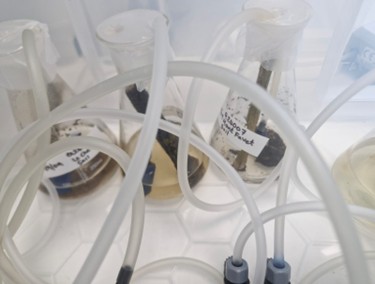
In the case of CSP, the recognised technique involves a conical flask, an aquarium airstone, water and a 12cm length of debarked plane stick (as well as your sample material!). The water is placed in the flask with the sample, along with the stick and airstone. Air is bubbled through the water for 3 weeks.
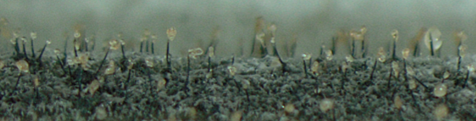
If the Ceratocystis is present, it will attack the plane stick and colonise the wood. It produces abundant perithecia (microscopic fruiting bodies shaped like flasks) which exude sticky droplets of spores. These spores can infect planes readily through any wounds. Spores are examined under the microscope to check their size and shape and can be picked off and grown on Petri dishes to get a pure culture. Their morphology helps with CSP diagnosis.
Strengthening Preparedness for the Future
These laboratory techniques are also used when samples are received from plane trees surveyed through other monitoring efforts and that might be affected by CSP.
In the event of a suspicious plane tree being spotted, the first step is to report it via TreeAlert. which requires three good photographs of the symptoms and location information. This enables the Tree Health Diagnostic and Advisory Service (THDAS) team to triage the information swiftly and escalate suspicious cases for a visit by a Plant Health Officer.
Samples can then be collected and returned to the quarantine laboratory for diagnostic testing.
This work on improving diagnostic preparedness forms part of a wider programme to raise awareness of CSP and to learn from the experience of European neighbours who have been managing this disease for many years.
Through vigilance, collaboration and early detection, we can strengthen our ability to protect plane trees in the UK for the future.
About the author
Caroline has been part of the Tree Health Diagnostic and Advisory Service at Forest Research for eleven years, responding to tree disease enquiries. Predominantly laboratory based, Caroline also delivers training and carries out site visits to diagnose the cause of ill health in trees. She has expertise in chestnut blight and ash dieback in particular and is currently involved in a DEFRA funded project to improve the UK’s preparedness for the introduction of Canker Stain of Plane. Prior to joining FR, Caroline worked at the Royal Horticultural Society for six years and has a PhD in Forest Pathology..


Conservation Action Tracker
BGCI’s Conservation Action Tracker provides information on conservation actions for tree species.
BGCI Databases
Explore BGCI's suites of databases to help plant conservation worldwide. Upload your data!