Heading To The Beech
-
Country
United Kingdom -
Region
Europe -
Programme
International Plant Sentinel Network -
Workstream
Addressing Global Challenges Through Public Engagement -
Topic
Plant Conservation -
Type
Blog -
Source
BGCI Partner
News published: 29 July 2026
Guest blog contribution from Chris Malumphy from Fera Science Ltd.
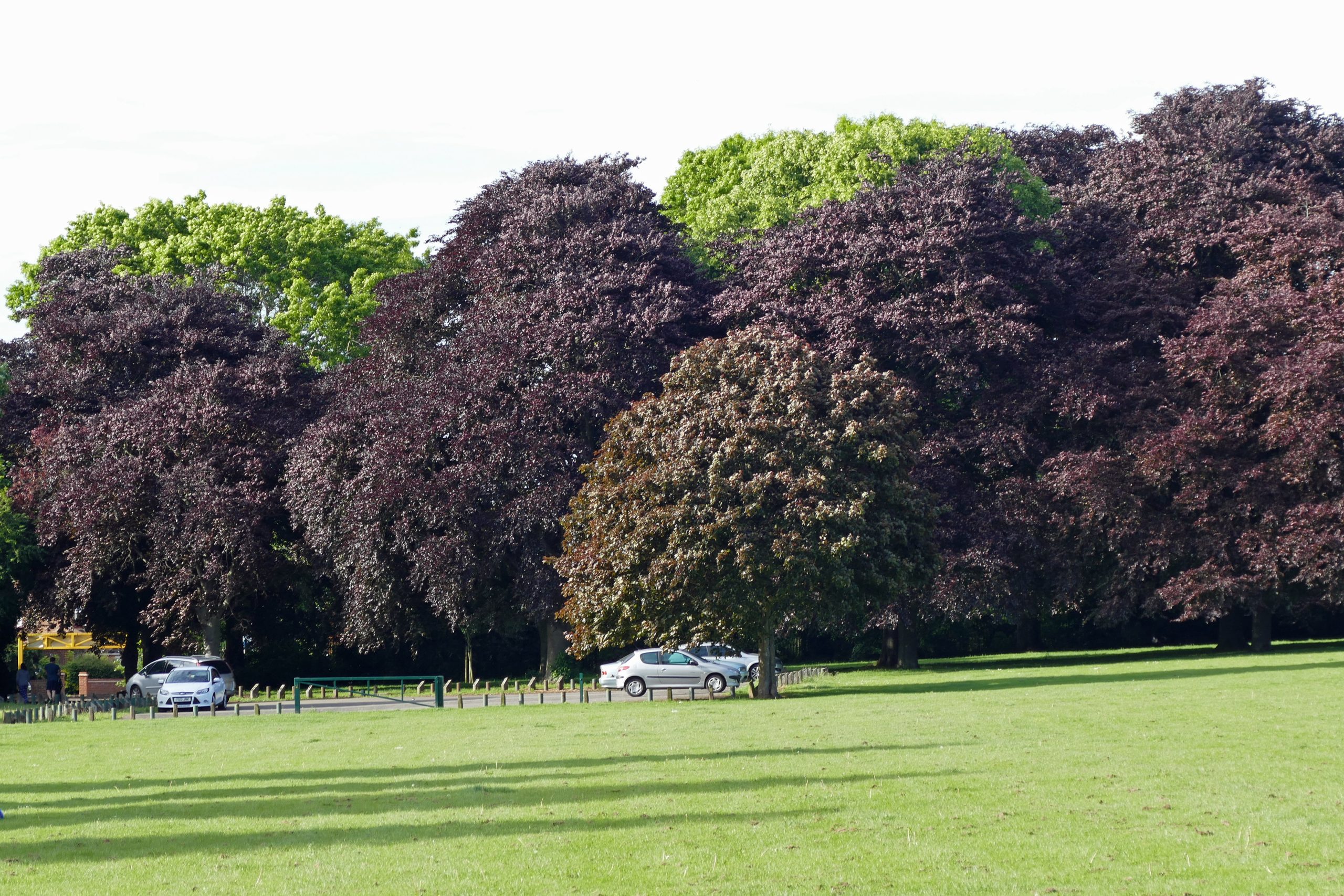
I am sure that many people have been dreaming about heading to the beach during our recent heatwaves. However, you may find heading to your local beech is more interesting. And you won’t have to go far; beech trees and hedges are common in urban areas and parks.
Beech is often known as the Queen of British Trees (oak being the King), as mature trees are monumental and majestic, and help form iconic landscapes in Britain. The dramatic shift in foliage colour in the autumn, turning from verdant green to bursts of gold, copper, and bronze, is one of the highlights of the season. Beech trees can live for 350 years, and if coppiced, for more than 1,000 years. They can grow to 49 m tall with a diameter of 3 m, and the tallest native tree in Britain is a 45 m tall beech growing in Derbyshire. Did you know that the tallest hedge in the world, located at Meikleour in Scotland, is composed of beech and is currently 30 m tall?
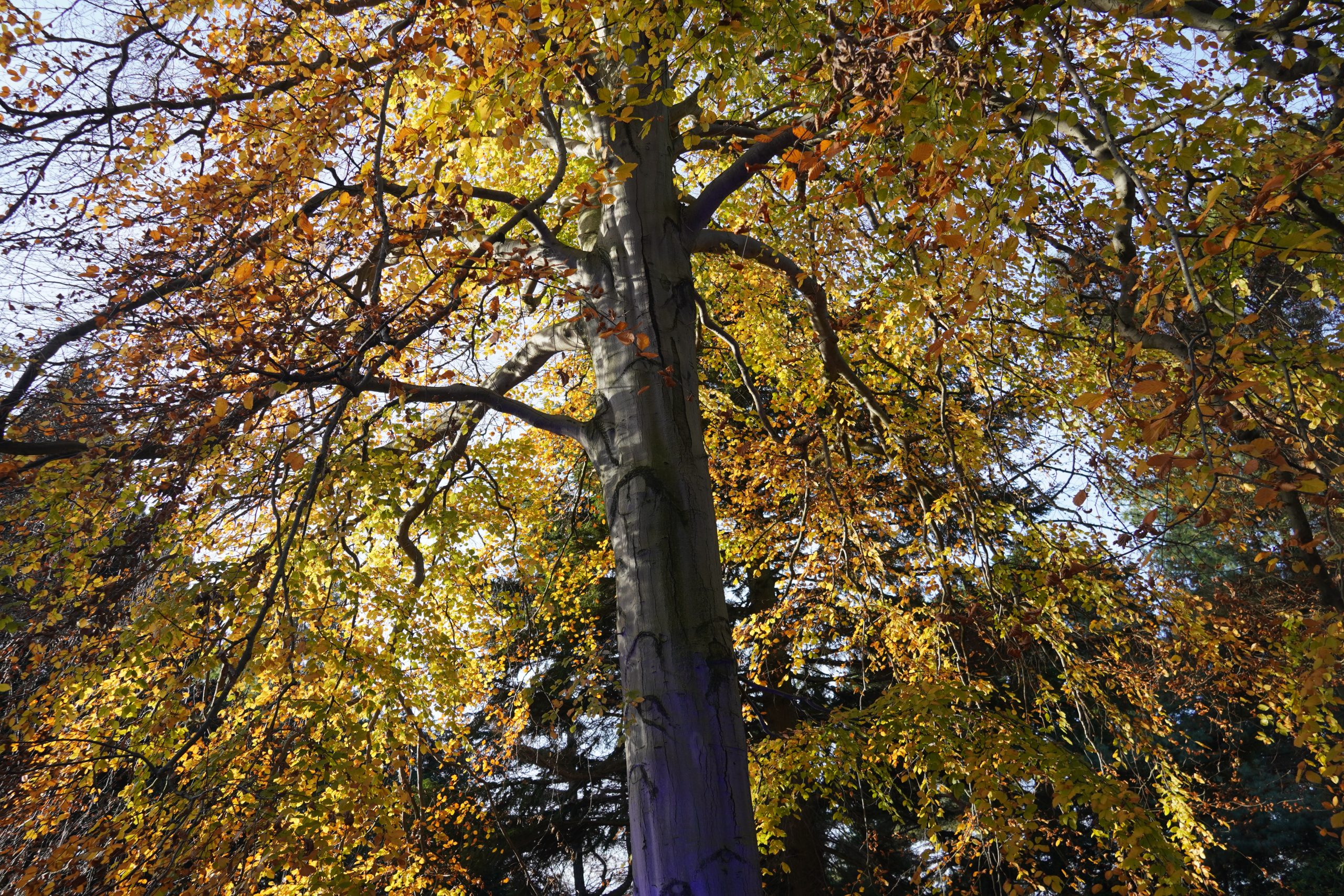
However, beech trees in Britain are threatened by climate change, pests, and diseases. Shallow-rooted, they can suffer stress, dieback, or death during droughts and windthrow during storms. These risks will increase with climate change. The impact of pests and diseases is also likely to increase as the trees become stressed.
The International Plant Sentinel Network (IPSN) and Fera Science have recently launched a survey for priority pests and diseases of beech in Britain, and, in the last month or so, I have monitored some beech trees close to where I live in the North of England.
Step into the beech
The first thing I noticed was the lack of insects, at least compared with oak and some other woody plants. However, a closer look, and turning over the leaves, revealed a bustling metropolis of tiny arthropods.
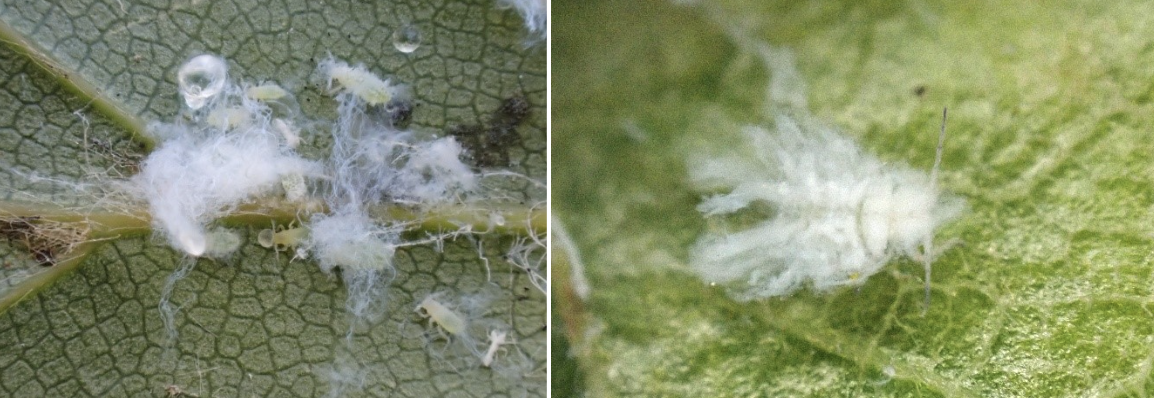
The most conspicuous insects are woolly beech aphids (Phyllaphis fagi). These little sap-suckers cover themselves in a fluffy, white waxy “wool” to hide from hungry predators. The foliage can become covered in honeydew, the sugary waste egested by the aphids that serves as a medium for sooty moulds to grow. They are occasionally attended by ants that feed on the honeydew.
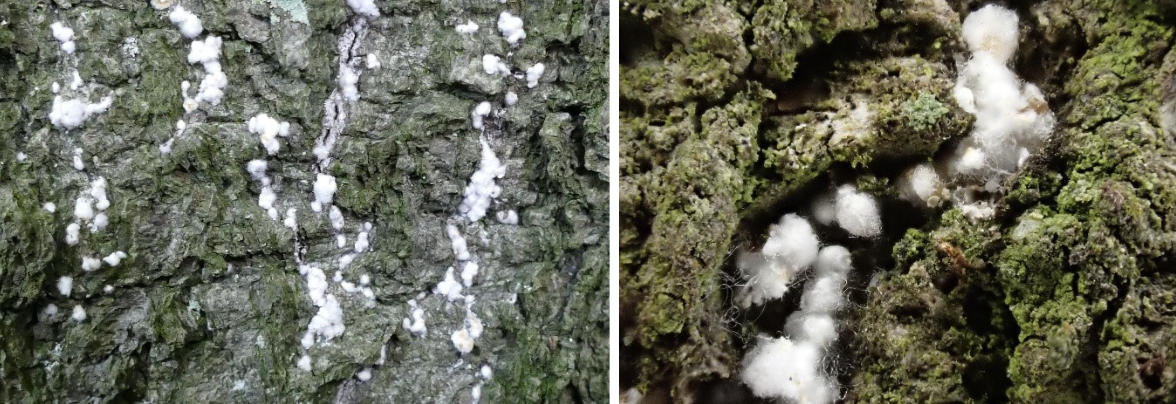
Another conspicuous pest, at least when it is abundant, is beech scale (Cryptococcus fagisuga), although it could easily be mistaken for a white mould. These are also tiny sap-sucking insects that occur on the bark and cover themselves with a white waxy coat. While not usually significant on their own, they can leave small wounds in the bark that allow fungi (Neonectria) to enter, leading to what is known as Beech Bark Disease, which over time can result in decline, dieback, and even death of mature trees.
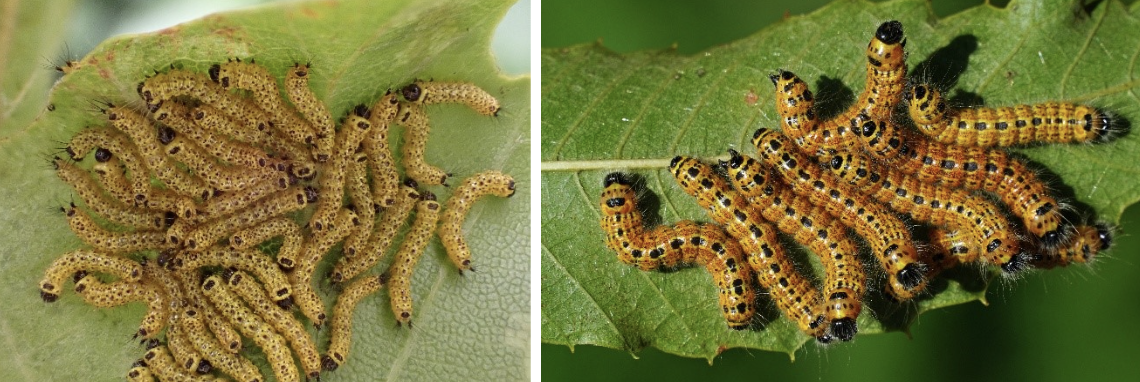
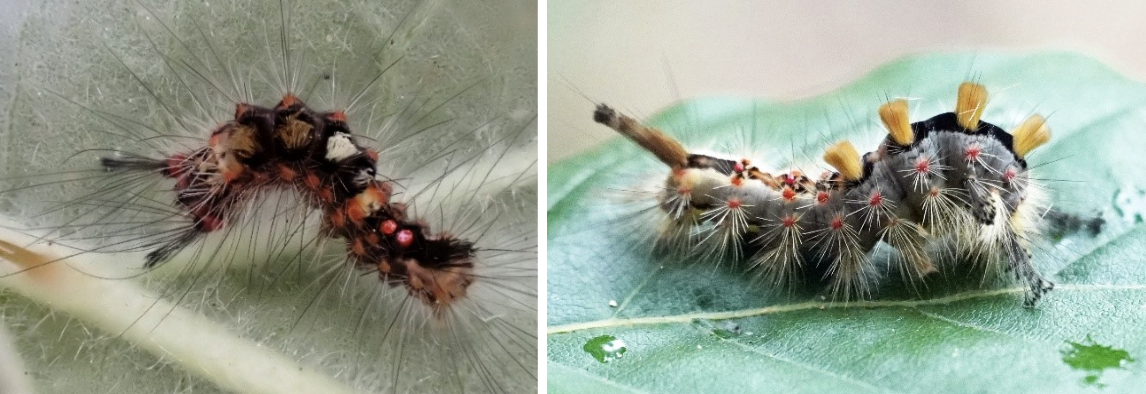
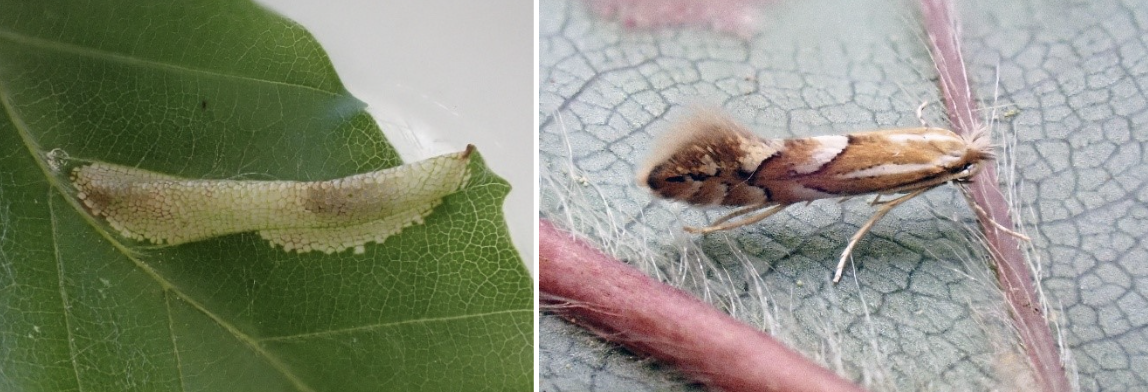
The caterpillars of several moth species feed on beech. One of the most striking is the vapourer moth caterpillar (Orgyia antiqua), with a red and grey body and several large flamboyant hair tufts. Later in the year, you may find highly distinctive buff tip (Phalera bucephala) caterpillars, with bright yellow-and-black checkered bodies and glossy black heads. However, by far the most common caterpillars on beech are hidden from view, feeding between the epidermal layers inside a leaf mine. Several species of leaf miner occur on beech, the most common being the beech leaf miner (Phyllonorycter maestingella).
Beech huts
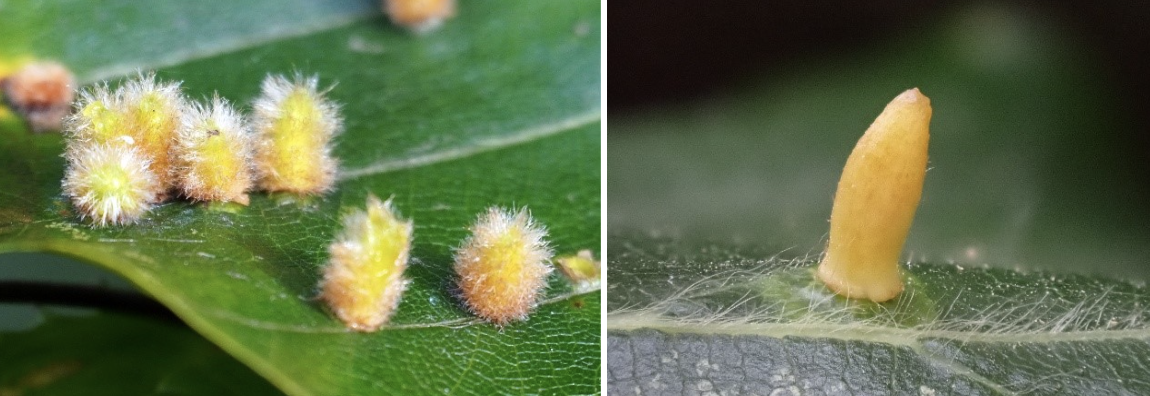
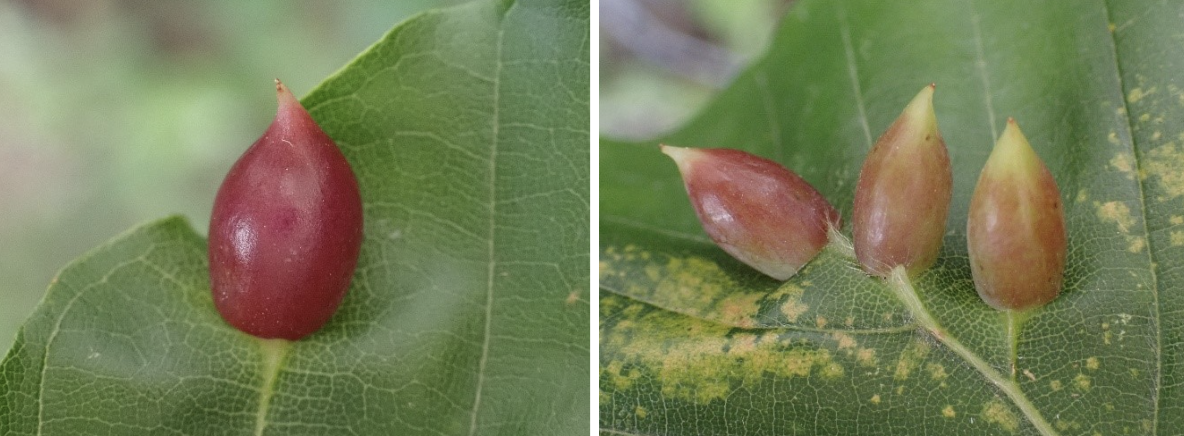
Two species of midge fly and two species of eriophyid mite induce the plant to create abnormal growths, known as galls, which provide a custom-built shelter and food source for the arthropods. One midge fly (Hartigiola annulipes) develops in a hairy beech gall, which in the spring and early summer consists of a flattened dome. By late summer, the gall looks like a fuzzy, pale green to reddish-brown cylinder (up to 6 mm). The other midge fly (Mikiola fagi) develops in a distinct, green, yellow, or red barrel-like gall, with a pointed top (up to 10 mm).
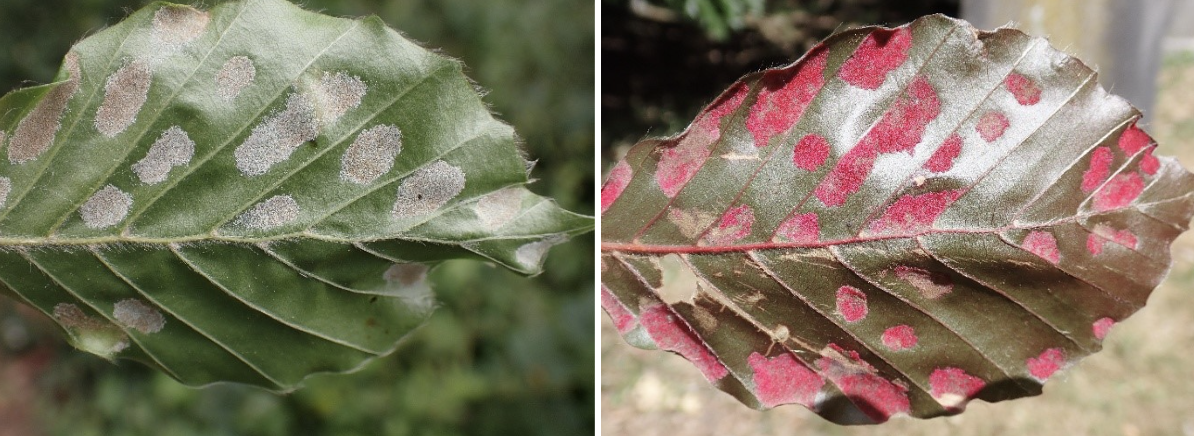
The gall mites are microscopic and live in fuzzy growths called erineum patches on the leaves (Aceria nervisequa) or live in the rolled leaf margin (Acalitus stenaspis). The erineum patches are often bright red on copper beech.
Beech bums
Many species of insect hang around beech trees, apparently doing very little. They simply use the tree or hedge as a place to rest, shelter, sunbathe, mate, overwinter, or are attracted to feed on honeydew egested by the aphids. The incidental arthropods found will depend on the location of the beech, adjacent vegetation, and weather conditions. Beech hedges provide good shelter for many flying insects.
Defending the beech
Summer is an ideal time to look at beech for pests and diseases. All the information you need, including protocols, posters, factsheets, and guides, is available on the IPSN website. The purpose of the survey is to detect new pests and diseases and gather data to help fill evidence gaps for the Department for Environment, Food and Rural Affairs (Defra); for example, on the distribution and impact of specific plant pests.
Helping to safeguard beech trees in Britain will ensure that ‘Life’s a beech’.
All the photos in this piece belong to Chris Malumphy.
About the author
Dr Chris Malumphy has worked in plant health for more than 35 years and is currently employed as a plant health consultant in entomology at Fera Science Ltd. His role includes developing Fera’s scientific capabilities, managing research projects, providing an identification service, training, consultancy, biosecurity enhancement, surveys, and conducting risk assessments on non-native invertebrate plant pests for the UK and overseas governments and commercial clients.

BGCI Databases
Explore BGCI's suites of databases to help plant conservation worldwide. Upload your data!
Become a Member
Be part of the largest network of botanic gardens and plant conservation experts in the world by joining BGCI today!