Cross-Institutional Collaboration on Wild Grapevines (Vitis L.) of the Americas
-
Region
The Americas -
Programme
Global Conservation Consortia -
Workstream
Saving Plants -
Topic
Plant Conservation -
Type
News -
Source
BGCI Member
News published 18 August 2026
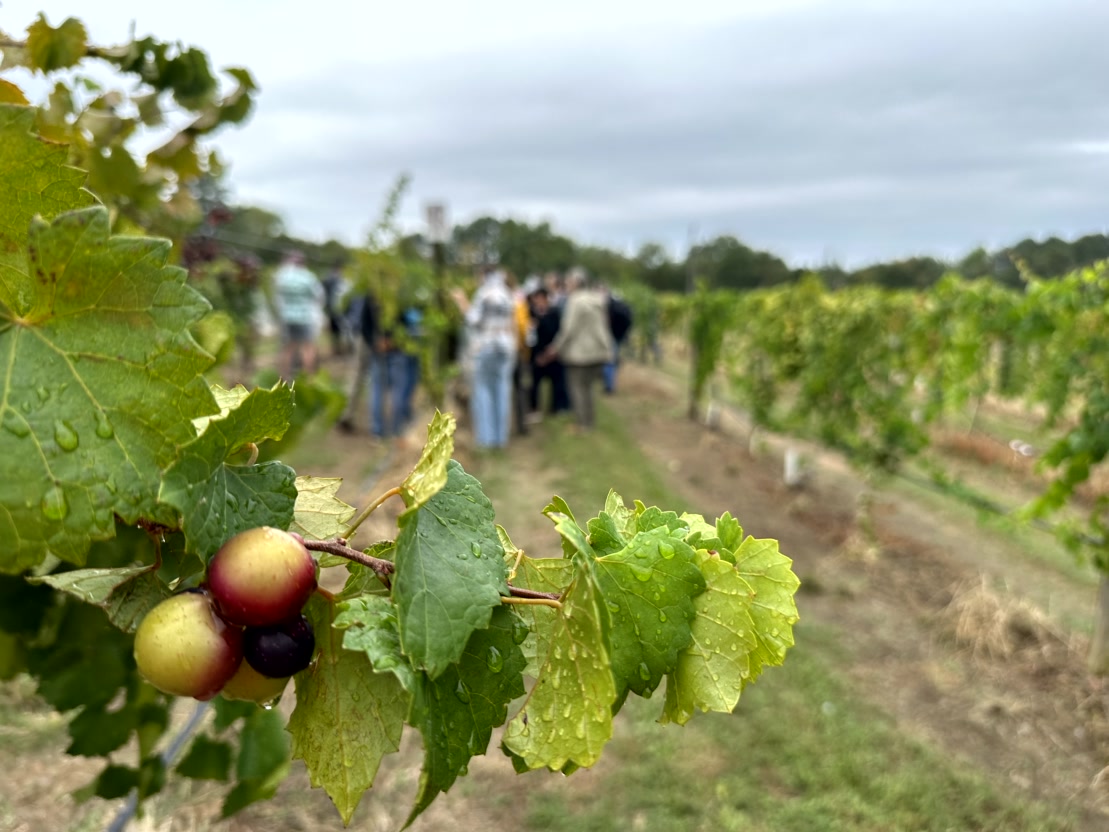
A new special collection on grapevines (Vitis L.) in Plants, People, Planet offers access to exciting new science about the diversity in one of the most widely consumed fruits in the world, including assessing the distribution and conservation status of wild Vitis in the Americas.
This research is part of the activities of the Global Conservation Consortium for Food Plants (GCCFP), which is hosted by the New York Botanical Garden. The GCCFP works to coordinate conservation, research and awareness-raising across botanic gardens, genebanks, and agricultural, culinary and educational sectors for food plant diversity, including crop wild relatives. Grapevines represent one taxonomic group within this broader, cross-institutional conservation initiative for food plants. These new Vitis resources, involving dozens of authors from different disciplines, indicate the value of multi-institutional, multi-year efforts to support integrated plant conservation at scale.
Conservation Gap Analysis
In a major conservation assessment paper, Carver, Khoury et al. (2026), apply an integrated ex situ/in situ gap analysis methodology, building on approaches previously used for other crop wild relative groups, to 38 wild grapevine taxa native to the Americas. These species range from southern Canada to northern South America, with concentrations in the southern and central-eastern United States and central-southern Mexico.
The analysis covers taxon distributions, environmental adaptations, and current ex situ and in situ conservation status, generating a Final Conservation Score for each taxon. The paper identifies priority taxa and geographic areas for targeted collecting and in situ protection, information directly usable by institutions holding or building Vitis germplasm collections.
The Broader Synthesis on Grape (Vitis L.) Biodiversity
The conservation gap analysis is one of 18 new research, review, opinion, and methods & techniques papers published in the special collection. In the editorial accompanying the collection, Khoury, Fennell, Migicovsky, Miller and Wen (2026), frame this conservation work within a wider synthesis of Vitis biology: taxonomy and evolutionary history, domestication and historical use, current genomic and physiological research, and viticultural applications, including the continued reliance on North American species for phylloxera-resistant rootstocks and for breeding disease- and climate-resilient hybrids. Together, the Vitis resources provide valuable assessments and information to guide agenda-setting for enhanced conservation and use of grapevine biodiversity.
Read the original research directly:
- Colin Khoury’s blog post about the work: The Grapevines All Around us (NYBG website)
- Carver, D., Khoury, C.K., et al. (2026). Conservation gap analysis for wild grapevines (Vitis L.) of the Americas. Plants, People, Planet. doi: 10.1002/ppp3.70246
- Khoury, C.K., Fennell, A., Migicovsky, Z., Miller, A.M., & Wen, J. (2026). Grape (Vitis L.) biodiversity – historical uses, current status, and future potential. Plants, People, Planet. doi: 10.1002/ppp3.70244
- Full special issue of PPP: Grape (Vitis) Biodiversity, Plants, People, Planet
Acknowledgements: The United States Botanic Garden provided support for the conservation gap analysis.