BGCI's 2026 Technical Review Published
-
Region
Global -
Topic
Policy and Advocacy -
Type
News -
Source
BGCI
News Published: 13 October 2026
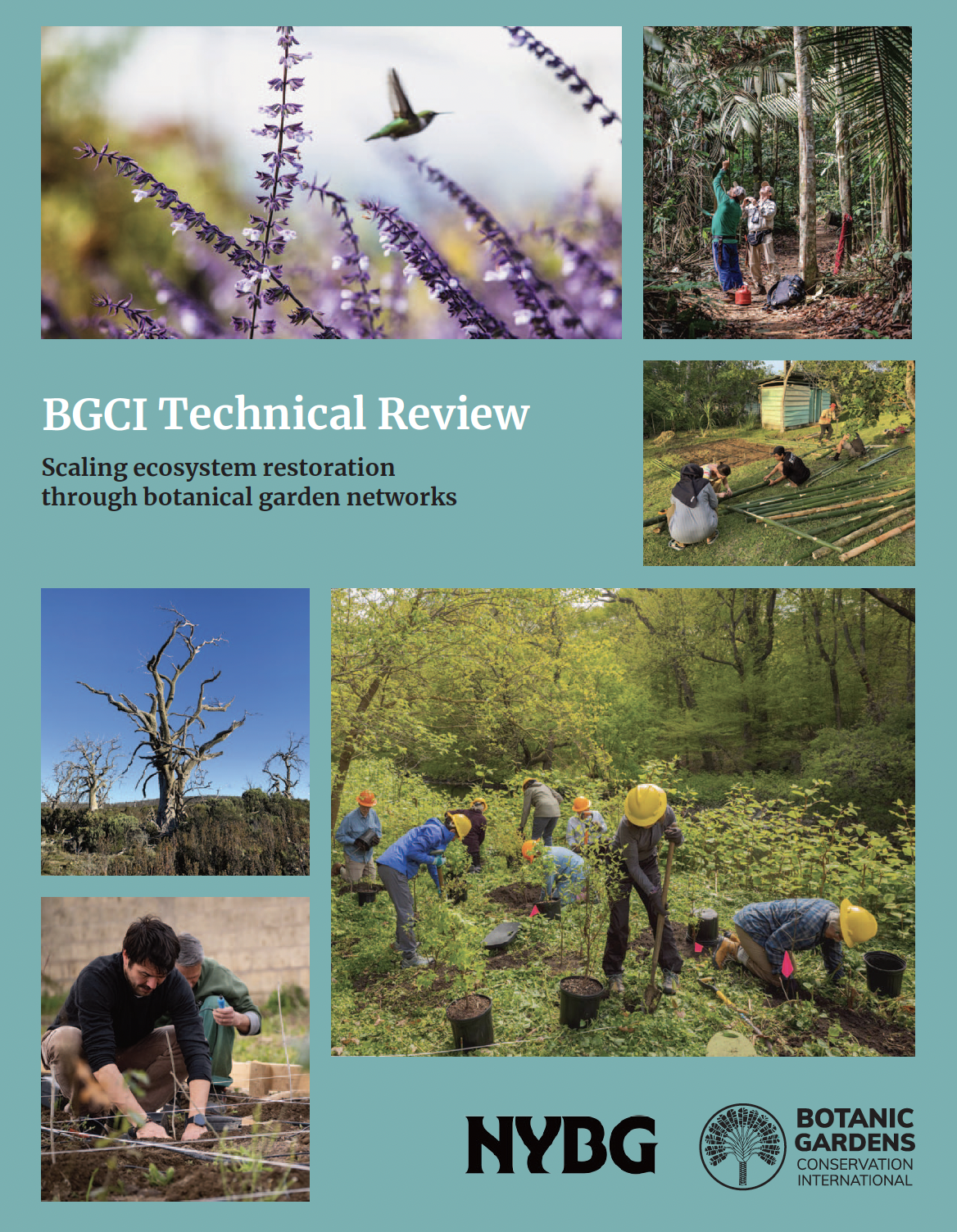
In partnership with New York Botanical Garden, BGCI are delighted to publish our 2026 Technical Review – Scaling Ecosystem Restoration Through Botanical Garden Networks.
Scaling Ecosystem Restoration Through Botanical Garden Networks explores how botanical gardens can help address some of the world’s most urgent environmental challenges. Drawing on contributions from global experts and practitioners, the review highlights the distinctive roles botanical gardens play in restoration through botanical science, ex-situ conservation, plant propagation, environmental education, community engagement, policy support, and long-term stewardship.
Combining thematic analyses with case studies from around the world, the publication demonstrates how botanical gardens can strengthen restoration quality, biodiversity outcomes, and climate resilience while helping scale restoration efforts through collaboration, knowledge exchange, and networked action.
Key Messages
- Botanical gardens are important partners in ecosystem restoration, contributing distinctive expertise in plant science, conservation, horticulture, education, and community engagement that can help strengthen restoration efforts alongside many other actors.
- Effective restoration is not only about scale. It is also about restoring biodiversity, ecological integrity, and long-term resilience so that ecosystems and communities can thrive over time.
- Botanical gardens can help connect plant science, restoration practice, local knowledge, and community stewardship, supporting more informed and locally relevant restoration approaches.
- Restoration is most effective when it is informed by local knowledge and shaped by the needs, priorities, and stewardship of the communities most closely connected to the landscape.
- Long-term restoration success depends on sustained investment, capacity building, monitoring, and learning, not simply short-term project implementation.
- Collaboration across institutions, sectors, and regions is essential for translating restoration commitments into meaningful and lasting outcomes on the ground.
- Botanical gardens can serve as trusted conveners and knowledge-sharing hubs, helping connect researchers, practitioners, policymakers, funders, and communities working toward shared restoration goals.
- Plant diversity is fundamental to healthy and resilient ecosystems, and botanical gardens can play an important role in ensuring restoration efforts incorporate diverse, appropriate, and well-documented plant material.
- Strengthening coordination among botanical gardens and restoration partners can help expand access to knowledge, resources, and practical tools that support higher-quality restoration outcomes.
NYBG have written a blog to accompany to launch of the publication, read it here.