Nature's Neighbours
-
Status of project
Ongoing -
Region
Southeast Asia -
Country
Philippines -
Topic
Public Engagement
Nature’s Neighbours: Sustainable Coexistence between Indigenous People and Philippine Eagles
Overview
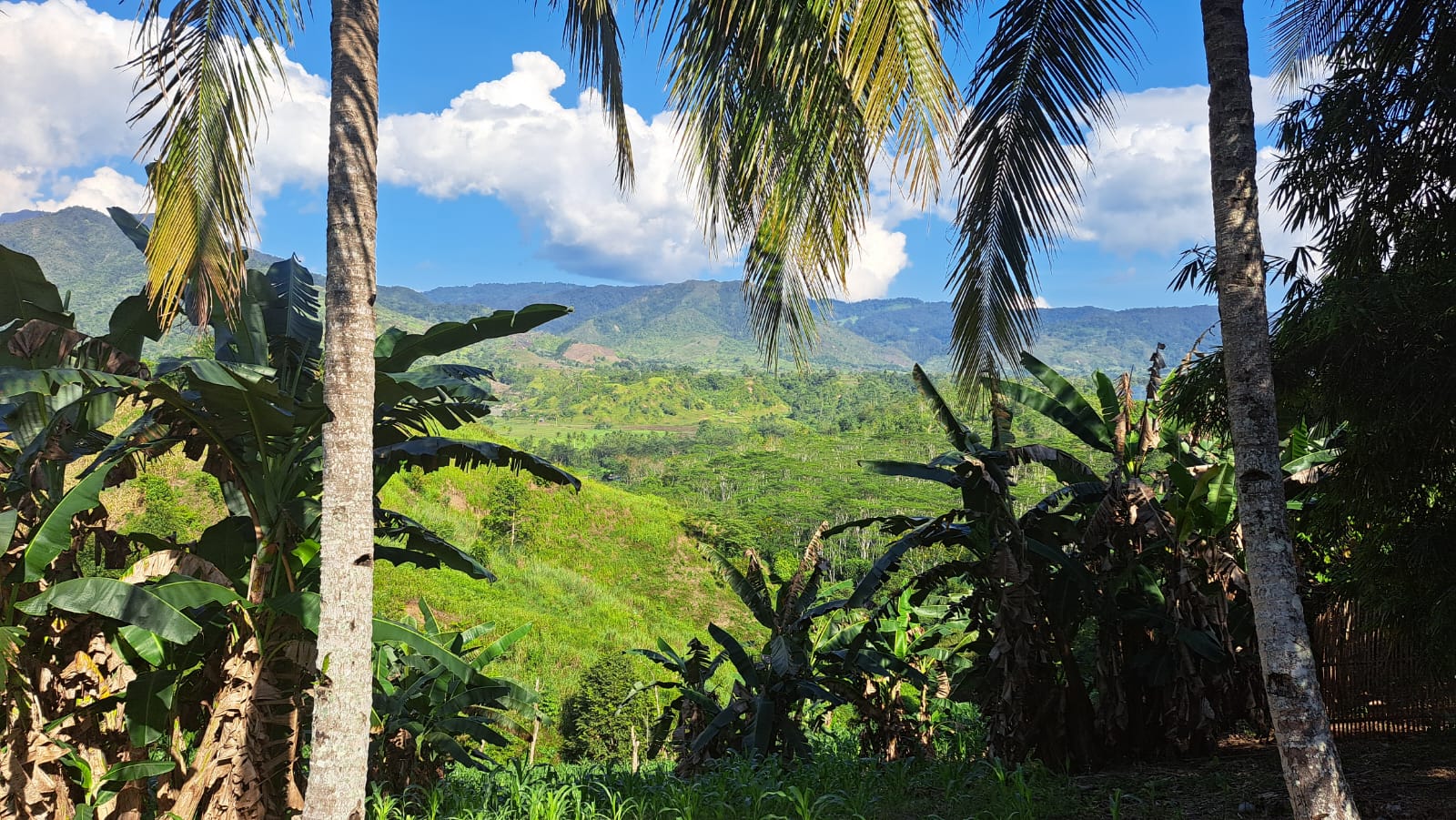
Much of the Philippines’s biodiversity thrives in tropical rainforests, such as in the Pantaron Mountain Range (PMR) on Mindanao Island. The PMR is a treasure trove of rare and valuable flora. The rich natural resources of the Philippines are, however, threatened and poorly protected.
The security of the Philippines’ biodiversity is intertwined with the lives of its local communities, including Indigenous People and migrants, who value and benefit from their environment but are also in conflict with it. The indigenous Tigwahanon claim the remaining primary forests in San Fernando Municipality (SFM) of the PMR as ancestral domain; however, owing to growing populations and poverty rates, the local community is increasingly turning to illegal logging as well as unsustainable crop expansion and livestock grazing. As forest habitats shrink and splinter, these conflicts with nature have extended to the Philippine eagle, which the community perceives as a threat to their subsistence-supporting livestock and, occasionally, poach for profit.
To these ends, the Nature’s Neighbours project will realign the Tigwahanon of SFM as stewards and co-existing neighbours of the eagle through development of a Community Conservation and Development Plan (CCDP) that will incorporate forest restoration, livelihood diversification, and public awareness through behavioural change interventions. The CCDP will strengthen the Tigwahanon’s application for a Certificate of Ancestral Domain Title — an important step towards securing their ancestral domain rights — while also easing pressure on Philippine eagles and their habitats.
Role of Education Team
As part of the wider project BGCI’s education team are delivering the public engagement components using a behaviour change approach. The education activities for the project are:
Activity 2.4: Run the Behaviour Centred Design methodology training for behaviour change with project partners (Years 1-2)
Activity 2.5: Design public engagement interventions with project partners and community representatives (Years 1-2)
Activity 2.6: Deliver at least five public engagement interventions targeting communities, including training wildlife hunters as forest guards, promoting awareness and adoption of conservation-friendly behaviours (Years 2-4)
Activity 1.2: Capacity development needs assessment and knowledge and practice (KAP) survey (Year 1)
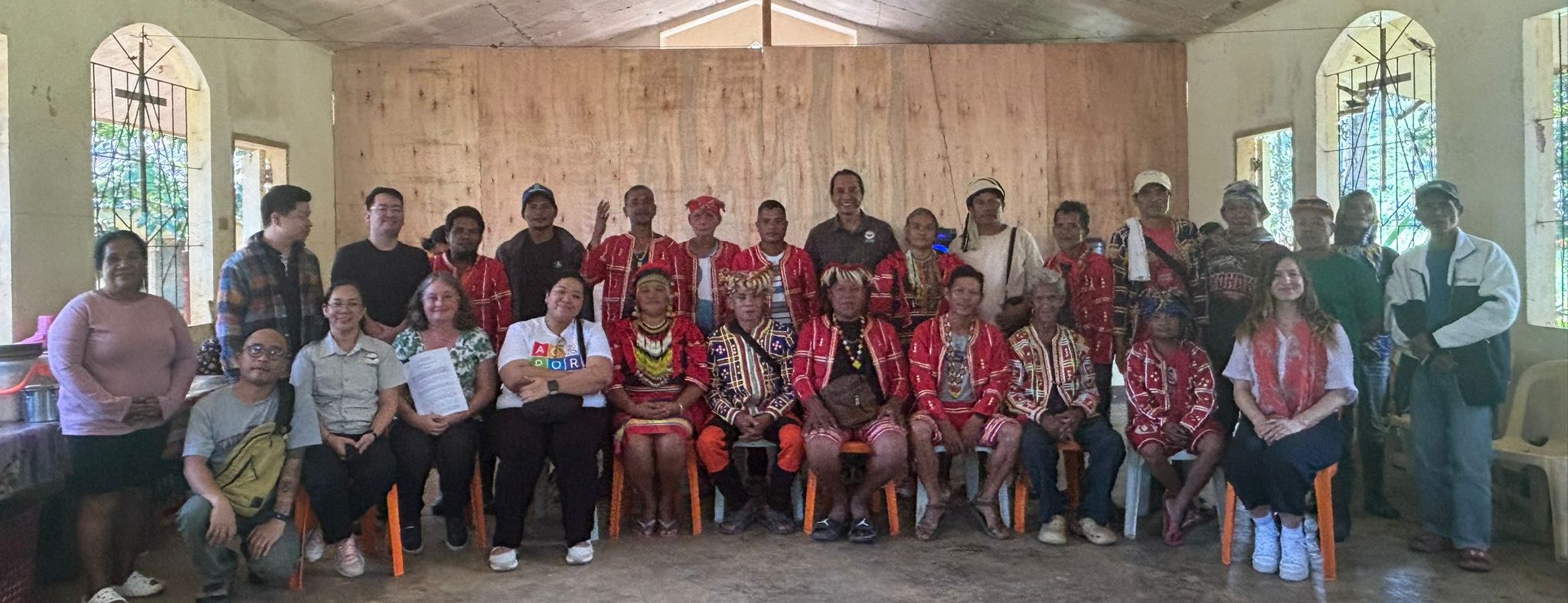
At the project start in October 2025, the BGCI education team began training project partners – ICRAF , PEF (Philippine Eagle Foundation) and BGCI colleagues – in Behaviour Centered Design (BCD). BCD is a framework which combines behavioural science and design thinking to create effective solutions for environmental challenges. It focuses on understanding the human, social, and contextual drivers behind environmental actions, utilising an eight-step process—from framing the problem to assessing the launch process—to encourage lasting behaviour change in communities.
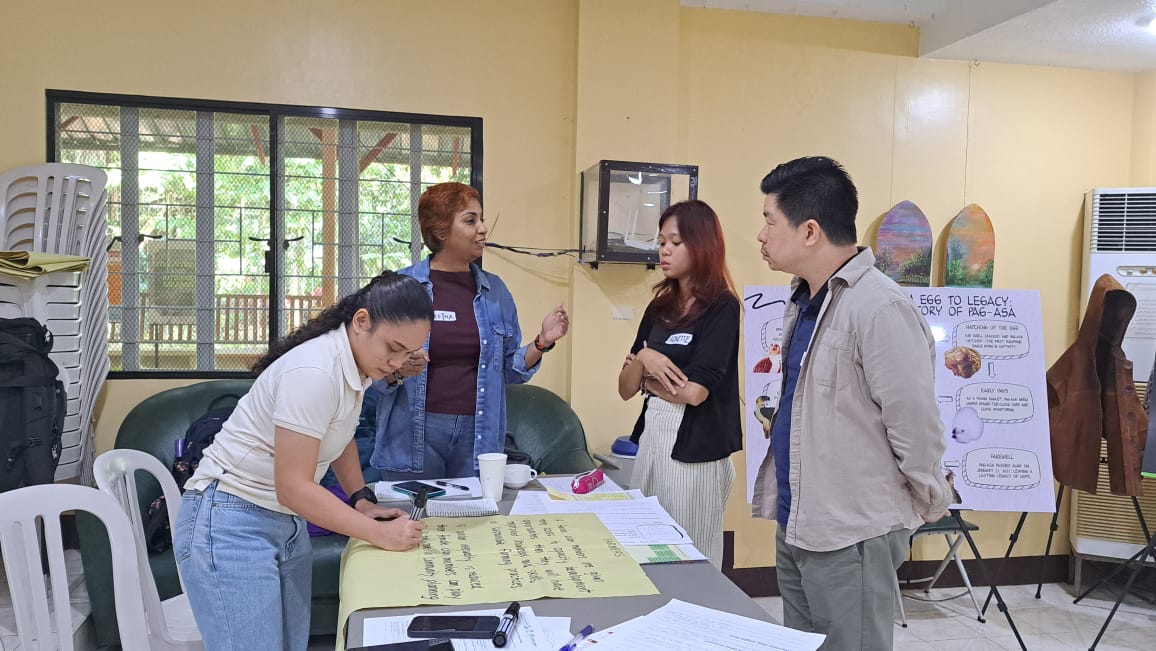
This eight-step process is delivered through a series of workshops during the first eight months of the project, resulting in the implementation of one or two public engagement activities. Next, the training will be adapted and translated to suit the local context. PEF will facilitate these workshops with local villagers, who will generate meaningful public engagement interventions tailored to their community. These activities will be implemented in the community over the final 2.5 years of the project.
The education team also created a Knowledge, Attitude and Practice (KAP) survey, which was part of the household survey and focus group discussions in which PEF and ICRAF interviewed 330 people in November 2025.
Partners
Supported by the UK governments’ Darwin Initiative Innovation Fund, this project is implemented in partnership with the International Centre for Research in Agroforestry (ICRAF) and the Philippine Eagle Foundation (PEF).
This 3.5-year project will run from October 2025 to March 2029.