Monitoring Holm Oaks in the UK
-
Status of project
Ongoing -
Region
Europe -
Country
United Kingdom -
Programme
International Plant Sentinel Network -
Workstream
Saving Plants -
Topic
Tree Conservation -
Type
Survey
Funded by DEFRA
Project: Ongoing
Project Partner: Fera Science Ltd.
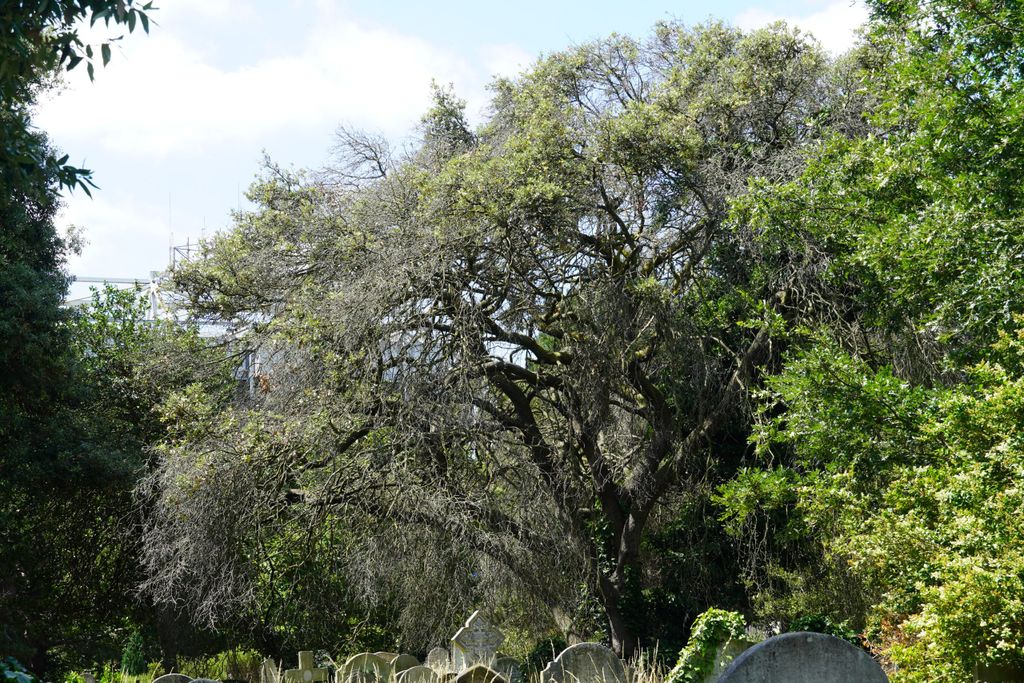
Holm Oaks (Quercus ilex) are becoming an increasingly important component of the UK’s urban and landscape plantings due to their resilience to climate change. However, the growing popularity of this non-native species brings new plant health risks, particularly from arthropod pests introduced through trade that may become problematic under changing environmental conditions. This project describes a coordinated UK-wide monitoring effort, using botanic garden and arboreta collections, to characterise the arthropod community associated with Holm Oak, establish essential baseline data, and strengthen early detection and response to emerging pest threats.
Holm Oak: A Climate-Resilient Tree Facing New Challenges
The Holm Oak (Quercus ilex), native to the Mediterranean region, was introduced to Britain in the late 1500s and has since become naturalised across southern England and Wales. Its tolerance to urban environments, resilience in coastal conditions and tolerance to air pollution make it an increasingly popular species for climate-change–resilient planting. As a result, the species has become increasingly important in the horticultural trade, particularly in the UK and across northern Europe. However, the growing volume of imports from continental Europe also creates pathways for non-native pests to enter the country.
Holm Oak is considered a keystone species due to its ecologically importance, supporting over 600 arthropod species. In its native range, these insects generally coexist harmlessly with the tree allowing them to go unnoticed for years. However, when introduced to new regions, they can potentially pose significant biosecurity and plant health risks due to the changes in their life cycle and behaviour due to the new environmental conditions in the introduction regions. Establishing a baseline understanding of the distribution of the organisms associated with Holm Oak in their non-native ranges is therefore essential for early detection of emerging threats, rapid response, and long-term tree health.
The Discovery of Holm Oak Bark Scale in London
Holm Oaks under stress from factors such as drought, poor soil, or pollution, can become more vulnerable to insect outbreaks. Healthy trees, on the contrary, are typically able to resist these organisms, preventing them from acting as pests and causing significant damage.
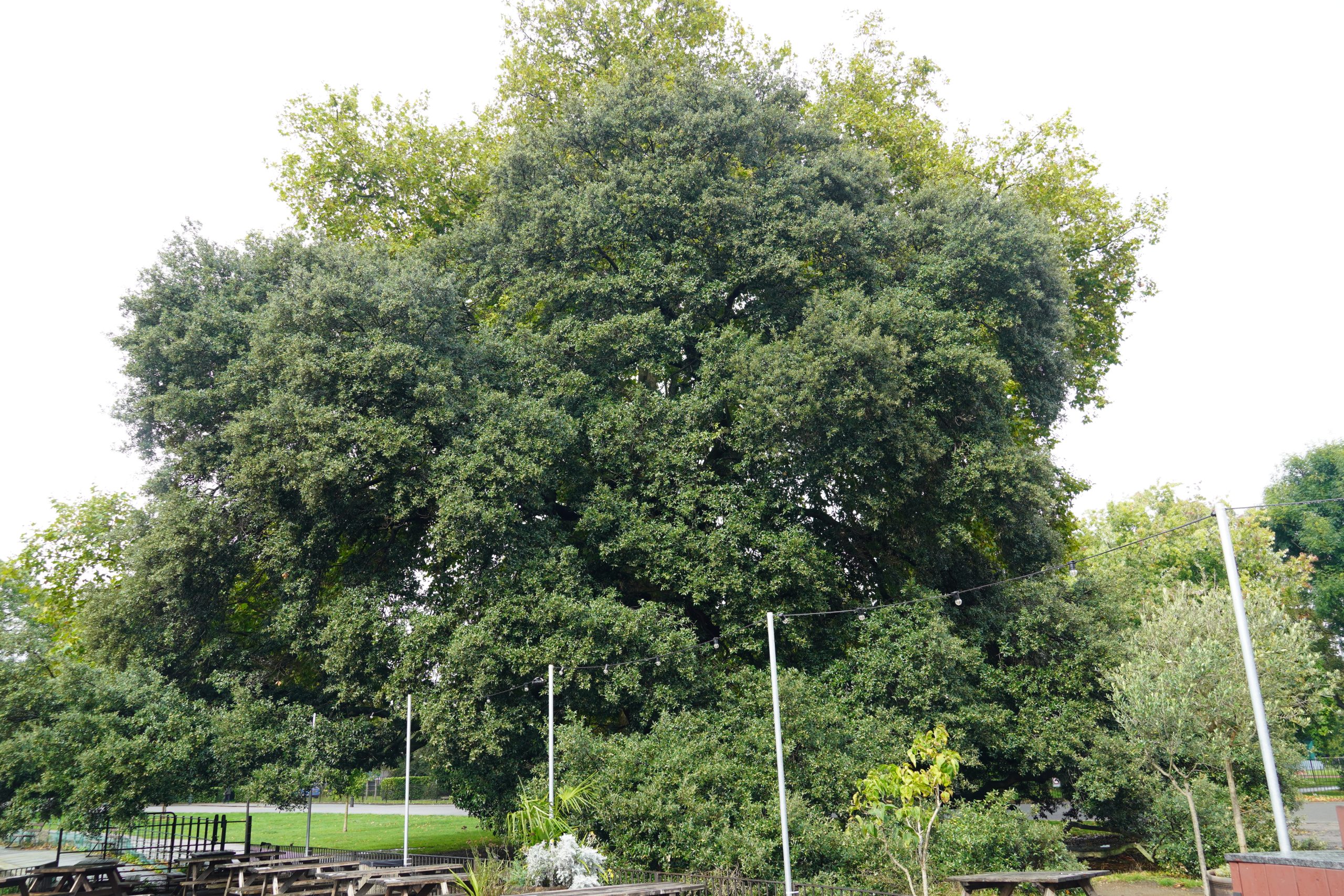
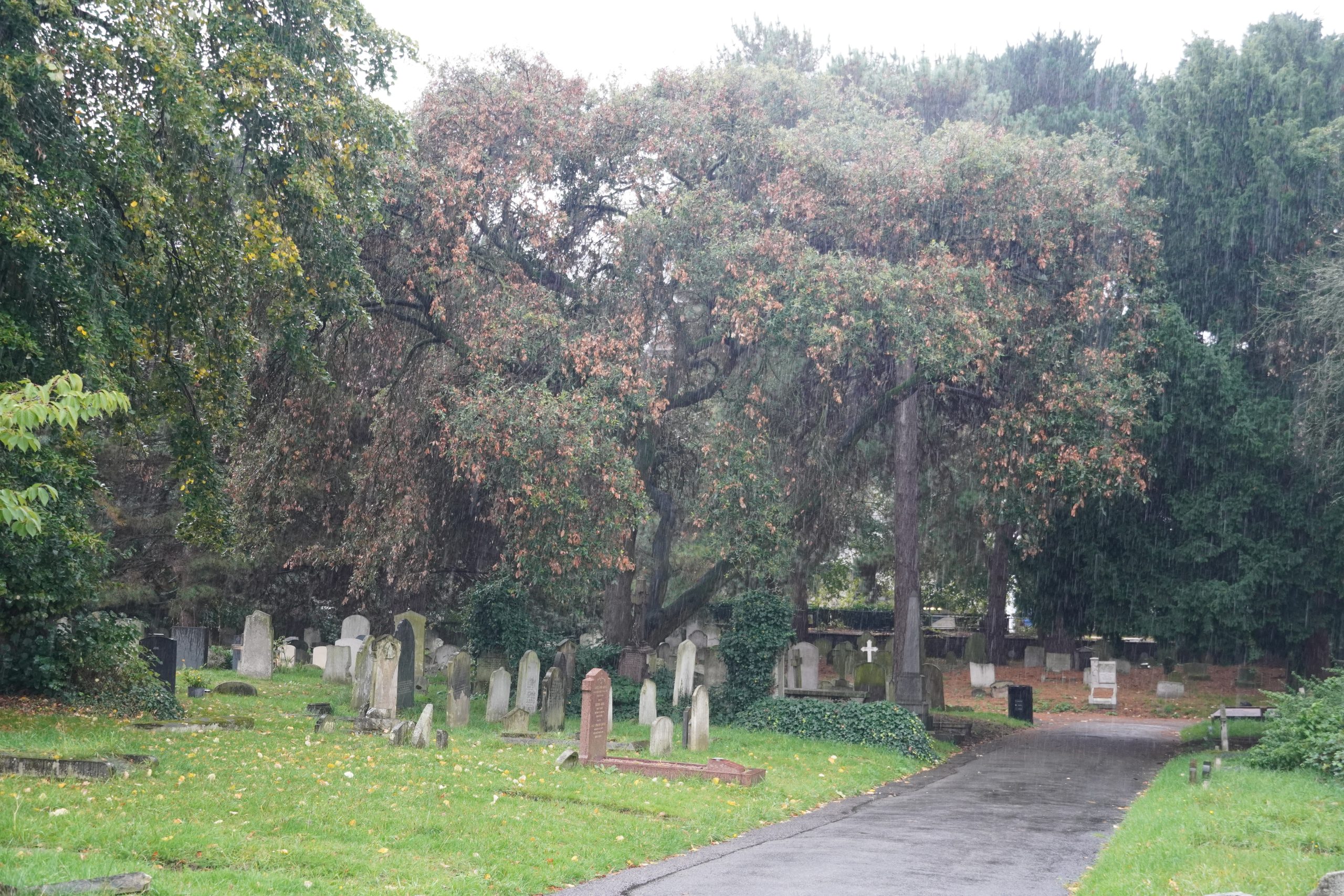
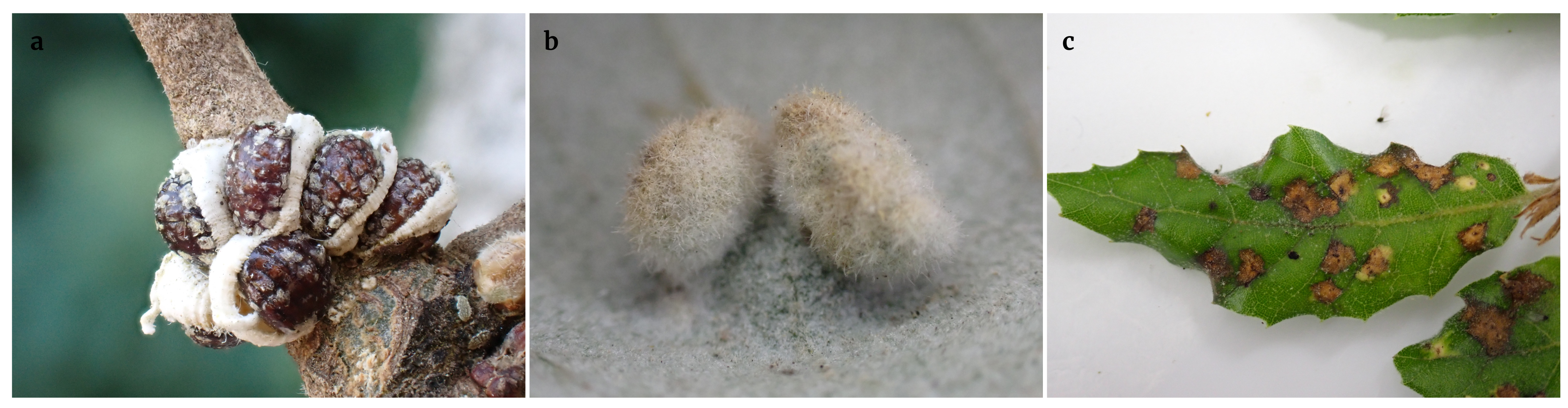
A perfect example of this situation was observed last year when the Holm Oak Bark Scale (Nidularia pulvinata) was detected in Brompton Cemetery, London, causing noticeable decline in the oak population onsite. This scale insect, typically found in Mediterranean regions, does not usually cause significant damage to the species in its native range. In London, however, it appears to have negatively impacted trees already stressed and growing in suboptimal conditions.
A recent study conducted in London revealed that not only is Holm oak more commonly planted across the city than expected but also that the Bark Scale infestation was more widespread than previously thought. This raises critical questions such as:
- Which other arthropods associated with Holm Oak are already present in the UK?
- Which of them have the potential to become pests?
- How are they distributed within the UK?
Since the 2000s, ten new arthropod species associated with Holm Oak have been in the UK. Considering the ever-incremental effect that climate change has on the distribution of insect species, and the combined impact on tree health, these findings highlight the need for a comprehensive baseline study to help identify potential threats early and prepare for future outbreaks.
Holm Oak Monitoring Initiative in the UK
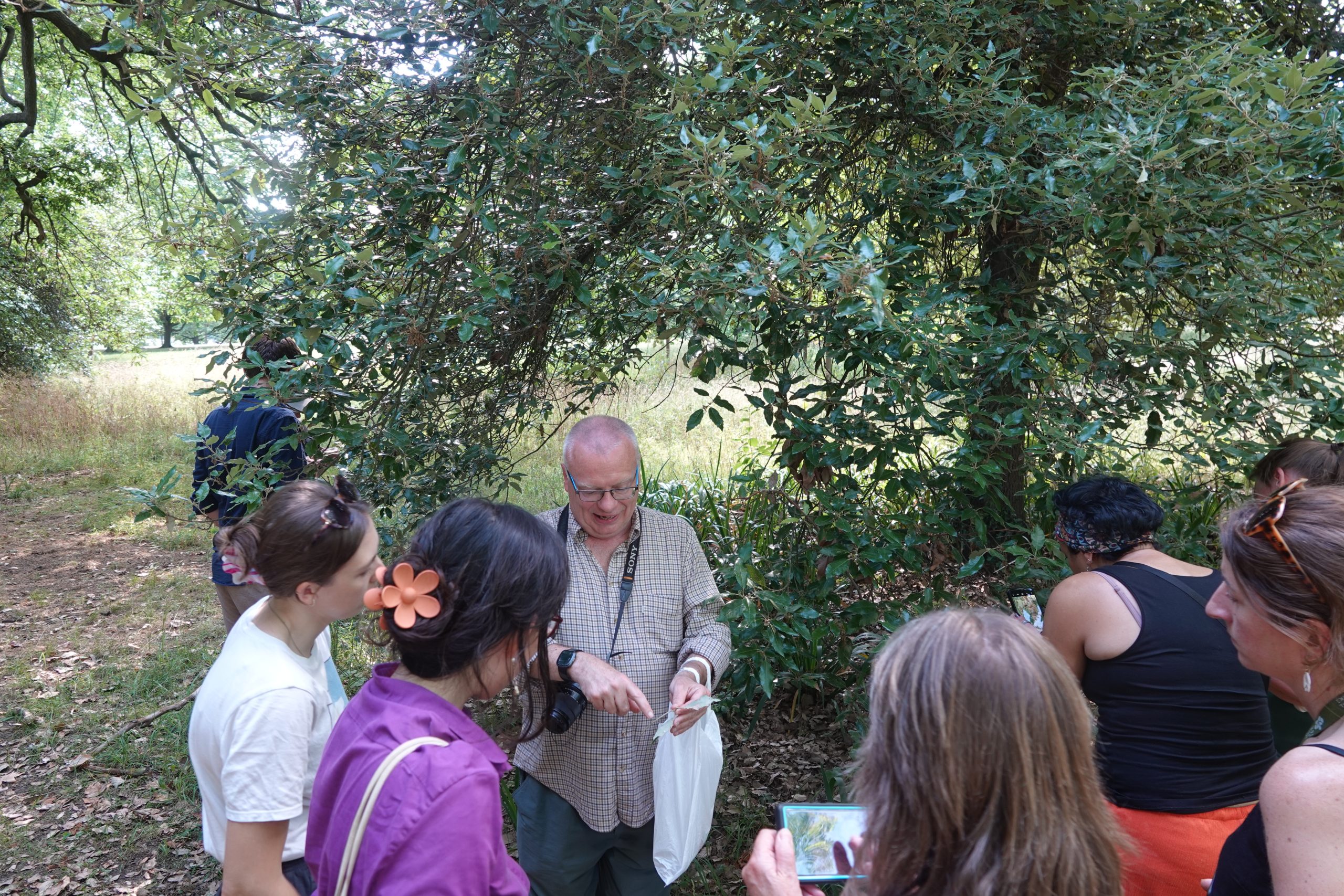
To address the growing uncertainty surrounding pests associated with Holm Oak, FERA and the IPSN launched a coordinated monitoring initiative that uses live Holm Oak collections across the UK to gather essential baseline data. Funded by DEFRA UK, the initiative aims to:
- Monitor Holm live-collections across the UK to create a baseline understanding of key pests associated with Holm Oaks and fill in evidence gaps, such as their distribution and potential damage.
- Record and track priority pests that can be easily identified, focusing on three target species:
- Holm Oak Bark Scale (Nidularia pulvinata)
- Holm Oak Gall Midge (Dryomyia lichtenstenii)
- Holm Oak Phylloxera (Phylloxera quercus complex)
To make this work possible a standardised monitoring protocol was developed. This manual outlines best practice for visually inspecting the different parts of a Holm Oak—leaves, branches, stems and bark—and explains how to take clear, diagnostic photos to support expert identification by the entomologist.
The protocol is supported by a poster describing symptoms and showing diagnostic images, as well as survey forms designed to standardise data collection across all participating collections.
Capturing the Full Arthropod Diversity on Holm Oak
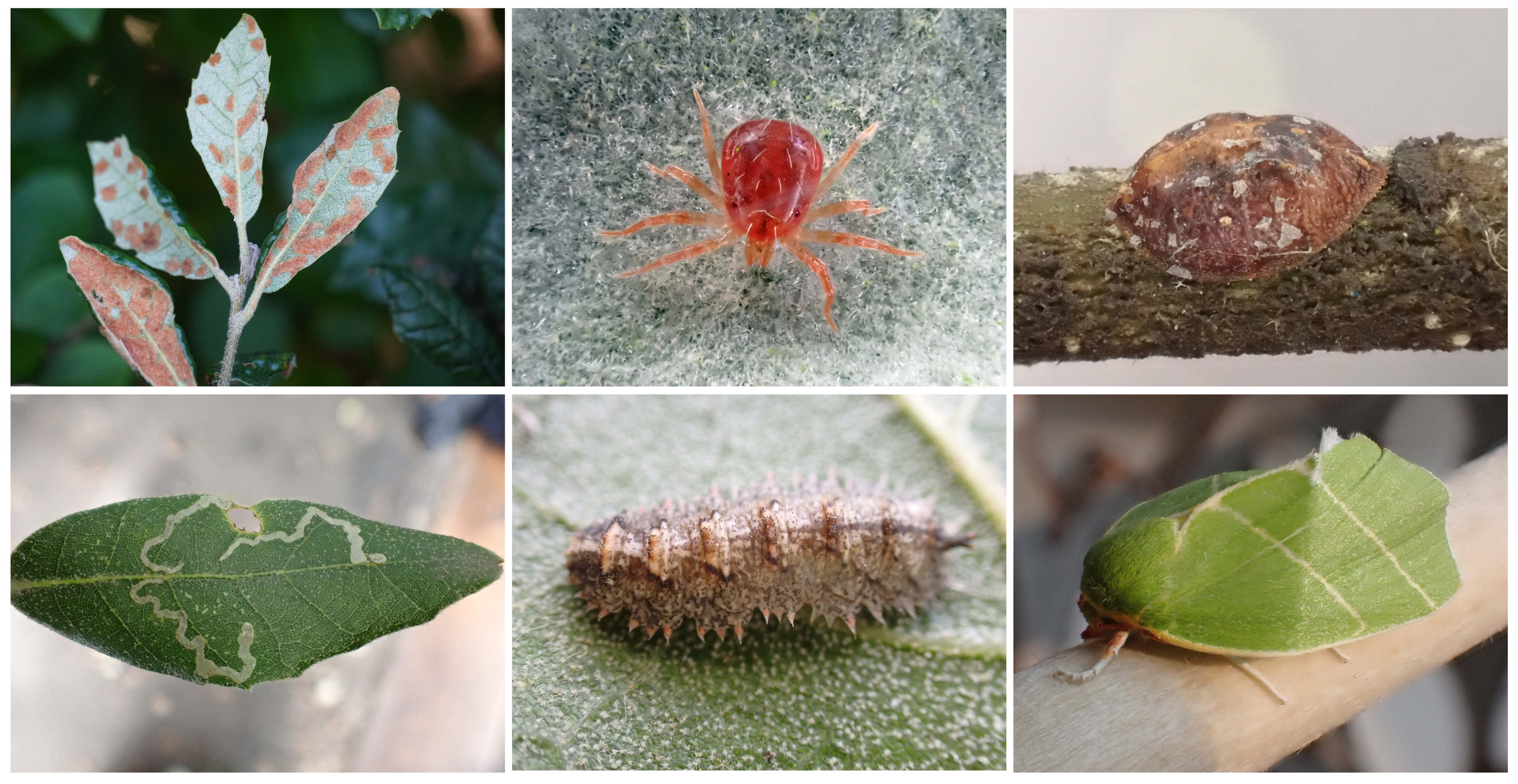
While the project focuses on three priority pests—Holm Oak Bark Scale, Holm Oak Gall Midge, and Holm Oak Phylloxera —it is equally important to monitor the wider community of arthropods found on Holm Oak. These non-target species may not currently be considered pests, but they provide essential context for understanding tree health and potential future risk.
Monitoring other non-target arthropods helps to:
- Build a complete baseline of the Holm Oak insect community, capturing its biodiversity and the ecological relationships of both harmless and potentially damaging species.
- Distinguish true pests from incidental or beneficial species, avoiding misidentification and unnecessary concern.
- Identify unusual species or early arrivals, which may signal new introductions or shifting distributions driven climate change.
- Track changes in species composition over time.
- Detect early signs of emerging threats, as some organisms may become pests when environmental conditions change or when trees are stressed.
To support this part of the project, a field guide to the most common arthropods found on Holm Oaks across the UK is being compiled, using information gathered by Chris Malumphy through different surveys that he has carried out in the country—alongside the records sent in by participating gardens. We hope this guide will help improve our ability to spot key insects associated with holm oak facilitating identification of unusual activity early and aiding in preparing practitioners for future plant health challenges.
The importance of baseline studies
The Brompton Cemetery outbreak showed how quickly pests can cause damage when they go undetected. Having a solid baseline of which arthropods are normally present on Holm Oak allows us to recognise early warning signs and take action before problems escalate, predicting and preventing outbreaks.
With Holm Oaks playing an increasing role in climate-resilient planting, this becomes crucial. Thanks to the joint efforts of participating gardens, we are now building the foundation needed to detect unusual activity and take early action that limits damage.