Conserving Chile's endemic trees

-
Status of project
Ongoing -
Region
Latin America -
Country
Chile -
Topic
Tree Conservation
Árboles endémicos de Chile
Dendroseris neriifolia es una de las 40 especies endémicas amenazadas que se encuentran en Chile. Esta especie solo crece en el archipiélago de Juan Fernández, situado en el océano Pacífico. Un único ejemplar sobrevive en su hábitat natural, en un remoto barranco. Su existencia refleja la grave situación a la que se enfrentan muchas especies de árboles chilenos, más de 40 de las cuales se encuentran actualmente al borde de la extinción y no se dan en ningún otro lugar del mundo.
Taller de planificación de la conservación
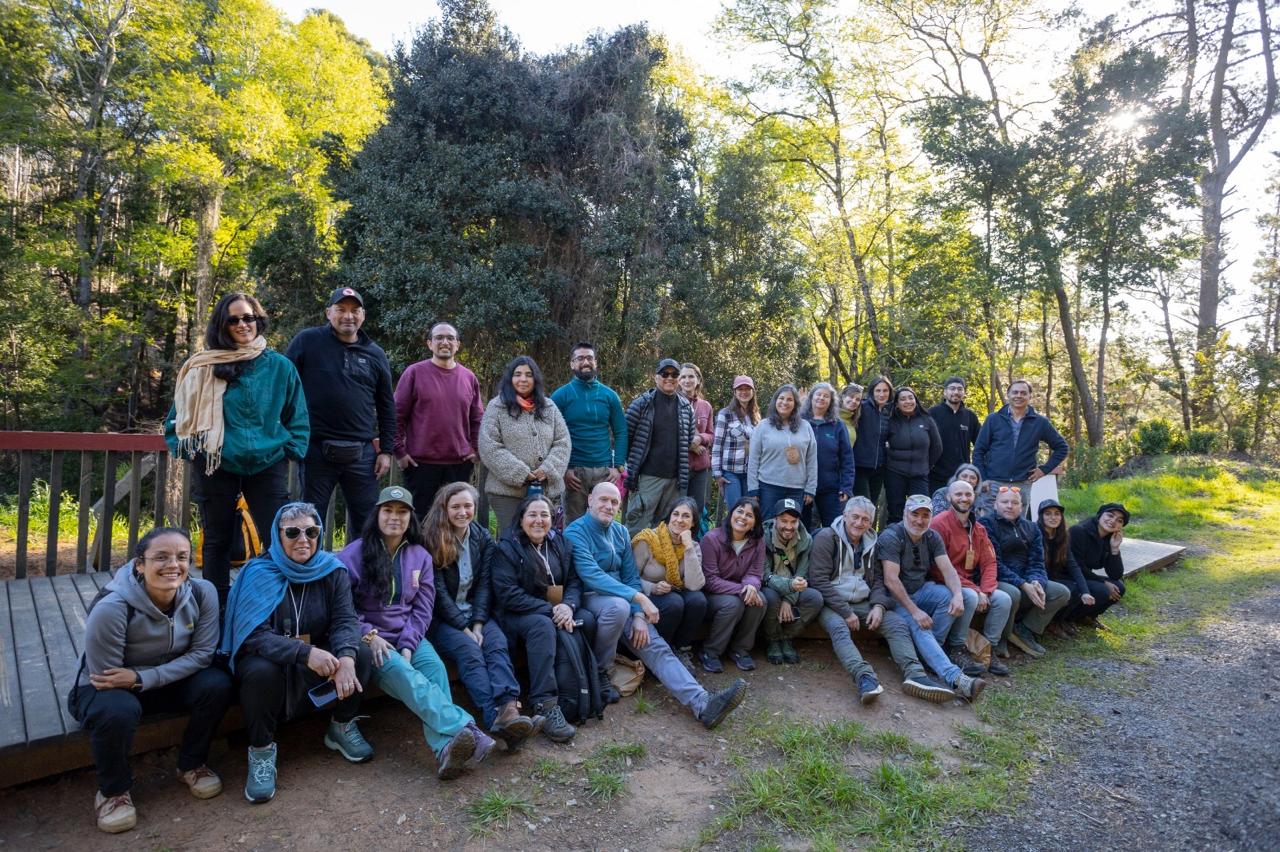
Para abordar la urgente necesidad de desarrollar y poner en práctica medidas de conservación para estas especies arbóreas únicas, en septiembre de 2024 se celebró un taller de planificación de la conservación integrada en la Universidad de Concepción, Chile. El taller, organizado por BGCI junto con el Laboratorio de Ecología del Paisaje de la Universidad de Concepción, contó con la colaboración del Grupo de Especialistas en Planificación de la Conservación (CPSG) de la Comisión de Supervivencia de Especies (SSC) de la Unión Internacional para la Conservación de la Naturaleza (UICN). La Fundación Franklinia generosamente financió el taller. El taller reunió a 28 especialistas de diferentes organizaciones chilenas, quienes, tras cinco días de debates participativos, desarrollaron un plan de conservación integrado para asegurar el futuro de las especies arbóreas endémicas amenazadas de Chile.
Plan de acción para la conservación
Aquí puede consultarse un resumen ejecutivo del plan en el que se describen el proceso y los resultados. El plan se publicará a lo largo de este año y contará con un equipo de gestión que se encargará de su aplicación y seguimiento.
Visión
“Las especies arbóreas endémicas de Chile y sus hábitats se conservan de manera eficaz e integrada, y son valoradas por una sociedad comprometida con el patrimonio natural, en el marco de una normativa eficaz y con una gobernanza y planificación territorial participativas y sostenibles.”
Objetivos
- Objetivo 1: Prevenir, controlar y erradicar la presencia y el impacto de las especies exóticas invasoras y de los patógenos
Objetivo 2: Prevenir y controlar la presencia de ganado en áreas de importancia para la conservación
Objetivo 3: Reducir la incidencia y el impacto (frecuencia y gravedad) de los incendios forestales que afectan a las especies amenazadas y sus hábitats
Objetivo 4: Fortalecer las acciones de las instituciones ambientales que se centran en el uso y la planificación del suelo en relación con las especies en peligro de extinción y sus hábitats a nivel regional, distrital y comunitario
Objetivo 5: Educar, apoyar y empoderar a las personas y a las organizaciones del sector civil en lo que respecta a la protección de las especies en peligro de extinción y sus hábitats, con especial atención a la política medioambiental y la gestión del territorio
Objetivo 6: Proteger los bosques autóctonos contra la invasión y el aumento de la superficie de especies forestales no autóctonas
Objetivo 7: Sensibilizar e involucrar a las comunidades locales sobre el uso legal y sostenible de los recursos naturales asociados a las especies en peligro de extinción y sus hábitats
Objetivo 8: Desarrollar y aplicar estrategias de gestión integrada (in situ y ex situ) para las especies arbóreas amenazadas, con el fin de mejorar la resiliencia de las poblaciones y mitigar las amenazas
Objetivo 9: Comprender y reducir los impactos del cambio climático sobre las especies arbóreas en peligro de extinción
Avances en la implementación
- Un nuevo proyecto, financiado por la Fundación Franklinia, pondrá en práctica este objetivo centrándose en la conservación estratégica de Legrandia concinna. Esta iniciativa de tres años de duración (2025-2027) se centrará en la especie a lo largo de su área de distribución natural en las regiones andinas y preandinas de Maule y Ñuble, en Chile, donde tiene un importante valor para el patrimonio cultural y natural.
Recursos relacionados
Chile’s endemic trees
Dendroseris neriifolia is one of 40 threatened endemic species found in Chile. This species only grows in the Juan Fernández Archipelago, situated in the Pacific Ocean. Only a single specimen survives in its natural habitat in a remote ravine. Its existence represents the wider perilous situation facing many Chilean tree species, over 40 of which are now on the verge of extinction and are found nowhere else in the world.
Conservation planning workshop
To address the urgent need to develop and implement conservation actions for these unique tree species, an Integrated Conservation Planning Workshop took place in September 2024 at the University of Concepción, Chile. The workshop, organised by BGCI together with the Landscape Ecology Laboratory of the University of Concepción, was facilitated by the International Union for Conservation of Nature (IUCN) Species Survival Commission (SSC) Conservation Planning Specialist Group (CPSG). Fondation Franklinia generously funded the workshop. The workshop brought together 28 specialists from different Chilean organisations, who after five days of participatory discussions, developed an integrated conservation plan to secure the future of Chile’s threatened endemic tree species.
Conservation action plan
An executive summary of the plan outlining the process and results can be found here. The plan will be published later this year, with a governance team who will be responsible for its implementation and monitoring.
Vision
“Chile’s endemic tree species and their habitats are conserved in an effective and integrated manner, and valued by a society committed to natural heritage, under an effective regulatory framework, with participatory and sustainable territorial governance and planning.”
Objectives
- Objective 1: Prevent, control and eradicate the presence and impact of invasive non-native species and of pathogens
- Objective 2: Prevent and control the presence of livestock in areas of conservation importance
- Objective 3: Reduce the incidence and impact (frequency and severity) of forest fires that affect threatened species and their habitats
- Objective 4: Strengthen the actions of environmental institutions that focus on land use and planning related to endangered species and their habitats at the regional, district and community levels
- Objective 5: Educate, support and empower people and civil sector organisations in regard to the protection of endangered species and their habitats with a focus on environmental policy and land management
- Objective 6: Safeguard native forests against encroachment from, and an increase in the area of, non-native forestry species
- Objective 7: Raise awareness and engage local communities on the legal and sustainable use of natural resources associated with endangered species and their habitats
- Objective 8: Develop and implement integrated management strategies (in situ and ex situ) for threatened tree species to enhance the resilience of populations and mitigate threats
- Objective 9: Understand and reduce the impacts of climate change on endangered tree species
Progress in implementation
- A new project, funded by the Fondation Franklinia, will put this objective into practice by focusing on the strategic conservation of Legrandia concinna. This three-year initiative (2025–2027) will target the species across its native range in the Andean and pre-Andean regions of Maule and Ñuble, Chile—where it holds significant cultural and natural heritage value.
Related Resources