The Wednesday Tree Murder Club: Investigating Clues And Protecting Yorkshire’s Trees
-
Country
England -
Region
Europe -
Programme
International Plant Sentinel Network -
Workstream
Addressing Global Challenges Through Public Engagement -
Topic
Plant Conservation -
Type
Blog -
Source
BGCI Member
News published: 11 May 2026
Guest blog contribution from Ginette Alexander from The Tree Health Centre at The Castle Howard Arboretum.
Not All Heroes Wear Capes
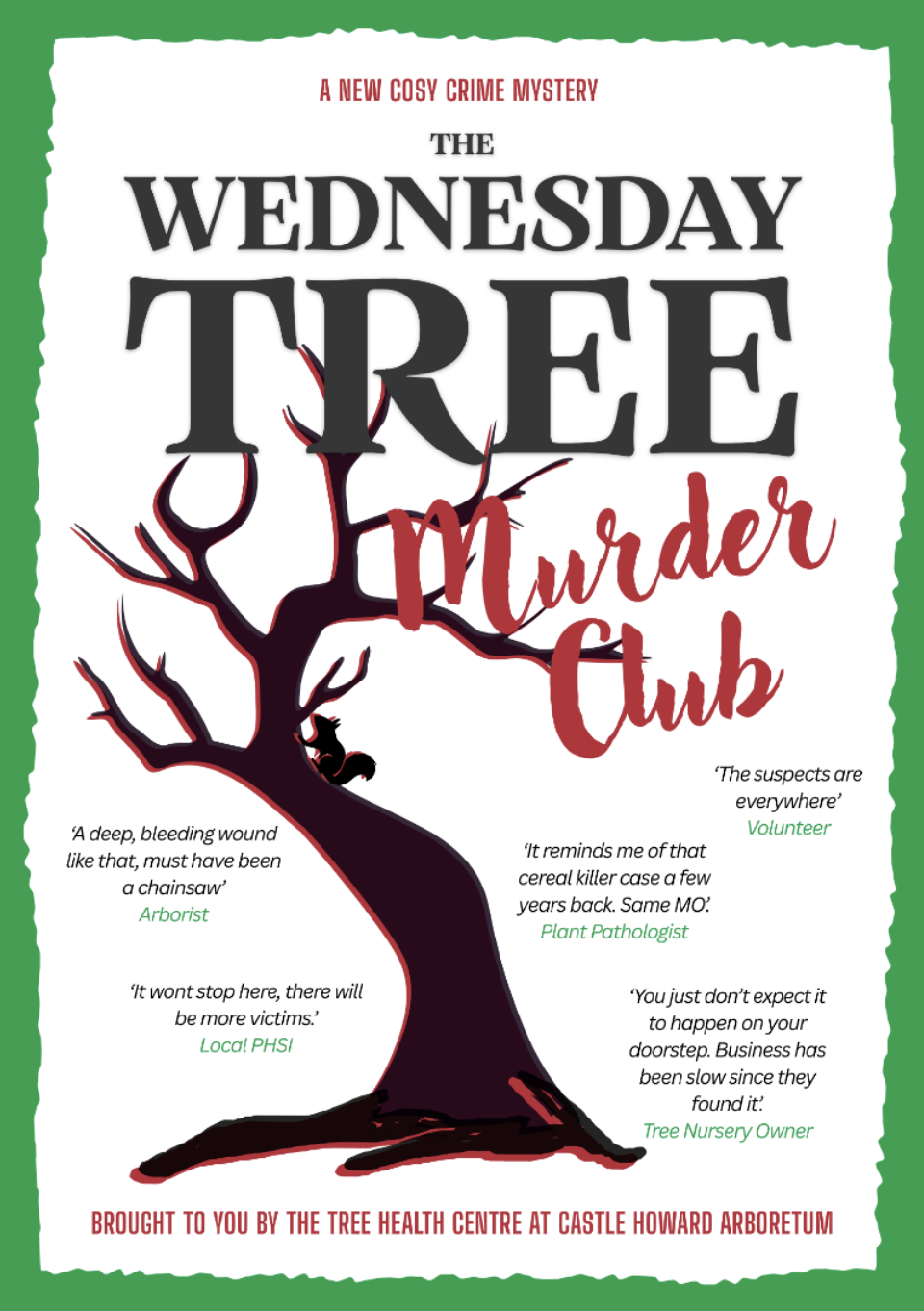
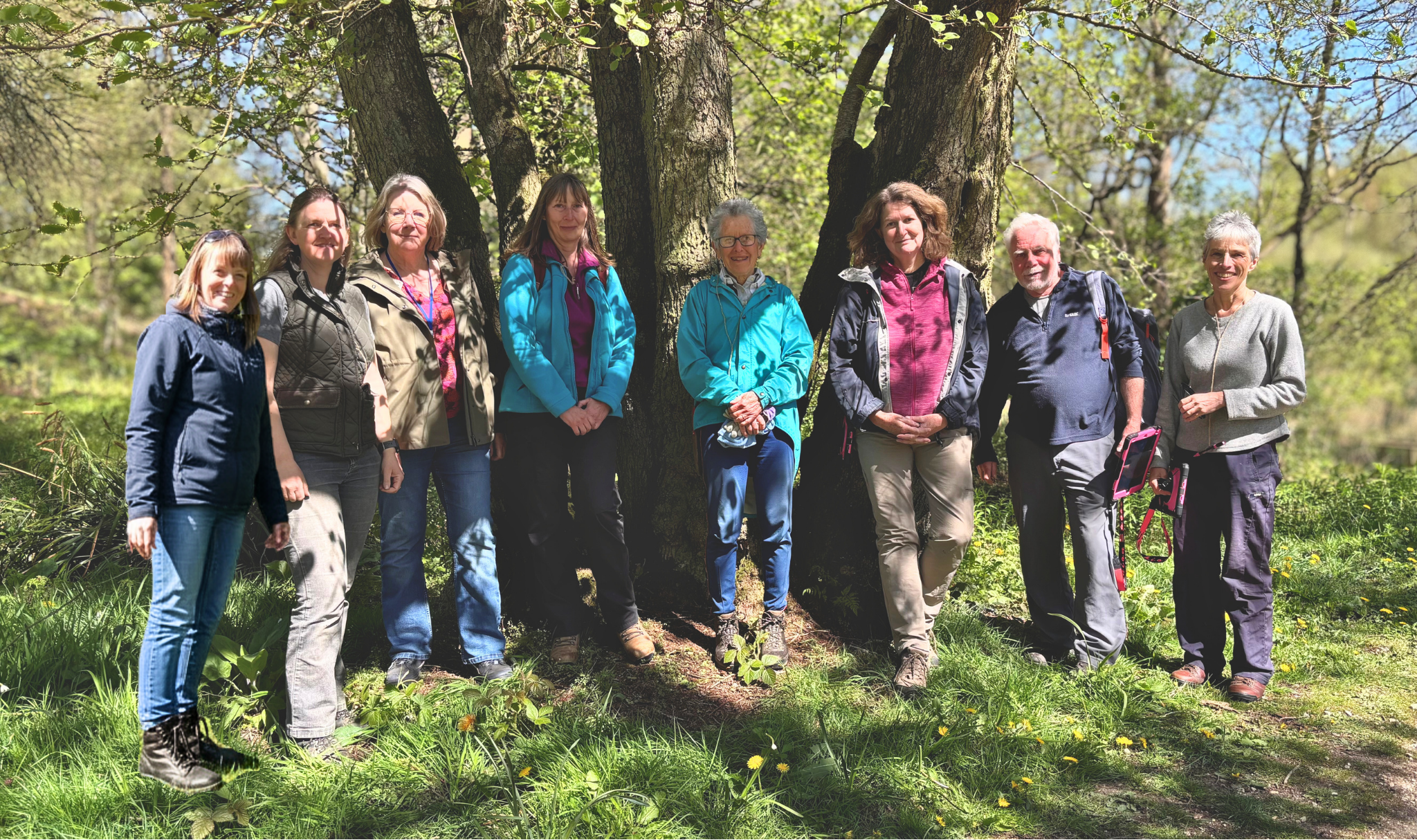
At the Castle Howard Arboretum, Wednesday mornings have become something of a tradition. A small group gathers, iPads, marker pens, and flasks at the ready, with a shared mission: to investigate the health of our trees. Looking closely, they observe not just the obvious things, like the sweep of a canopy or the colour of autumn leaves, but also the quieter clues most people walk past.
They call themselves The Wednesday Tree Murder Club (WTMC) – a playful nod to the Richard Osman books, and a reminder that there’s something wonderfully detective-like about tree health surveying. In classic ‘who-done-it’ style, they stumble across the crime, gather evidence from the victim, then follow the clues to find the culprit inflicting the (sometimes) fatal blow.
Phil, Chief WTMC Volunteer: “At first, we considered ourselves more as ‘Dad’s Army’ than the ‘Wednesday Tree Murder Club’ – our role was to get trained, stand guard against invading pests and diseases and then help banish them from these shores. However, as time has gone by, we have increasingly found our varied skills useful in spotting and investigating tree ‘killers’ and now feel more like detectives than the home guard – good job really, I much prefer to align with Helen Mirren and Pierce Brosnan than Captain Mainwaring!”
Louise: “With retirement on the horizon, I was looking for a new opportunity that would allow me to get outside in nature while continuing to learn. The tree health volunteer role has provided that.”
Linda: “I like learning more about trees from other more experienced staff and volunteers and I’m no longer intimidated by an iPad!”
Every Tree has a Story and Our Volunteers Help Us Read It
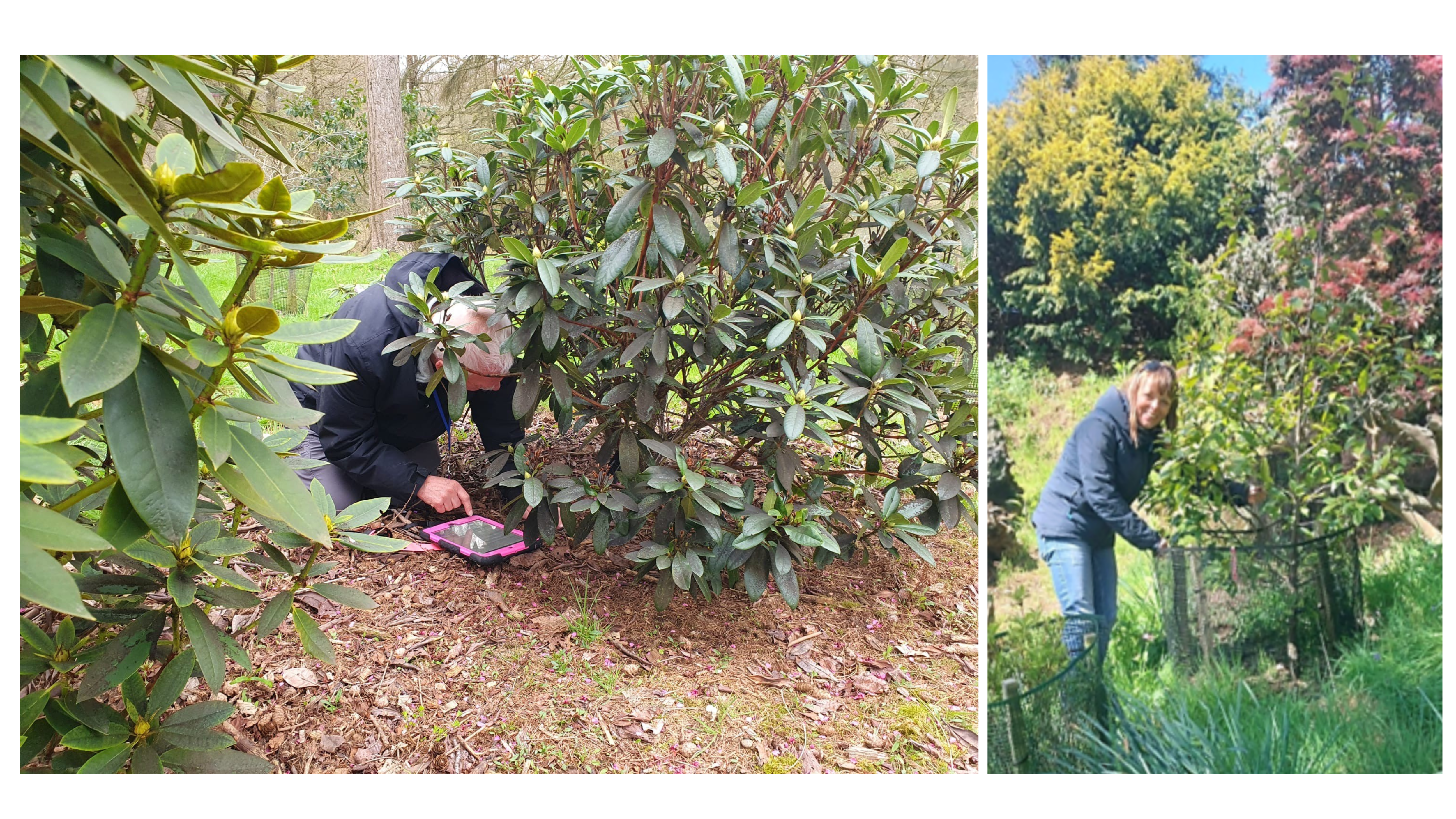
Trees can’t tell us they’re unwell, but they do leave evidence: a wilting shoot here, an unusual patterning on leaves there, bark cracking, bleeding, dieback, thinning crowns, fungal fruiting bodies – sometimes subtle, sometimes dramatic.
The Wednesday Tree Murder Club volunteers systematically work their way through the living collection, recording what they see and occasionally scrambling up for a closer look or flagging one to watch across the seasons. Building familiarity with individual trees and areas, they spot when something doesn’t fit the usual pattern, recording the data as they go.
Their surveys create a growing picture of tree condition year on year, one observation at a time.
Claire: “It takes time to get your eye in especially as trees vary so much, not just between species and varieties, but also with time of year. I knew about red band needle blight, but had never seen it ‘in the flesh’ until joining the team. I was quite excited to see it!”
Louise: “The first time I spotted something I knew I realised that I’d actually learnt something and how worthwhile the exercise is. I now realise that not spotting a problem is as important as finding something.”
Why Surveying Matters: Early Detection Leads to Better Outcomes
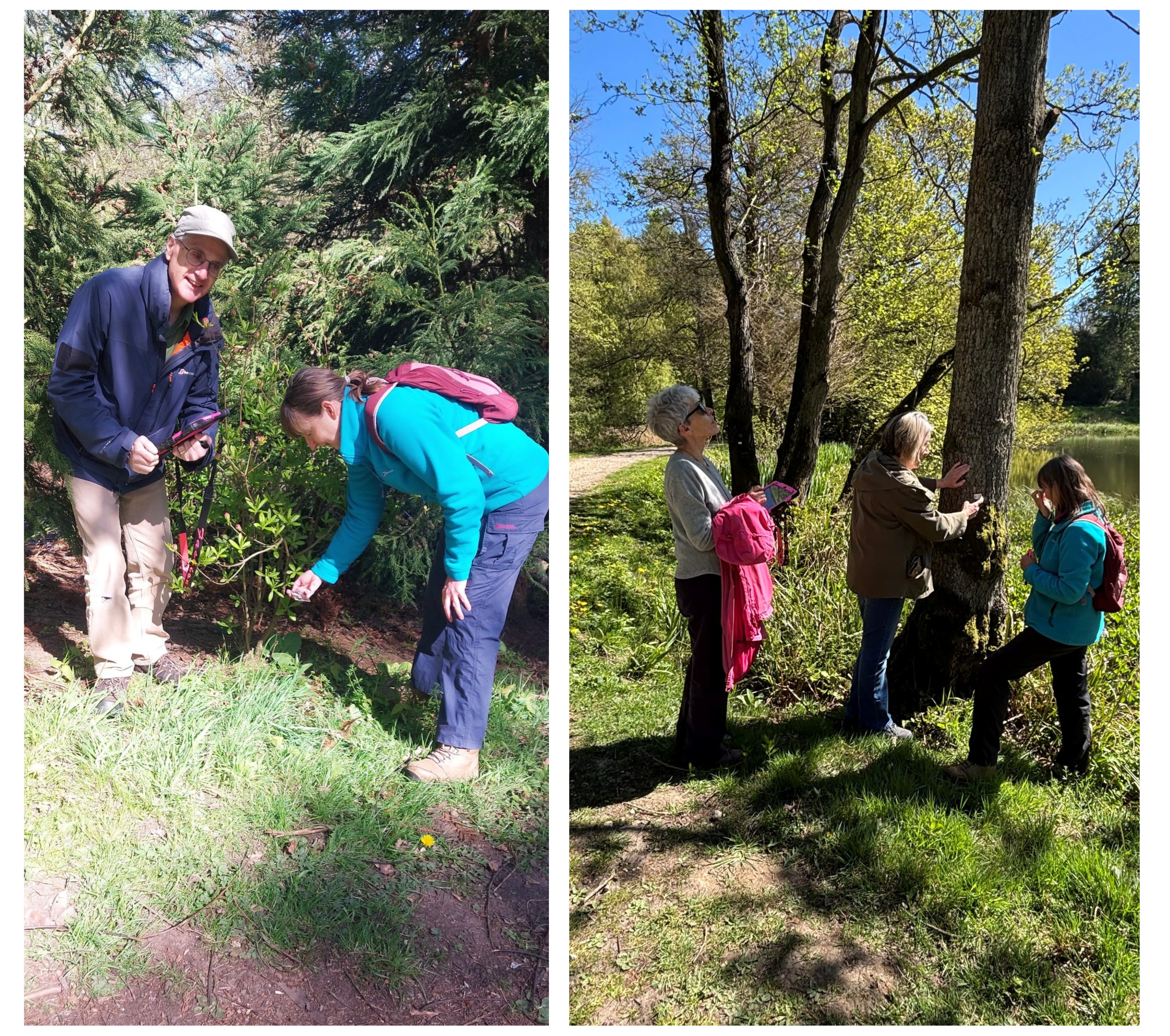
In a changing climate, and in a world where pests and diseases can hitchhike across borders, early detection matters. The sooner we notice unusual symptoms, the quicker we can investigate, seek specialist advice and diagnose if needed, and take sensible action to protect the wider collection.
That doesn’t mean every spot or patch of dieback is a disaster. Often, symptoms have more than one possible cause: weather stress, soil conditions, physical damage, or a range of organisms. But careful monitoring helps us decide what needs closer attention and what can be monitored over time.
This is where our volunteers are indispensable; they are our extra eyes and ears across the Arboretum, regularly and methodically observing trees at a scale a small staff team simply can’t sustain alone. Their growing knowledge and experience allow them to weed out the everyday and red herrings, reading the whole crime scene of the tree in its unique local environment, noting problematic symptoms without obvious causes that could indicate a more sinister pest or disease suspect.
Louise: “I had some trepidation when I started with WTMC, as I knew nothing about tree health. It soon became clear all that was needed was the ability to observe and record. It doesn’t matter if we report a finding and it’s not a concern. We’re not judged on whether we are right or wrong.”
Data that Makes a Difference and Builds a Legacy
Tree health isn’t only about what we see in the moment; it’s also about what we can learn over the years. The Wednesday Tree Murder Club doesn’t just take a look; they collect positive and negative data.
Each survey contributes to a wider dataset that helps us:
- Track changes over seasons and years
- Monitor and compare the health of specific species
- Compare different areas of the collection
- Prioritise inspections or follow-up checks
- Build evidence for management decisions
- Record ongoing resilience in a changing climate
- Support education, training, and research partnerships
Put simply, our brilliant volunteers are helping to create a long-term health record for the Arboretum’s trees – an asset that will matter even more in the future than it does today.
Claire: “I am delighted to be part of a team that is contributing to the legacy of the Arboretum by aiming to ensure that the tree collection stays healthy.“
Linda: “Our observations are respected by the experienced staff, and that means a lot. I feel like I’m making a tangible contribution to helping the environment, more than lip service.”
It’s Not Just Good for Trees, It’s Good for People
There’s another side to the Wednesday Tree Murder Club story, and it’s one the volunteers tell best, the human one. Being outdoors, learning together, noticing the small details, sharing knowledge, and feeling useful all attract our volunteers to the role.
Kirsty: “I always think how great it is really looking closely at the trees – you notice little details you’d never see just walking past. It’s a bit buzzwordy, but it’s quite mindful.”
Linda: “I’ve learned my way around the Arboretum and accessed parts I’d never found before. I enjoy the physicality, scrambling in the undergrowth and being under trees is good for our health: forest bathing!”
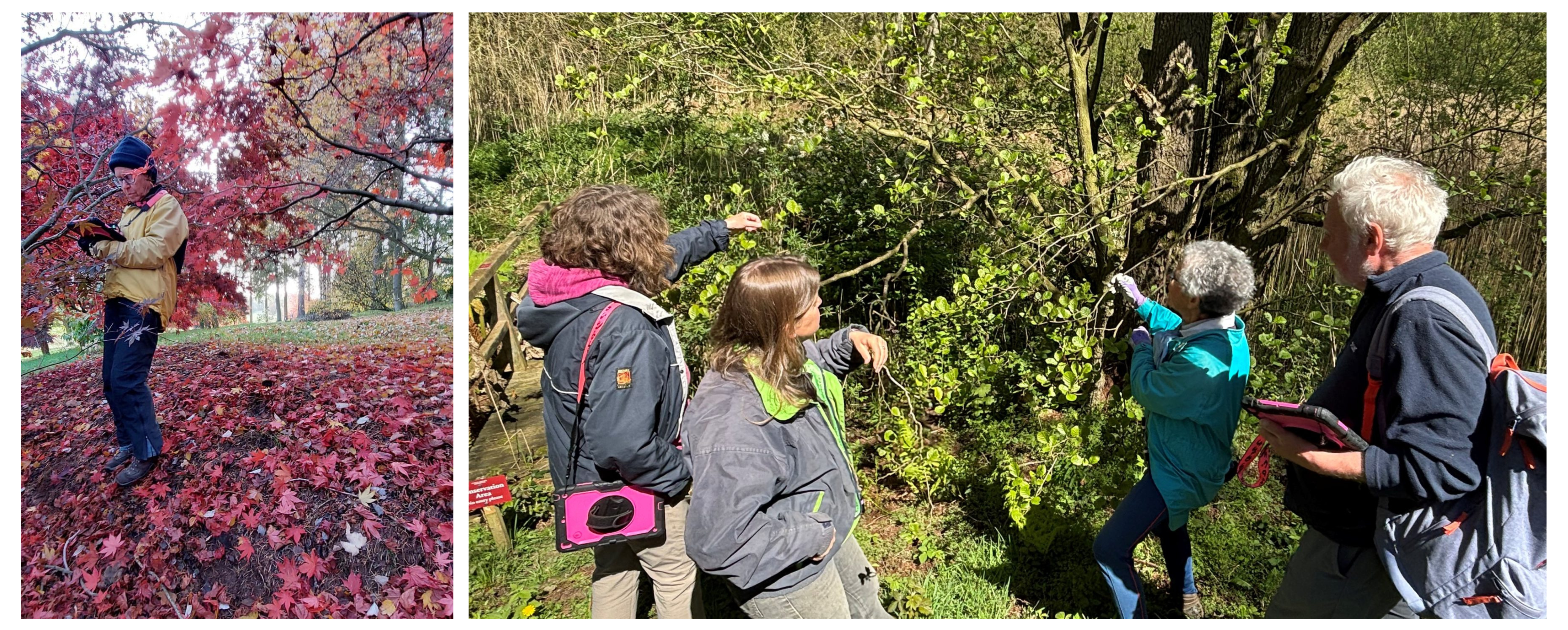
For many volunteers, tree health surveying becomes a weekly anchor, a reason to be in the landscape, to stay curious, to connect with others, and to be part of a team with a shared purpose.
Claire: “I have become more confident at working amongst a diverse range of trees and I have learned a lot. Having the chance to be with such nice people once a week (when I am able to get there) means a lot to me. There is humour amongst us, but also a thirst for knowledge as well as a sense of being part of a community of people that want to support the natural world.”
And because the group has built its own identity, complete with that brilliant name, there’s a lightness to the work too. Yes, the stakes can be serious, but the experience is welcoming, friendly, and full of small moments of shared discovery.
Louise: “The Wednesday Tree Murder Club is a diverse group with plenty of stories from past lives. While we all appreciate the importance of the inspection, we also have time for a bit of fun and a laugh while we do our job.”
Linda: “I feel like skipping when we first set out in the morning! It’s ok to be silly, almost expected!”
The Case Files Continue…
If you pass a group at Castle Howard Arboretum on a Wednesday morning peering thoughtfully at leaves, checking bark, or pointing at a fungus with the intensity of someone solving a mystery, you may have just encountered the Wednesday Tree Murder Club mid-investigation.
They are proof that biosecurity and tree health aren’t just for experts. It’s open to anyone in our communities with an interest in their wider environment, and you can contribute valuably by giving some time, curiosity and attention to detail.
And they remind us of something simple: when people learn to notice trees, they start to look after them differently.
Want to Join the Wednesday Tree Murder Club?
We’re always happy to hear from people who are curious, observant, and keen to learn. You don’t need to be an expert – we provide guidance and support, and you’ll be part of a friendly team.
Prefer to volunteer from your desk? We are currently particularly interested in someone to complement the experience of our existing volunteers, with a desire to help create a standardised survey model using their experience of digital surveys, data collection, and data interfaces to better input tree health data into the arboretum collection system.
To find out more about volunteering with tree health surveying at the Yorkshire Arboretum:
- Email: volunteer@castlehowardarboretum.org
- When: Wednesdays 10 am – 3 pm (times flexible depending on availability and season)
- What you’ll do: Initial training to learn common signs and symptoms needed for tree surveys. Work in small groups to survey and record observations and help protect our living collection.
Want to Start a Wednesday, or Maybe a Thursday Tree Murder Club?
We’re working with the International Plant Sentinel Network and UK Garden Sentinel Network to create a template of the club that can be replicated at other botanic gardens or arboreta. If your organisation is interested in taking part, please get in touch to discuss further.
Please email TreeHealth@castlehowardarboretum.org with the subject title WTMC
All the photos in this piece belong to Ginette Alexander.
About the author
With over 25 years of experience working with plants, Ginette began her career in horticulture and ecology, focusing on plant health over the last decade or so. As a plant pathologist specialising in mycology at Fera Science, Ginette diagnosed fungal pathogens and later served as a Plant Health and Seeds Inspector (PHSI) and Engagement Manager at the Animal and Plant Health Agency (APHA). Her expertise spans the plant health process – from cultivation to inspection and diagnosis – providing her with extensive knowledge, industry connections, and practical experience. Ginette now applies this at the Tree Health Centre, located at Castle Howard Arboretum Trust – a charitable trust, where she works on research and development projects, creates resources and delivers training to engage, inspire, and empower learners in tree health, biosecurity, and resilience in a changing climate.

BGCI Databases
Explore BGCI's suites of databases to help plant conservation worldwide. Upload your data!
Become a Member
Be part of the largest network of botanic gardens and plant conservation experts in the world by joining BGCI today!