IPSN UK Network Summer Meeting Recap
-
Country
United Kingdom -
Region
Europe -
Programme
International Plant Sentinel Network -
Workstream
Saving Plants -
Topic
Plant Conservation -
Type
News -
Source
BGCI
News published: 3 July 2026
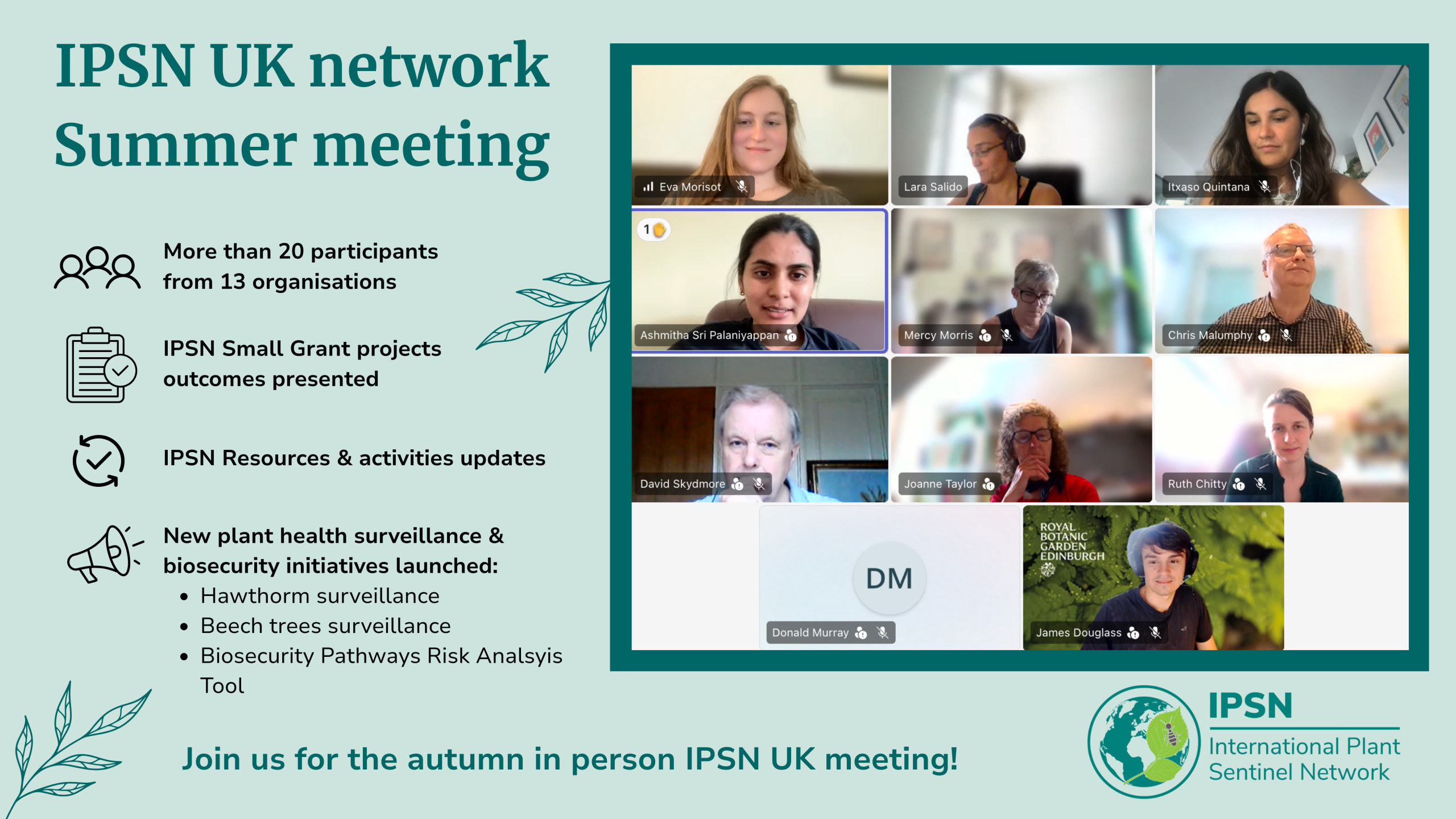
On June 29th, the IPSN team was delighted to host the 2026 online UK Members Summer Meeting, bringing together 22 members and partners from 13 organisations across the UK to share project outcomes, explore new initiatives, and discuss priorities for the year ahead.
The meeting provided a great opportunity to showcase the outcomes of the 2025-2026 IPSN Small Grants programme, present updates on IPSN resources, and introduce several new activities and initiatives inviting botanic gardens and arboreta to play an active role in plant health and biosecurity efforts.
The IPSN’s Small Grants project leads share their findings
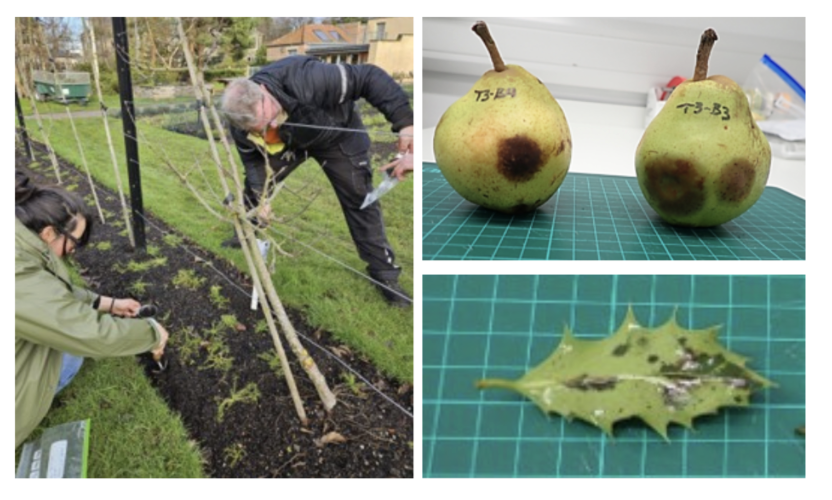
A highlight of the meeting was the presentation of two of the IPSN Small Grants projects completed over the past year.
Joanne Taylor from the Royal Botanic Garden Edinburgh shared the outcomes of her project on practical soil surveillance for Phytophthora, which evaluated accessible detection methods and produced guidance and protocols to support routine monitoring in botanic gardens.
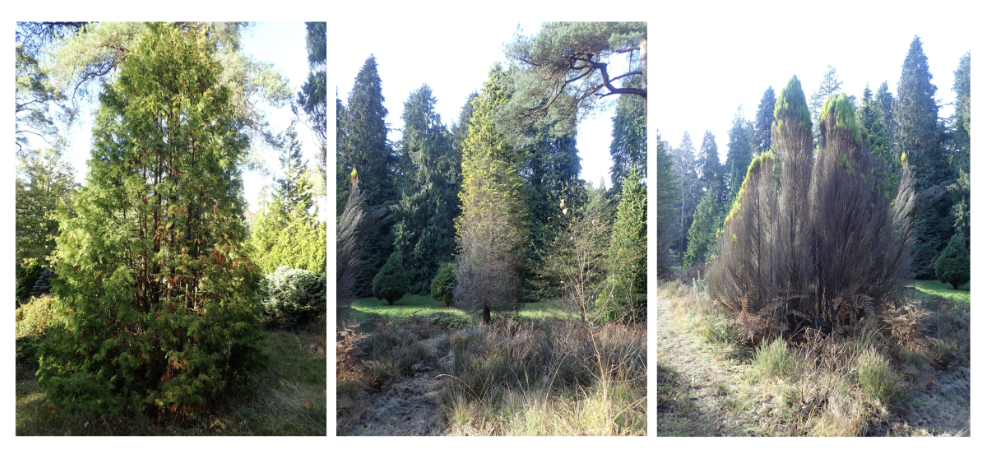
Caroline Gorton from Forest Research presented her work on improving the assessment of emerging conifer dieback and on developing a photographic guide to support consistent monitoring of symptoms associated with Pestalotiopsis and other causes of decline.
New IPSN resources to support plant health
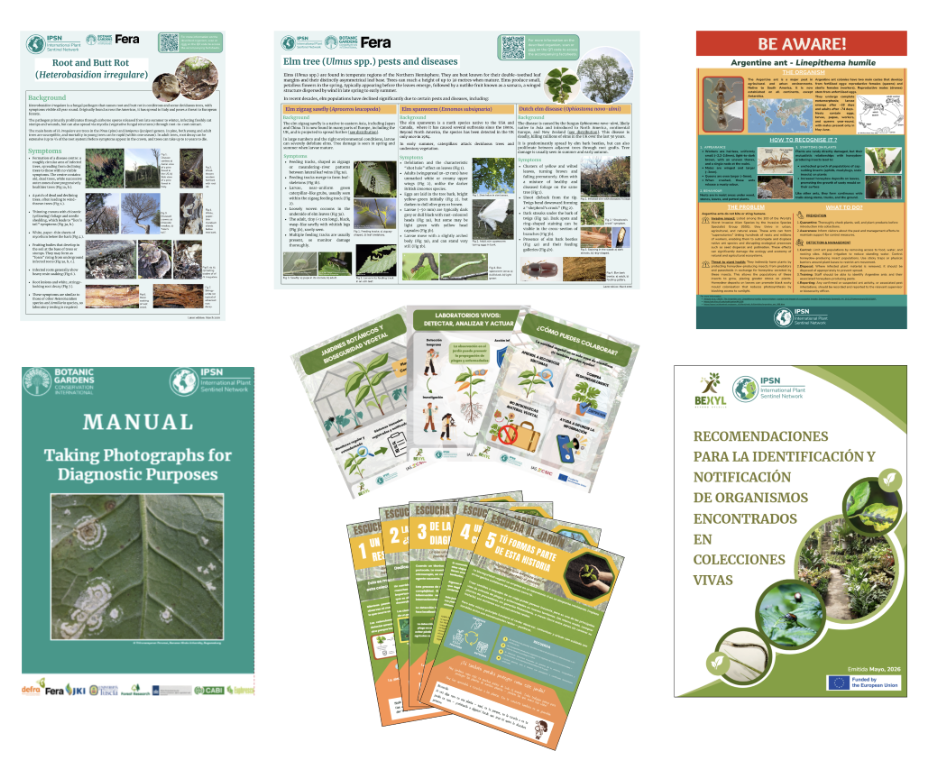
The IPSN team presented a range of new resources developed during the past year to support and strengthen plant health and biosecurity capacity across the network. These included:
- Pest and disease posters, factsheets, and awareness materials.
- New and updated sampling and monitoring protocols for Holm oak, Canker Stain of Plane, and Hawthorn.
- Technical guides for submitting photographs (accessible in both English and French) and diagnostic samples.
- Technical manuals to support the identification of harmful organisms in living collections (only available in Spanish).
- Educational outreach resources on biosecurity, the role of botanic gardens in global plant health, and the impacts of Xylella fastidiosa (only available in Spanish).
- The IPSN blog series, which features plant health and biosecurity case studies from members and partners.
Participants also received an update on the network’s wider activities, including continued surveillance programmes, research collaborations, and the development of new digital tools to support biosecurity.
New opportunities for botanic gardens and arboreta
A key focus of the meeting was the launch of three new initiatives that provide opportunities for botanic gardens and arboreta to contribute to plant health surveillance and improve biosecurity practices. These include:
- Hawthorn surveillance
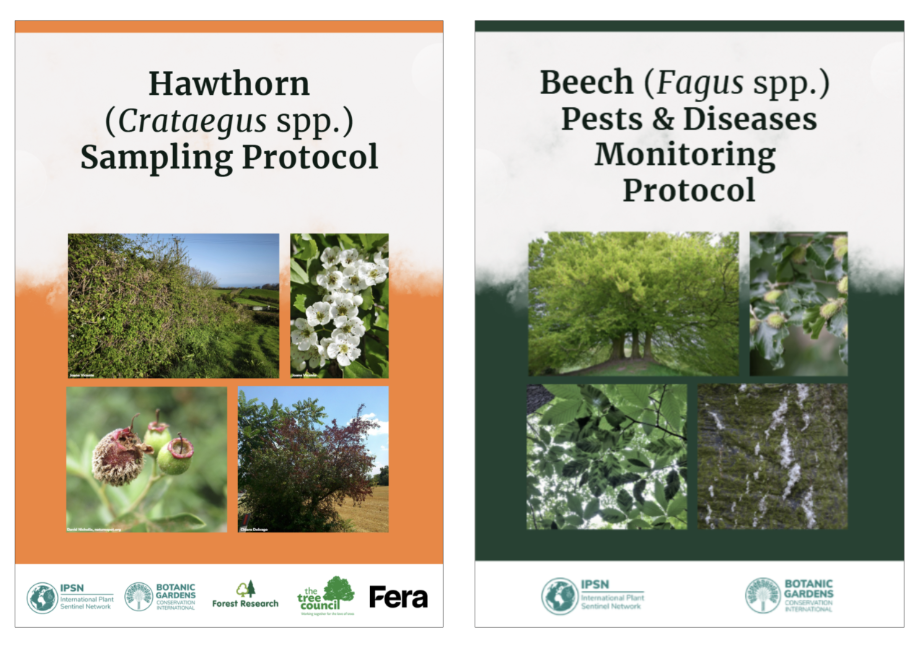
A collaborative initiative between Forest Research, The Tree Council, Fera, and the IPSN, aiming at improving our understanding of hawthorn health, hedgerow resilience, and pest and disease impacts to the wider treescape.
The initiative focuses on surveying hawthorn species (Crataegus spp.) across the UK for two priority diseases: fireblight and rust diseases caused by Gymnosporangium species.
Botanic gardens and arboreta are encouraged to conduct visual inspections of hawthorn in living collections and, where symptoms are observed, collect samples using an available step-by-step survey and sampling protocol.
- Beech baseline survey
This new one-year survey invites UK botanic gardens and arboreta to inspect beech (Fagus spp.) in their living collections for Beech Leaf Disease, Petrakia leaf spot, beech scale, and woolly beech aphid. Participating gardens will receive a detailed survey protocol, step-by-step guidance, and identification resources to support monitoring and reporting.
The survey will improve our understanding of the distribution and impacts of these pests and diseases, support early detection, provide information on the health of UK beech collections, and inform future biosecurity preparedness and response at a national level.
- Biosecurity Pathway Risk Analysis (BPRA) tool
Building on previous work, this initiative will focus on the development of a digital version of the BPRA tool that will help horticultural organisations identify, assess, and reduce the risk of introducing and spreading plant pests and diseases through effective pathway management. The tool will be redesigned to be more accessible and user-friendly, with simplified workflows, improved data visualisation, and supporting guidance materials.
Botanic gardens are invited to participate in the co-development and pilot phase by testing the tool, reviewing guidance materials, and providing feedback.
Future priorities and next steps
The meeting concluded with a discussion of future priorities for the network. Members highlighted:
- The need for additional training on glasshouse pests and diseases
- Translation of the available educational and awareness-raising resources
- Increased use of national collections for surveillance
- Continued engagement of volunteers to strengthen plant health monitoring across botanic gardens
Planning is also already underway for the next IPSN UK Members Meeting, which will take place in person in early autumn. In response to members’ feedback, we plan to include a dedicated training session alongside updates on the latest developments in plant health and biosecurity.
Want to join the IPSN?
Membership is free! By joining, you gain access to expert-led initiatives, resources on biosecurity and plant health monitoring, and a global network of professionals.
To get involved, email: lara.salido@bgci.org or eva.morisot@bgci.org.
Become a Member
Be part of the largest network of botanic gardens and plant conservation experts in the world by joining BGCI today!
BGCI Databases
Explore BGCI's suites of databases to help plant conservation worldwide. Upload your data!