Early Seed Production Observed in Glyphaea brevis in a Young Ugandan Miyawaki Forest
-
Country
Uganda -
Region
Africa -
Workstream
Saving Plants -
Topic
Plant Conservation -
Type
Conservation Story -
Source
BGCI Member
News published: 14 May 2026
In March 2024, Lukango Tree Conservancy established what was then our largest Miyawaki forest in Uganda: a 930 m² high-density native forest containing 2,790 trees representing 57 indigenous species, including 22 threatened taxa. The forest was designed as an experiment in accelerated ecological recovery using densely planted indigenous species.
Like many restoration practitioners, we expected rapid canopy development, strong competition-driven growth, and high biodiversity value.
In May 2026, just over two years after planting, one of the species within the forest, Glyphaea brevis, produced mature seed ready for collection and sowing. The species, a woody secondary forest and forest-edge tree or shrub native to tropical Africa, appears to have very limited published information relating to age at first fruiting. Yet within this young restoration system, it has already progressed from seedling establishment to reproductive maturity.
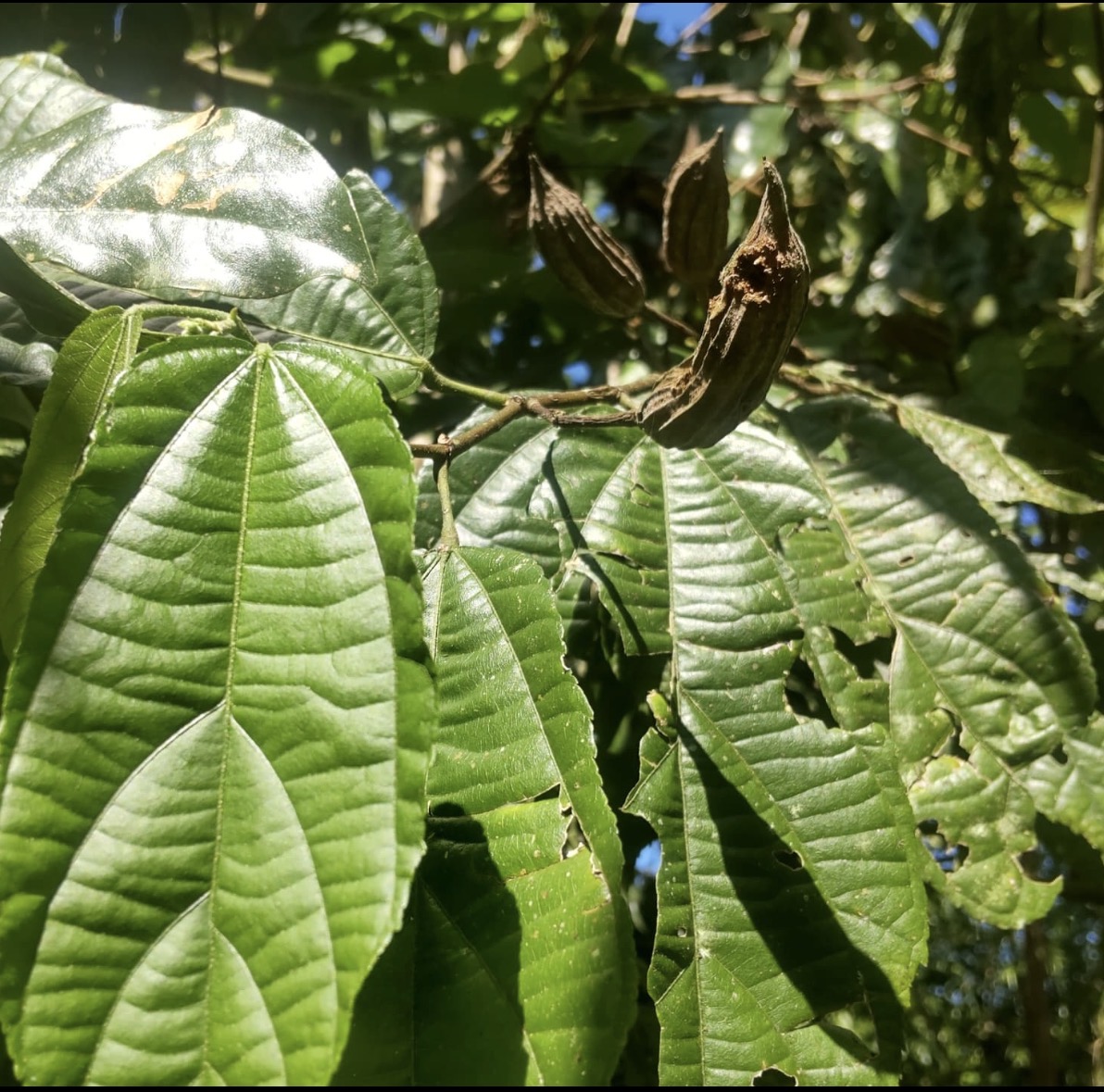
The observation touches on an important and often overlooked question in restoration ecology: how quickly do restored forests begin to function reproductively?
Globally, restoration success is commonly measured using indicators such as trees planted, survival rates, canopy closure, hectares restored, or carbon accumulation. While these metrics are important, they do not necessarily indicate that ecological processes have resumed. Reproduction is different. A forest capable of flowering, fruiting, and producing viable seed is beginning to move beyond establishment and toward ecological continuity.
This is not the first time LuTreeCo has observed unusually early reproductive behaviour inside dense mixed-species restoration systems. Several previous observations were recorded and these new observations involving Glyphaea brevis strengthen that emerging pattern.
Why certain species appear to reproduce earlier inside dense native plantings remains uncertain. Competition for light, accelerated vertical growth, altered soil biology, improved moisture retention, pollinator return, and rapid canopy formation may all contribute. It is also possible that some tropical woody species possess greater reproductive plasticity than previously appreciated.
Importantly, these observations should not yet be interpreted as proof that the Miyawaki method universally accelerates reproduction. However, they strongly suggest that reproductive monitoring deserves far greater attention within restoration science.
Become a Member
Be part of the largest network of botanic gardens and plant conservation experts in the world by joining BGCI today!
Support BGCI
You can support our plant conservation efforts by sponsoring membership for small botanic gardens, contributing to the Global Botanic Garden Fund, and more!