Early Fruit Initiation in Sausage Tree at 3.75 Years in Ugandan Miyawaki Plot
-
Country
Uganda -
Region
Africa -
Workstream
Saving Plants -
Topic
Tree Conservation -
Type
News -
Source
BGCI Member
News published: 02 March 2026
In February 2026, Lukango Tree Conservancy (LuTreeCo), Uganda, discovered that a nursery-grown specimen of Kigelia africana (sausage tree) established within a mixed-species indigenous Miyawaki restoration plot at LuTreeCo had initiated fruit development at approximately 3 years and 9 months from seed. The individual was planted in November 2022 at six months of age. Multiple flowers were successfully pollinated, and several young fruits are currently developing, confirming full reproductive competence rather than isolated flowering.
Published sources commonly report first flowering of Kigelia africana at approximately 4–6 years from seed under cultivation. For example: Rønne & Jøker (2005) report first flowering at approximately 6 years from seed. The CABI Invasive Species Compendium (2023 update) similarly notes first flowering at around 6 years. San Diego Zoo Wildlife Alliance plant profile indicates maturity and flowering can occur at 4–6 years under favorable cultivation conditions. These references refer specifically to flowering rather than fruiting.
The present observation therefore indicates that successful pollination and fruit initiation occurred slightly earlier than commonly cited flowering timelines.
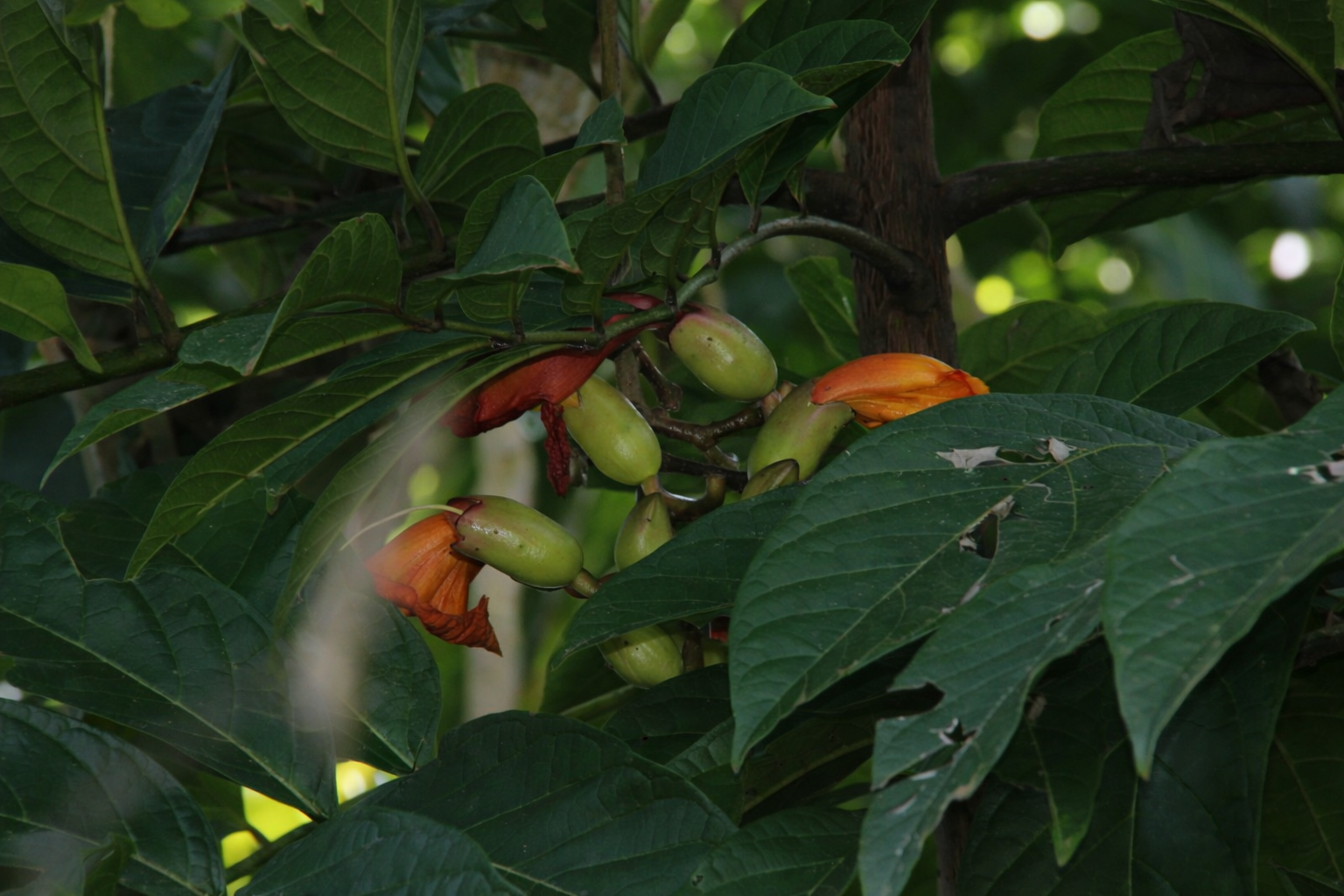
The tree forms part of an 40-species indigenous restoration plot established at high density (approximately 3 seedlings per m²) using Miyawaki principles, including deep soil preparation and organic amendment. No chemical fertilizers were applied.
While this represents a single data point, it suggests that dense, diverse native restoration systems may influence the timing of reproductive maturity in some African tree species. If similar early reproductive onset is observed in additional individuals, this could have implications for:
• Restoration-based seed production timelines
• Germplasm security planning
• Urban and community restoration projects
• Scaling native tree propagation systems
Further monitoring will determine whether fruit maturation proceeds to viability and whether comparable patterns are replicated in other individuals within the planting.
Careful documentation of phenological shifts under restoration conditions may contribute valuable data to African tree conservation efforts as landscape-scale native restoration expands.
References
Rønne, P., & Jøker, D. (2005). Kigelia africana (Lam.) Benth. Seed Leaflet No. 99. Forest & Landscape Denmark, University of Copenhagen.
CABI (2023). Kigelia africana datasheet. CABI Compendium.
San Diego Zoo Wildlife Alliance (n.d.). Sausage Tree (Kigelia africana) plant profile.
Become a Member
Be part of the largest network of botanic gardens and plant conservation experts in the world by joining BGCI today!
Support BGCI
You can support our plant conservation efforts by sponsoring membership for small botanic gardens, contributing to the Global Botanic Garden Fund, and more!