Chester Zoo Conservationists Save the Seeds of Highly Threatened Cacti
-
Region
South America -
Workstream
Saving Plants -
Type
Press Release -
Source
BGCI Member
News published: 03 July 2026
Chester Zoo conservationists have just returned to Cheshire after spending days in Chile’s hyper-arid Atacama Desert, collecting Copiapoa cacti seeds for preservation.
Many of these species are in real danger of extinction due to climate change, industrial and urban development projects, plant poaching and illegal off-roading.
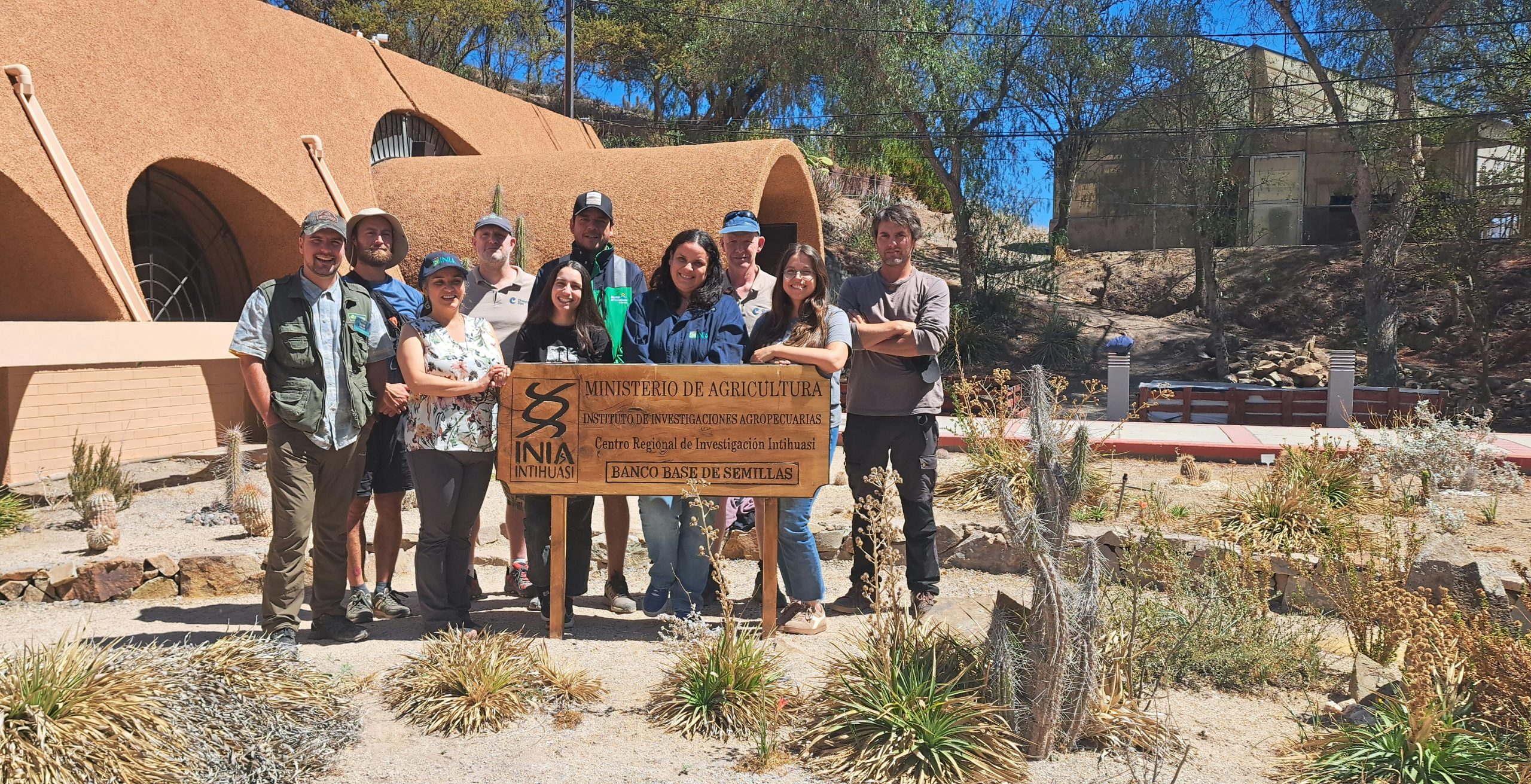
Paul Bamford, Regional Field Programme Senior Manager for Latin America, and Richard Hewitt, Team Manager for the Chester Zoo plant nursery, worked alongside Chile’s INIA Intihuasi Seedbank, where the seeds are now housed, and Cactus Lagarto Nursery.
Mr Bamford said: “The idea of seed banks can feel quite apocalyptic, as they are set up for the worst-case scenario: the loss of a species from the wild. This expedition doubled up as a training workshop for Chester Zoo staff and Chilean conservation organisations. Our next step will be to work with the INIA seed bank and cactus experts in Chile to draft best practice guidelines for saving seeds.”
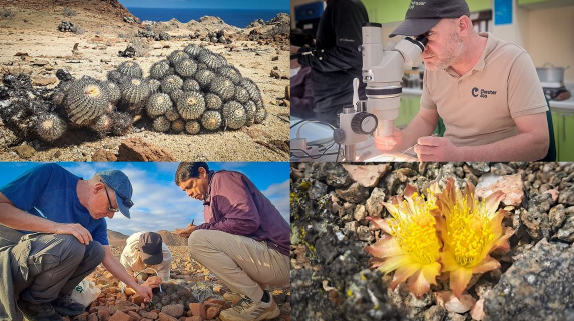
The Chester Zoo team was involved in every step of the process, removing the seeds from wild Copiapoa using tweezers, logging location coordinates, photographing the parent plant beside bagged and labelled seed samples, and returning them to a lab to be sorted, cleaned, dried and frozen.
Copiapoa seeds do not travel far from the parent plants, and the cacti grow very slowly. This means individual species are often restricted to a small area, making them vulnerable to damage and slow to recover.
Mr Bamford said: “We saw evidence of the dangers threatening these species. We saw illegal constructions, 4×4 tire tracks going through their habitats and there were gaps where poached plants were uprooted and carried away.”
The project is funded by the Korea Arboreta and Gardens Institute, via Botanic Gardens Conservation International’s Global Seed Conservation Grant.
During the course of the field work, conservationists from the zoo covered more than 2,000km and collected seeds from five Critically Endangered species, eight Endangered species, five Vulnerable species and two Least Concern species.
The seed harvesting is part of a wider Copiapoa Action Plan, published in 2025, after a conservation-planning workshop funded by Chester Zoo, the SSC Internal Grants programme and the British Cactus and Succulent Society and facilitated by the SSC Conservation Planning Specialist Group.
The Action Plan sets out 87 actions aimed at improving the protection and resilience of wild populations and their habitats. These are being implemented through collaboration with IUCN Cactus and Succulent Plants Specialist Group, researchers from Concepción University, Chilean public sector organisations, the INIA Intihuasi seedbank, and Cactus Lagarto nursery.
Become a Member
Be part of the largest network of botanic gardens and plant conservation experts in the world by joining BGCI today!
Support BGCI
You can support our plant conservation efforts by sponsoring membership for small botanic gardens, contributing to the Global Botanic Garden Fund, and more!