2026 UK IPSN Winter Meeting: The Recap
-
Country
UK -
Region
Europe -
Programme
International Plant Sentinel Network -
Workstream
Saving Plants -
Topic
Plant Conservation -
Type
News -
Source
BGCI
News Published: 11 March 2026
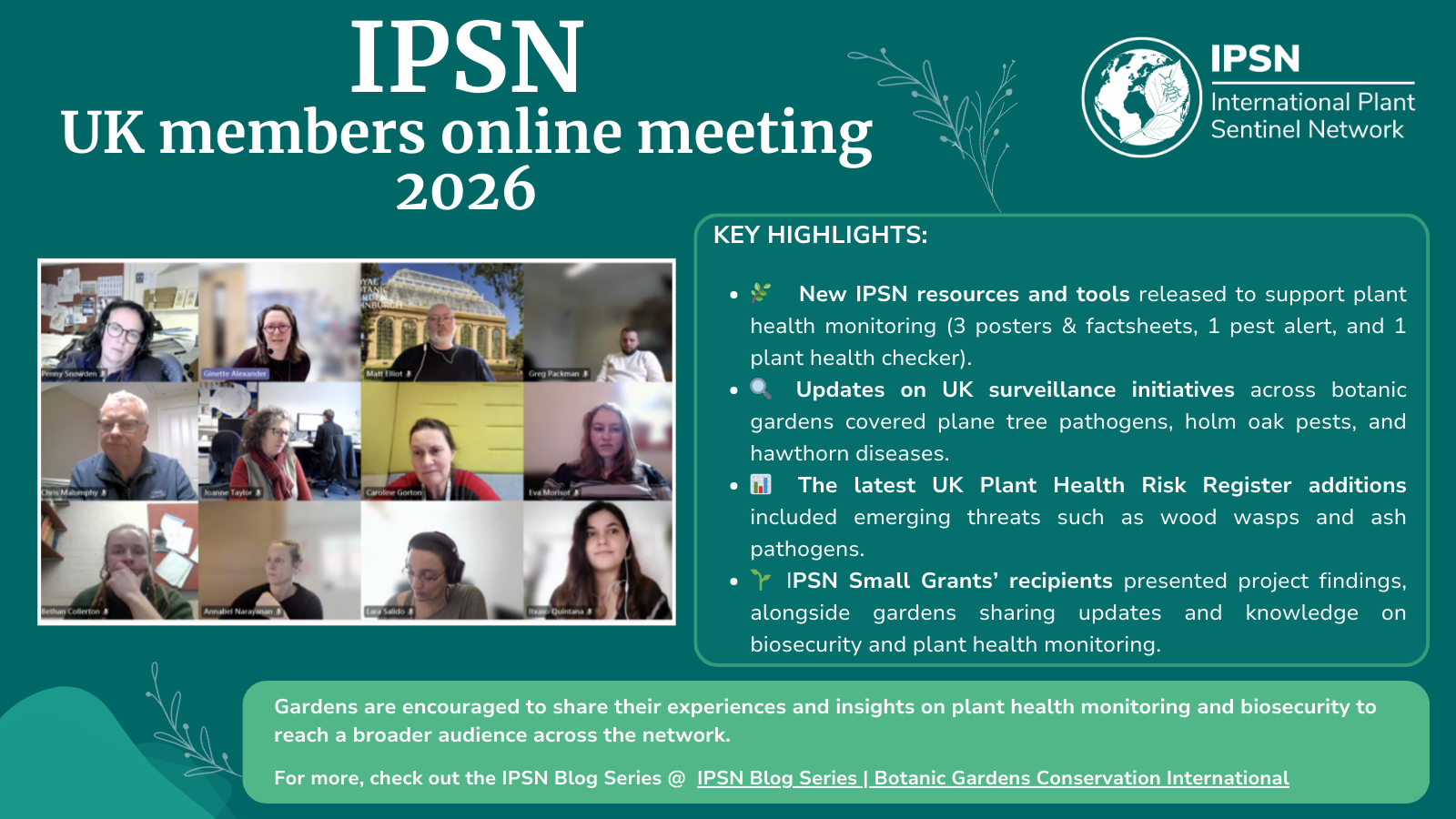
In late February, UK-based members and partners of the International Plant Sentinel Network (IPSN) convened online for the 2026 IPSN UK Winter meeting.
These seasonal meetings allow participants to hear about the progress and outcomes of UK-based IPSN initiatives, receive updates on the latest additions to the UK Risk Register, and learn more about the IPSN Small Grant projects, while exchanging plant health and biosecurity insights with other representatives of the network.
KEY TAKEAWAYS
New IPSN Resources
Every year, the IPSN team, in collaboration with expert diagnosticians from Fera, produces a range of informative resources and monitoring tools that help raise awareness on key emerging pathogens. This year’s materials include:
- New Posters and Factsheets for the two-spot cotton leafhopper (Amrasca biguttula), root and butt rot (Heterobasidion irregulare), and elm pests and diseases, including the elm zigzag sawfly (Aproceros leucopoda), elm spanworm (Ennomos subsignaria), and Dutch Elm Disease (Ophiostoma novo-ulmi)
- A new Pest Alert spotlighting the invasive Argentine ant (Linepithema humile)
- Plant Health Checker for Palms
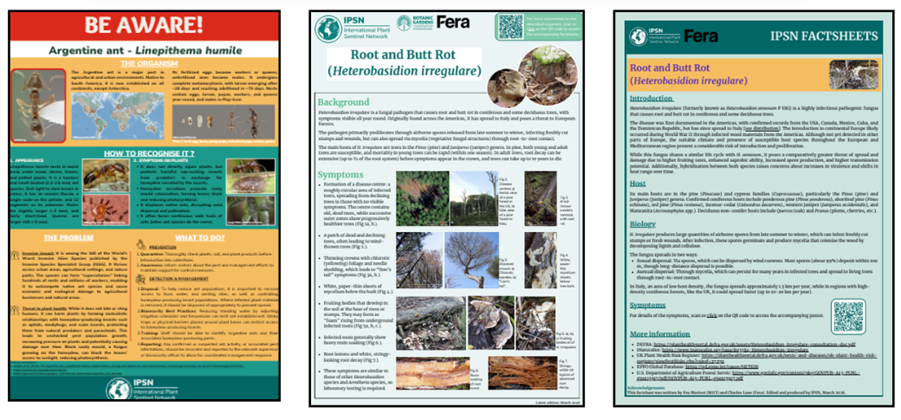
Some of the new 2025-2026 information resources (from left to right): Organism alert for Argentinian ant, Two-spot cotton leafhopper poster and the complementary factsheet
UK-Based IPSN Initiatives
In 2025-2026, four key surveillance initiatives took place in collaboration with UK botanic gardens, arboreta, and other organisations with living collections:
- Canker Stain of Plane passive spore trapping – Aimed at establishing a spore trapping network to monitor for the presence of canker stain of plane and test sampling methods for its identification and diagnosis. Over the last two years,12 gardens participated in this trapping initiative, which has now come to an end. An updated version of the trapping protocol, including feedback from participants, will be published next month through the usual IPSN communication channels.
- Holm Oak Baseline Surveillance – Focused on gathering baseline data for three key pests of holm oak: holm oak scale, holm oak midge, and holm oak Phylloxera, 15 gardens partook in surveys, with key organism reported at various locations. Due to the success of the pilot survey, the IPSN is putting together a field guide to the most common holm oak arthropods, which will be shared with the network in the coming months.
- Hawthorn and Hedgerow Sampling – Investigating the distribution of pathogens that threaten hawthorn and hedgerow species, including: fireblight, Gymnosporangium rust, and mosaic viruses. In 2025, with six gardens taking part in sampling work. With surveys restarting in April 2026, collections across the UK are invited to join this pivotal initiative to protect hedgerow species.
- UK Garden Sentinel Network (UKGSN) – Developed in collaboration with Observatree and PlantNetwork, this initiative’s key objective was to provide training and informative resources for volunteers and students groups with the aim of supporting their plant health monitoring within living collections. Unfortunately, due to current financial constraints, this activity will not be continuing in 2026-2027. However, should funding become available, the IPSN Team will be back in touch with further information on how to participate.
UK Risk Register: 2025 Additions
The UK Plant Health Risk Register (UK-PHHR) is a database of over 1,000 pests and diseases that scores their risk and threat to the UK’s crops, trees, gardens, and ecosystems. Every year, new species are added, and existing ones are reviewed.
During the meeting, the following new additions were highlighted:
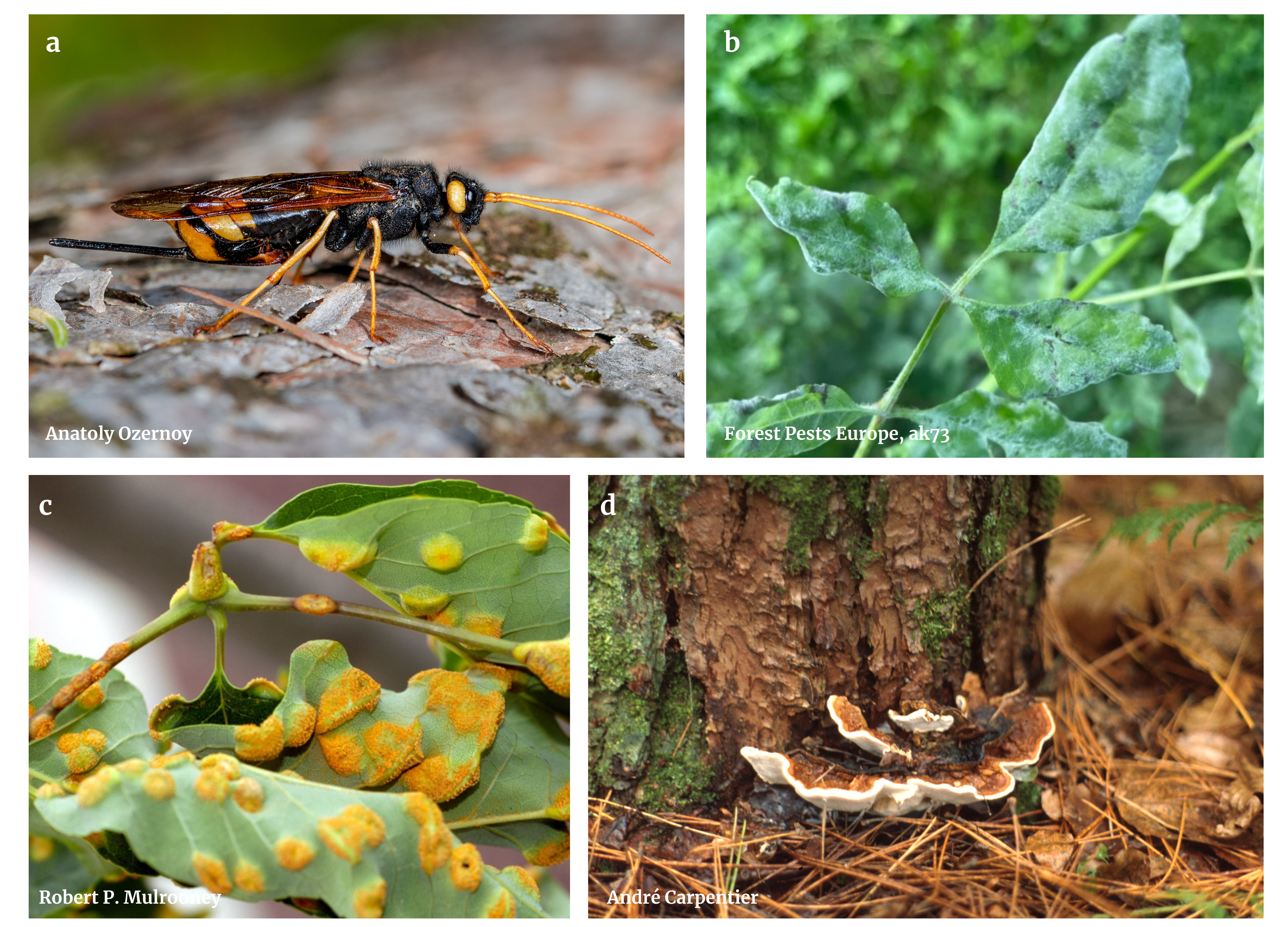
- Wood wasps (Urocerus japonicus) – closely resembling a UK native species, making layman identification challenging.
- Ash Powdery Mildew (Phyllactinia fraxinicola) – a native species is already present; an invasive variant would be of concern.
- Rust on Ash (Puccinia sp.) – a pathogen of international concern with an unknown distribution; lab confirmation would be required, and surveillance may be requested.
- Root and Butt Rot (Heterobasidion irregulare) – of particular interest to botanic gardens due to its rapid spore production and spread; accidentally introduced to Europe.
Gardens are encouraged to document and report any unusual pest sightings to the IPSN.
2025/ 2026 IPSN Small Grants Projects
The IPSN Small Grants programme supports UK-based members by funding short-term projects that demonstrate the role and importance of using living collections to develop, test, and innovate monitoring strategies, as well as advance, assess, and encourage best biosecurity practice implementation.
During the meeting, the impact of this funding initiative was showcased through the informative presentations of the three projects of 2025-2026:
- Bethan Collerton, Birmingham Botanical Gardens – Strengthening Plant Health: Biosecurity Policy Development Framework using Birmingham Botanical Gardens as a Case Study.
- Joanna Taylor, Royal Botanic Garden Edinburgh – Establishing a Protocol for Determining the Presence of Phytophthora Pathogens in Garden Soil.
- Caroline Gorton, Forest Research, in collaboration with Dan Crowley, Westonbirt Arboretum and Dan Luscombe, Bedgebury National Pinetum – Development of Monitoring Resources to Support the Assessment of Cupressus dieback.
Knowledge Sharing and Activity Updates from UK Members
During the session, participants shared updates of their activities and work across a range of plant health topics and biosecurity, including upcoming webinars, concerns about emerging pathogens, suggestions on pest surveillance and biosecurity actions, and accreditation applications.
Gardens were also encouraged to share their biosecurity and plant health monitoring experiences and ongoing activities through the IPSN blog series. For more information on how to submit articles and check out previously submitted blogs go to: IPSN Blog Series | Botanic Gardens Conservation International
Want to Join the IPSN?
Membership is free! By joining, you gain access to expert-led initiatives, resources on biosecurity and plant health monitoring, and a global network of professionals.
To get involved, email: lara.salido@bgci.org or itxaso.quintana@bgci.org
Become a Member
Be part of the largest network of botanic gardens and plant conservation experts in the world by joining BGCI today!
BGCI Databases
Explore BGCI's suites of databases to help plant conservation worldwide. Upload your data!