South Africa's black townships, the direct products of apartheid, are the epitome of urban desertification. Ill-planned, and the victims of unkind and unfeeling bureaucracy, these areas offer the ultimate challenge in urban greening, particularly with the current wave of violence.
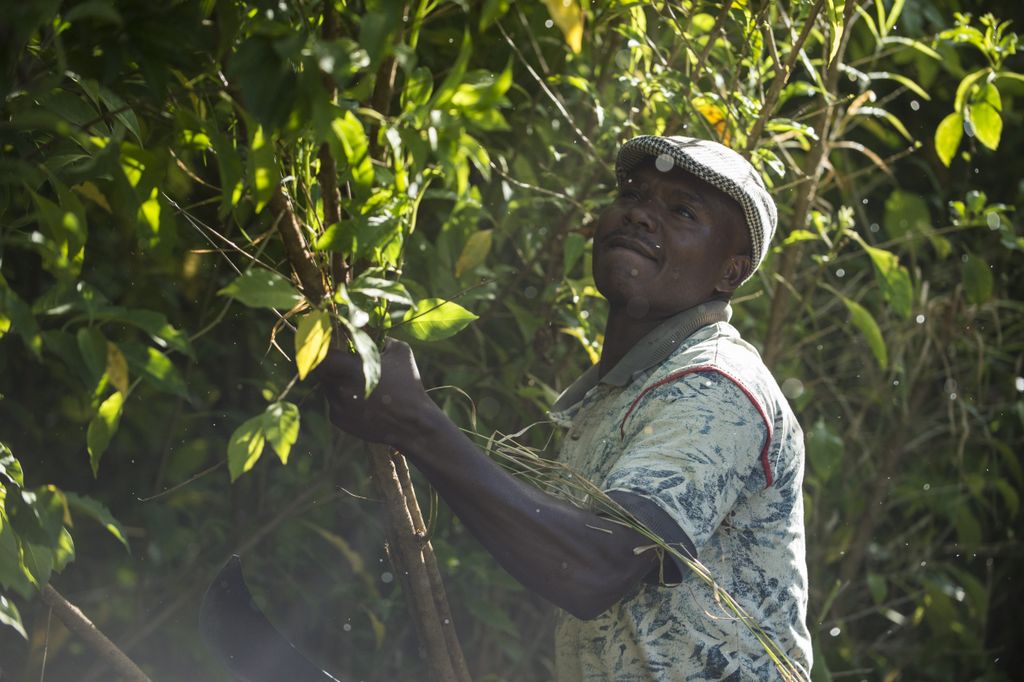
Township greening has been pioneered by Trees for Africa (TVA), a non-governmental organisation, which aims to plant trees and other plants throughout the whole country. TFA was initiated three years ago and now employs three field officers who respond to requests from local communities to green their environment. Simple application forms are used to identify the need, the requirements and the details of the local environment. TFA finds a sponsor/s for a particular programme and ensures that the plants arrive and are planted. Every three months TFA carries out an evaluation to ensure that the trees are maintained and replaced if necessary.
In some centres in South Africa, community-based greening projects have been initiated. Following a request from a particular community, a greening workshop is held with interested parties to discuss broad environmental issues (such as waste removal, provision of clean water, air pollution, burning of local vegetation, etc.) and ultimately those linked with greening. Simple greening skills, e.g. tree planting and soil preparation, are demonstrated, and appropriate resource guides or lists of plants adapted to local conditions are distributed. A greening committee, elected at the workshop, then proceeds with a plan of action for that particular community.
In March 1992, TFA initiated a greening programme in Khayelitsha (Xhosa for "new home") on the Cape Flats near Cape Town. Once an extensive natural sand dune system, the Flats are now literally a desert; a direct result of building the township.
The TFA and the National Botanical Institute, working in partnership, have initiated a joint schools greening programme in this area. The main objectives include:
Regular tree plantings take place, mainly in schools, in the face of summer drought and browsing by goats - many township people keep livestock as a main source of income.
A reciprocal programme brings groups to Kirstenbosch National Botanical Gardens. Here groups can experience the richness of the plant kingdom and observe first hand that planting indigenous species will eventually produce a wonderful garden.
Sadly, with only one project officer and over half a million inhabitants in the area, there is a limit to what one individual can do. Major funding is required to ensure the steady supply of trees, and provide another project officer.
Success of this programme to date can be put down to three things; an interested and active community, starting in a small way with a few plants and networking with key greening organisations. Elements which are essential for any community-based environmental education programme.
In 1993
To date (1990-1993)
In Khayeltisha